

10.2 Wastewater Treatment Methods
The choice of selecting wastewater treatment techniques is based on assessing the
initial quality of water and parameters recognized by regulations. As shown in
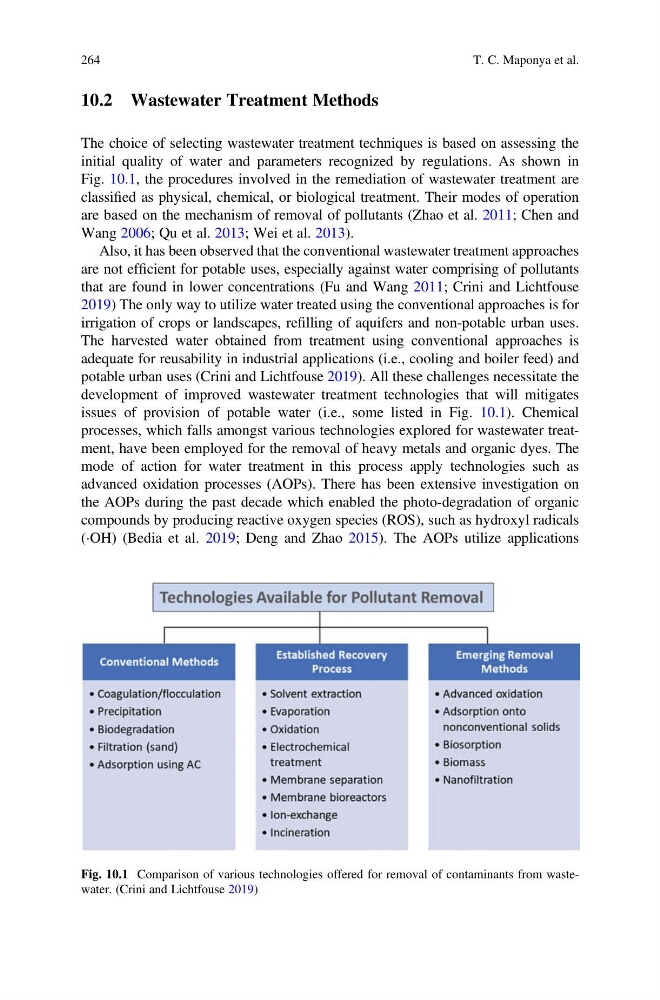
Fig. 10.1, the procedures involved in the remediation of wastewater treatment are
classified as physical, chemical, or biological treatment. Their modes of operation
are based on the mechanism of removal of pollutants (Zhao et al. 2011; Chen and
Wang 2006; Qu et al. 2013; Wei et al. 2013).
Also, it has been observed that the conventional wastewater treatment approaches
are not efficient for potable uses, especially against water comprising of pollutants
that are found in lower concentrations (Fu and Wang 2011; Crini and Lichtfouse
2019) The only way to utilize water treated using the conventional approaches is for
irrigation of crops or landscapes, refilling of aquifers and non-potable urban uses.
The harvested water obtained from treatment using conventional approaches is
adequate for reusability in industrial applications (i.e., cooling and boiler feed) and
potable urban uses (Crini and Lichtfouse 2019). All these challenges necessitate the
development of improved wastewater treatment technologies that will mitigates
issues of provision of potable water (i.e., some listed in Fig. 10.1). Chemical
processes, which falls amongst various technologies explored for wastewater treatment, have been employed for the removal of heavy metals and organic dyes. The
mode of action for water treatment in this process apply technologies such as
advanced oxidation processes (AOPs). There has been extensive investigation on
the AOPs during the past decade which enabled the photo-degradation of organic
compounds by producing reactive oxygen species (ROS), such as hydroxyl radicals
(ÁOH) (Bedia et al. 2019; Deng and Zhao 2015). The AOPs utilize applications
Fig. 10.1 Comparison of various technologies offered for removal of contaminants from wastewater. (Crini and Lichtfouse 2019)
264
T. C. Maponya et al.
The choice of selecting wastewater treatment techniques is based on assessing the
initial quality of water and parameters recognized by regulations. As shown in
Fig. 10.1, the procedures involved in the remediation of wastewater treatment are
classified as physical, chemical, or biological treatment. Their modes of operation
are based on the mechanism of removal of pollutants (Zhao et al. 2011; Chen and
Wang 2006; Qu et al. 2013; Wei et al. 2013).
Also, it has been observed that the conventional wastewater treatment approaches
are not efficient for potable uses, especially against water comprising of pollutants
that are found in lower concentrations (Fu and Wang 2011; Crini and Lichtfouse
2019) The only way to utilize water treated using the conventional approaches is for
irrigation of crops or landscapes, refilling of aquifers and non-potable urban uses.
The harvested water obtained from treatment using conventional approaches is
adequate for reusability in industrial applications (i.e., cooling and boiler feed) and
potable urban uses (Crini and Lichtfouse 2019). All these challenges necessitate the
development of improved wastewater treatment technologies that will mitigates
issues of provision of potable water (i.e., some listed in Fig. 10.1). Chemical
processes, which falls amongst various technologies explored for wastewater treatment, have been employed for the removal of heavy metals and organic dyes. The
mode of action for water treatment in this process apply technologies such as
advanced oxidation processes (AOPs). There has been extensive investigation on
the AOPs during the past decade which enabled the photo-degradation of organic
compounds by producing reactive oxygen species (ROS), such as hydroxyl radicals
(ÁOH) (Bedia et al. 2019; Deng and Zhao 2015). The AOPs utilize applications
Fig. 10.1 Comparison of various technologies offered for removal of contaminants from wastewater. (Crini and Lichtfouse 2019)
264
T. C. Maponya et al.