

(such as cyanobacteria) and eukaryotic (such as Chlorella) algae usually
bioremediate arsenic (arsenate and arsenite) via the phosphate transportation and
plasma membrane-based hexose permeases and aqua-glyceroporins pathways
(Zhang et al. 2014). Arsenate is transported by competitive inhibition of phosphate
due to their chemical similarity (between AsO 4
3À and PO 4
3À
). The different functional groups present on the cell wall of algae help in adsorbing the metal. Wang
et al. (2013) and Zhang et al. (2013) reported more than 60% of arsenic removal by
algae from contaminated water through adsorption. With regard the biochemistry of
arsenic biotransformation to reduce its toxicity, the two biochemical conversion
pathways occurring inside the algal cells, viz. oxidation and methylation, are
discussed below.
Oxidation of Arsenic
Few algae such as Synechocystis and Cynidiales could oxidise As
III to As
IV inside
the cells. Zhang et al. (2011) reported a process of detoxification through the uptake,
accumulation and transformation of arsenic in Synechocystis sp. inside the cell. A
few other reports confirm that the oxidation of As
III happens outside with the help of
extracellular phosphatases (Mitra et al. 2017). The role of the enzyme involved in the
process particularly in the oxidation process is hitherto obscure (Mitra et al. 2017;
Zhang et al. 2014).
Methylation of Arsenic
This mechanism involves the conversion of toxic As
III arsenic to a less toxic
monomethyl and dimethyl arsenates with the help of arsenite methyltransferases
(Ye et al. 2012). Qin et al. (2009) confirmed that Cyanidioschyzon
sp. (an extremophilic alga) could alone oxidise As
III to As
V , reduce As
V to As
III
and methylate As
V to monomethyl arsenate and dimethyl arsenate.
Fungal Remediation
In terms of bioactive compound production, fungi are the most prominent and potent
biomass in soil. The fungal cell wall is made up of polysaccharide molecules and
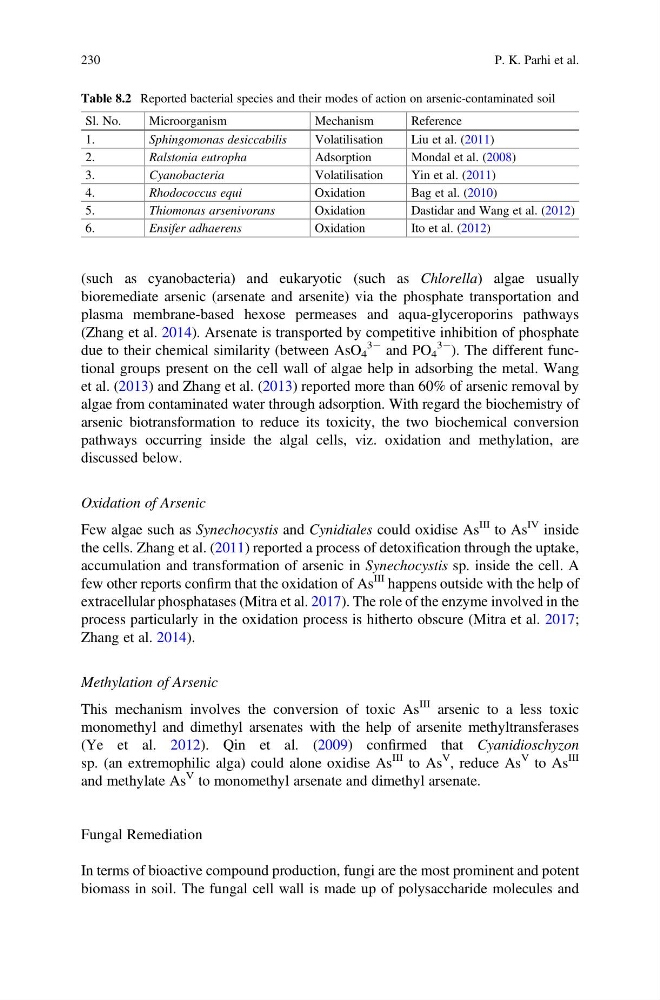
Table 8.2 Reported bacterial species and their modes of action on arsenic-contaminated soil
Sl. No.
Microorganism
Mechanism
Reference
1.
Sphingomonas desiccabilis
Volatilisation
Liu et al. (2011)
2.
Ralstonia eutropha
Adsorption
Mondal et al. (2008)
3.
Cyanobacteria
Volatilisation
Yin et al. (2011)
4.
Rhodococcus equi
Oxidation
Bag et al. (2010)
5.
Thiomonas arsenivorans
Oxidation
Dastidar and Wang et al. (2012)
6.
Ensifer adhaerens
Oxidation
Ito et al. (2012)
230
P. K. Parhi et al.
bioremediate arsenic (arsenate and arsenite) via the phosphate transportation and
plasma membrane-based hexose permeases and aqua-glyceroporins pathways
(Zhang et al. 2014). Arsenate is transported by competitive inhibition of phosphate
due to their chemical similarity (between AsO 4
3À and PO 4
3À
). The different functional groups present on the cell wall of algae help in adsorbing the metal. Wang
et al. (2013) and Zhang et al. (2013) reported more than 60% of arsenic removal by
algae from contaminated water through adsorption. With regard the biochemistry of
arsenic biotransformation to reduce its toxicity, the two biochemical conversion
pathways occurring inside the algal cells, viz. oxidation and methylation, are
discussed below.
Oxidation of Arsenic
Few algae such as Synechocystis and Cynidiales could oxidise As
III to As
IV inside
the cells. Zhang et al. (2011) reported a process of detoxification through the uptake,
accumulation and transformation of arsenic in Synechocystis sp. inside the cell. A
few other reports confirm that the oxidation of As
III happens outside with the help of
extracellular phosphatases (Mitra et al. 2017). The role of the enzyme involved in the
process particularly in the oxidation process is hitherto obscure (Mitra et al. 2017;
Zhang et al. 2014).
Methylation of Arsenic
This mechanism involves the conversion of toxic As
III arsenic to a less toxic
monomethyl and dimethyl arsenates with the help of arsenite methyltransferases
(Ye et al. 2012). Qin et al. (2009) confirmed that Cyanidioschyzon
sp. (an extremophilic alga) could alone oxidise As
III to As
V , reduce As
V to As
III
and methylate As
V to monomethyl arsenate and dimethyl arsenate.
Fungal Remediation
In terms of bioactive compound production, fungi are the most prominent and potent
biomass in soil. The fungal cell wall is made up of polysaccharide molecules and
Table 8.2 Reported bacterial species and their modes of action on arsenic-contaminated soil
Sl. No.
Microorganism
Mechanism
Reference
1.
Sphingomonas desiccabilis
Volatilisation
Liu et al. (2011)
2.
Ralstonia eutropha
Adsorption
Mondal et al. (2008)
3.
Cyanobacteria
Volatilisation
Yin et al. (2011)
4.
Rhodococcus equi
Oxidation
Bag et al. (2010)
5.
Thiomonas arsenivorans
Oxidation
Dastidar and Wang et al. (2012)
6.
Ensifer adhaerens
Oxidation
Ito et al. (2012)
230
P. K. Parhi et al.