

Tang et al. reported the utilization of ultrafine α-Fe 2 O 3 nanoparticles to treat
arsenic contaminated synthetic and natural ground water systems (Tang et al. 2011).
Kinetic studies ascribed that As (V) and As (III) expulsion by α-Fe 2 O 3 materials was
very quick. With a loading of 0.04 g/L of α- Fe 2 O 3 and initial As (III) concentration
of 0.115 mg/L, about 74% of As (III) has been removed within the first 30 mins of
interaction. In the case of As (V), the initial concentration was 0.095 mg/L, and
100% expulsion of As (V) has been accomplished when the α-Fe 2 O 3 loading was
just 50% of that utilized for As(III). The specific surface area of the synthesised
material was around 162 m
2 /g and the particle size was about 5 nm which showed
the higher arsenic removal efficacy at neutral pH. Adsorption capacities with regards
to As(V) and As (III) were resolved to be 47 mg/g and 95 mg/g, respectively. In
addition, it was demonstrated that the competitive anions of NO 3
À , SO 4
2À
, and Cl
- in
the water has a negligible negative impact on arsenic removal process.
The action of magnetite nanoparticles (Fe 3 O 4 ) to remove arsenic-polluted water
was reported earlier (Chowdhury and Yanful 2011). The synthesised adsorbent had
the average size of 20 nm and the specific surface area of 69.4 m
2 /g. Results
demonstrated that removal of arsenic by Fe 3 O 4 nanomaterial is mainly depends on
pH of the solution, initial concentration of arsenic, contact time, adsorbent concentration and PO 4
3À concentration. Maximum removal capacity for both arsenic
species was accomplished by the initial concentration of 2 mg/L at pH 2. Arsenite
adsorption did not vary by changing the pH from 2 to 9, whereas, arsenate adsorption
decreased very quickly in higher pH (above 7). In addition, maximum arsenic
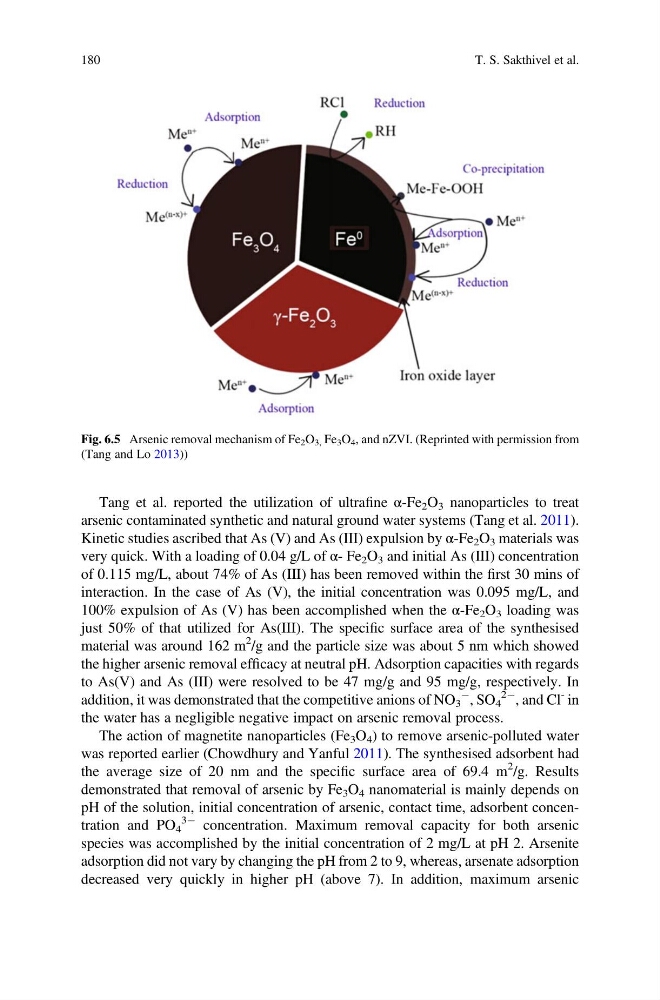
Fig. 6.5 Arsenic removal mechanism of Fe 2 O 3, Fe 3 O 4 , and nZVI. (Reprinted with permission from
(Tang and Lo 2013))
180
T. S. Sakthivel et al.
arsenic contaminated synthetic and natural ground water systems (Tang et al. 2011).
Kinetic studies ascribed that As (V) and As (III) expulsion by α-Fe 2 O 3 materials was
very quick. With a loading of 0.04 g/L of α- Fe 2 O 3 and initial As (III) concentration
of 0.115 mg/L, about 74% of As (III) has been removed within the first 30 mins of
interaction. In the case of As (V), the initial concentration was 0.095 mg/L, and
100% expulsion of As (V) has been accomplished when the α-Fe 2 O 3 loading was
just 50% of that utilized for As(III). The specific surface area of the synthesised
material was around 162 m
2 /g and the particle size was about 5 nm which showed
the higher arsenic removal efficacy at neutral pH. Adsorption capacities with regards
to As(V) and As (III) were resolved to be 47 mg/g and 95 mg/g, respectively. In
addition, it was demonstrated that the competitive anions of NO 3
À , SO 4
2À
, and Cl
- in
the water has a negligible negative impact on arsenic removal process.
The action of magnetite nanoparticles (Fe 3 O 4 ) to remove arsenic-polluted water
was reported earlier (Chowdhury and Yanful 2011). The synthesised adsorbent had
the average size of 20 nm and the specific surface area of 69.4 m
2 /g. Results
demonstrated that removal of arsenic by Fe 3 O 4 nanomaterial is mainly depends on
pH of the solution, initial concentration of arsenic, contact time, adsorbent concentration and PO 4
3À concentration. Maximum removal capacity for both arsenic
species was accomplished by the initial concentration of 2 mg/L at pH 2. Arsenite
adsorption did not vary by changing the pH from 2 to 9, whereas, arsenate adsorption
decreased very quickly in higher pH (above 7). In addition, maximum arsenic
Fig. 6.5 Arsenic removal mechanism of Fe 2 O 3, Fe 3 O 4 , and nZVI. (Reprinted with permission from
(Tang and Lo 2013))
180
T. S. Sakthivel et al.