

which are major contributor for contamination. This class is further divided as per
their basic nature. Nitroaromatic compounds are extensively utilised in fungicides,
pesticides, plasticizers, and dyes. It is a major water pollutant in industrial effluents.
4-Nitrophenol (4-NP)— listed as a “priority pollutant” by the US Environmental
Protection Agency, makes substantial health and environmental risks, resulting in
toxicity and carcinogenicity. It is difficult to be removed by natural degradation and
is highly soluble in water.
Bulk MoS 2 has a large size and small bandgap, which is unfavourable for
production of free hydroxyl radicals, on the contrary, nano sized MoS 2 due to its
larger surface area displace excellent photo catalytic property. Additionally, modifying MoS 2 to a lesser number of layers is also reported to improve photocatalytic
property. The photocatalytic performance of MoS 2 is a function of morphology,
particle size and bandgap. Photocatalytic property of MoS 2 is influenced by its
optical and structural properties as it decides on the active sites and its defect state.
MoS 2 is an active photocatalytic material in the visible range. Many researches have
reported its high degradation efficiency against various chemicals and dyes.
Photocatalytic property of MoS 2 depends on type and number of elements in its
configuration, which can be classified into three forms namely pure MoS 2 ,
Bi-functional elements and Ternary hybrid combination with MoS 2 . Further to
enhance its capabilities MoS 2 nanocomposites were fabricated along with other
successful materials. Various examples of MoS 2 based nanocomposites for
photocatalytic degradation are shown in Table 4.1. Few of these elements forming
nanocomposites with MoS 2 are zinc oxide, carbon nitride, graphene etc. The success
rate of photocatalytic materials is governed by function that rate of recombination
should be slower and lesser than the electron capturing rate.
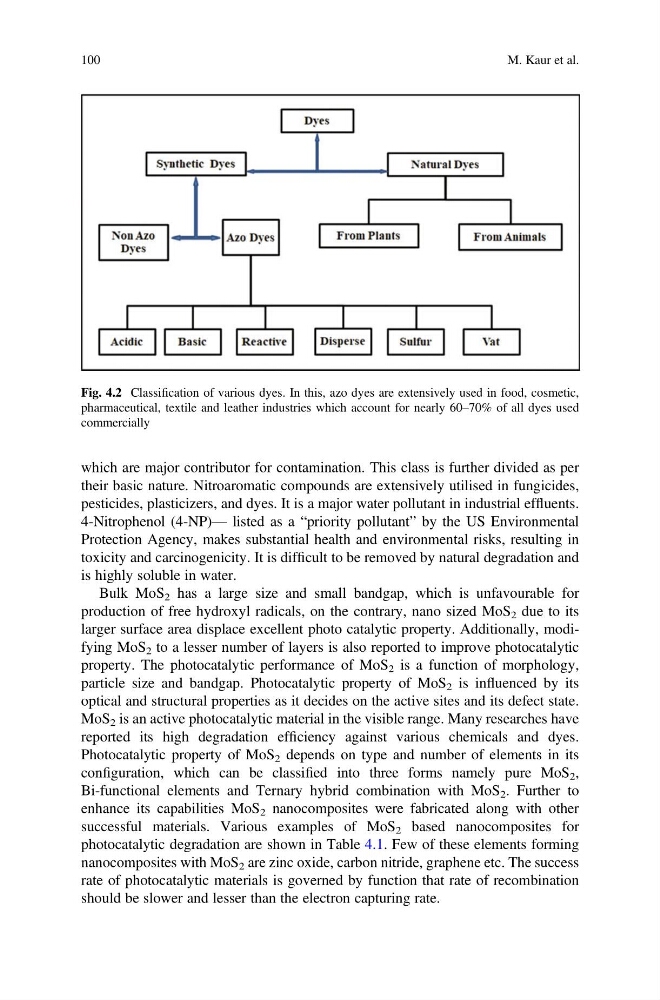
Fig. 4.2 Classification of various dyes. In this, azo dyes are extensively used in food, cosmetic,
pharmaceutical, textile and leather industries which account for nearly 60–70% of all dyes used
commercially
100
M. Kaur et al.
their basic nature. Nitroaromatic compounds are extensively utilised in fungicides,
pesticides, plasticizers, and dyes. It is a major water pollutant in industrial effluents.
4-Nitrophenol (4-NP)— listed as a “priority pollutant” by the US Environmental
Protection Agency, makes substantial health and environmental risks, resulting in
toxicity and carcinogenicity. It is difficult to be removed by natural degradation and
is highly soluble in water.
Bulk MoS 2 has a large size and small bandgap, which is unfavourable for
production of free hydroxyl radicals, on the contrary, nano sized MoS 2 due to its
larger surface area displace excellent photo catalytic property. Additionally, modifying MoS 2 to a lesser number of layers is also reported to improve photocatalytic
property. The photocatalytic performance of MoS 2 is a function of morphology,
particle size and bandgap. Photocatalytic property of MoS 2 is influenced by its
optical and structural properties as it decides on the active sites and its defect state.
MoS 2 is an active photocatalytic material in the visible range. Many researches have
reported its high degradation efficiency against various chemicals and dyes.
Photocatalytic property of MoS 2 depends on type and number of elements in its
configuration, which can be classified into three forms namely pure MoS 2 ,
Bi-functional elements and Ternary hybrid combination with MoS 2 . Further to
enhance its capabilities MoS 2 nanocomposites were fabricated along with other
successful materials. Various examples of MoS 2 based nanocomposites for
photocatalytic degradation are shown in Table 4.1. Few of these elements forming
nanocomposites with MoS 2 are zinc oxide, carbon nitride, graphene etc. The success
rate of photocatalytic materials is governed by function that rate of recombination
should be slower and lesser than the electron capturing rate.
Fig. 4.2 Classification of various dyes. In this, azo dyes are extensively used in food, cosmetic,
pharmaceutical, textile and leather industries which account for nearly 60–70% of all dyes used
commercially
100
M. Kaur et al.