

1.4.6.2 Gasification
Gasification is a thermochemical process that involves the partial oxidation of
biomass into a combustible gas mixture (synthesis gas; Syngas) at high temperatures
(800–1000
C). Syngas is a mixture of CO, CO 2 , H 2 , CH 4 , water and tar vapors (long
chain aliphatics), and ash particles that contains 70–80% of the energy originally
present in the biomass feedstock (Ghasemi et al. 2012). Syngas is a low calorific gas
(typical 4–6 MJ m
3 ) that can yield fuel gases for engines and gas turbines. Gasification processes can be classified as conventional gasification and supercritical water
gasification. Conventional gasification is the process to decompose dry algal biomass with low moisture content (15–20%) to the material in absence of oxygen at
high temperature (800–1000
C or higher) and pressure, which are further
decomposed into small molecular combustible gas with the help of catalysts. Supercritical water gasification causes the hydrolysis of biomass components to produce
smaller molecules at 347
C with a metal catalyst or at 697
C with a carbonaceous
or alkali catalyst. Supercritical water gasification has some unique advantages over
conventional gasification such as recovery of energy from wet biomass, no energy
intensive drying process, high solubility of biomass components and products in
supercritical water, homogeneous reaction, and simple separation of the gas products
from liquid phase at the end of the reaction.
1.4.6.3 Thermochemical Liquefaction
Thermochemical liquefaction is a process that converts wet algal biomass material
into liquid fuel (bio-oil) at low temperature (300–350
C) and high pressure
(5–20 MPa) using a catalyst in the presence of hydrogen (Ghasemi et al. 2012).
However, liquefaction is a relatively expensive process due to the use of hydrogen.
Conversion is conducted at 300
C, accommodating high moisture content biomass.
With the help of a catalyst, the process utilizes the high water activity in sub-critical
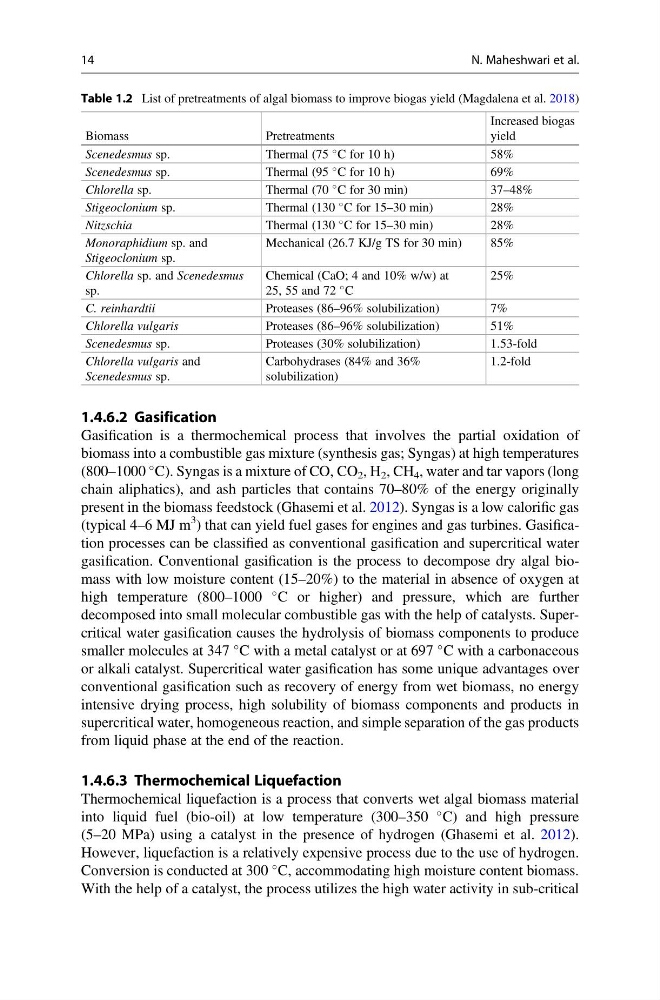
Table 1.2 List of pretreatments of algal biomass to improve biogas yield (Magdalena et al. 2018)
Biomass
Pretreatments
Increased biogas
yield
Scenedesmus sp.
Thermal (75
C for 10 h)
58%
Scenedesmus sp.
Thermal (95
C for 10 h)
69%
Chlorella sp.
Thermal (70
C for 30 min)
37–48%
Stigeoclonium sp.
Thermal (130
C for 15–30 min)
28%
Nitzschia
Thermal (130
C for 15–30 min)
28%
Monoraphidium sp. and
Stigeoclonium sp.
Mechanical (26.7 KJ/g TS for 30 min)
85%
Chlorella sp. and Scenedesmus
sp.
Chemical (CaO; 4 and 10% w/w) at
25, 55 and 72
C
25%
C. reinhardtii
Proteases (86–96% solubilization)
7%
Chlorella vulgaris
Proteases (86–96% solubilization)
51%
Scenedesmus sp.
Proteases (30% solubilization)
1.53-fold
Chlorella vulgaris and
Scenedesmus sp.
Carbohydrases (84% and 36%
solubilization)
1.2-fold
14
N. Maheshwari et al.
Gasification is a thermochemical process that involves the partial oxidation of
biomass into a combustible gas mixture (synthesis gas; Syngas) at high temperatures
(800–1000
C). Syngas is a mixture of CO, CO 2 , H 2 , CH 4 , water and tar vapors (long
chain aliphatics), and ash particles that contains 70–80% of the energy originally
present in the biomass feedstock (Ghasemi et al. 2012). Syngas is a low calorific gas
(typical 4–6 MJ m
3 ) that can yield fuel gases for engines and gas turbines. Gasification processes can be classified as conventional gasification and supercritical water
gasification. Conventional gasification is the process to decompose dry algal biomass with low moisture content (15–20%) to the material in absence of oxygen at
high temperature (800–1000
C or higher) and pressure, which are further
decomposed into small molecular combustible gas with the help of catalysts. Supercritical water gasification causes the hydrolysis of biomass components to produce
smaller molecules at 347
C with a metal catalyst or at 697
C with a carbonaceous
or alkali catalyst. Supercritical water gasification has some unique advantages over
conventional gasification such as recovery of energy from wet biomass, no energy
intensive drying process, high solubility of biomass components and products in
supercritical water, homogeneous reaction, and simple separation of the gas products
from liquid phase at the end of the reaction.
1.4.6.3 Thermochemical Liquefaction
Thermochemical liquefaction is a process that converts wet algal biomass material
into liquid fuel (bio-oil) at low temperature (300–350
C) and high pressure
(5–20 MPa) using a catalyst in the presence of hydrogen (Ghasemi et al. 2012).
However, liquefaction is a relatively expensive process due to the use of hydrogen.
Conversion is conducted at 300
C, accommodating high moisture content biomass.
With the help of a catalyst, the process utilizes the high water activity in sub-critical
Table 1.2 List of pretreatments of algal biomass to improve biogas yield (Magdalena et al. 2018)
Biomass
Pretreatments
Increased biogas
yield
Scenedesmus sp.
Thermal (75
C for 10 h)
58%
Scenedesmus sp.
Thermal (95
C for 10 h)
69%
Chlorella sp.
Thermal (70
C for 30 min)
37–48%
Stigeoclonium sp.
Thermal (130
C for 15–30 min)
28%
Nitzschia
Thermal (130
C for 15–30 min)
28%
Monoraphidium sp. and
Stigeoclonium sp.
Mechanical (26.7 KJ/g TS for 30 min)
85%
Chlorella sp. and Scenedesmus
sp.
Chemical (CaO; 4 and 10% w/w) at
25, 55 and 72
C
25%
C. reinhardtii
Proteases (86–96% solubilization)
7%
Chlorella vulgaris
Proteases (86–96% solubilization)
51%
Scenedesmus sp.
Proteases (30% solubilization)
1.53-fold
Chlorella vulgaris and
Scenedesmus sp.
Carbohydrases (84% and 36%
solubilization)
1.2-fold
14
N. Maheshwari et al.