

the accounted “active pharmaceutical ingredients” to depict these products as
pharmacologically active, degradation resistant, extremely enduring in aqueous
media and have the potential to create adverse impact on aqueous flora and fauna
as well as on human health (Rivera-Utrilla et al. 2013).
The pollution raised by pharmaceuticals in surface water (Agunbiade and
Moodley 2016), groundwater (Paíga and Delerue-Matos 2016), WWTPs (Kostich
et al. 2014) has been reported by many scientists all over the world as emerging
environmental obstruction. During the last few years’ Indian pharmaceutical
industries have recorded a fast increment. Production under pharmaceutical
industries comprises raw material, various kind of medicines like anti-inflammatory,
antibiotics, hormones, cosmetics, and personal care products that produce harmful
chemical containing effluent during their manufacturing (Dixit and Parmar 2013).
Households
Hospitals
Usage
Body
Toilet
STPs
Raw
Landfill
Sink/Toilet
Household
Pharmacy
Disposal
Biologic and
chemical
degradation,
removed as
sludge
Chemical and
biological
degradation
with leachate
treatment
Treated
leachate
Surface
water
Biosolids
spread on land
Leaching to
groundwater
WTPs
Drinking
water
Metabolic
activities
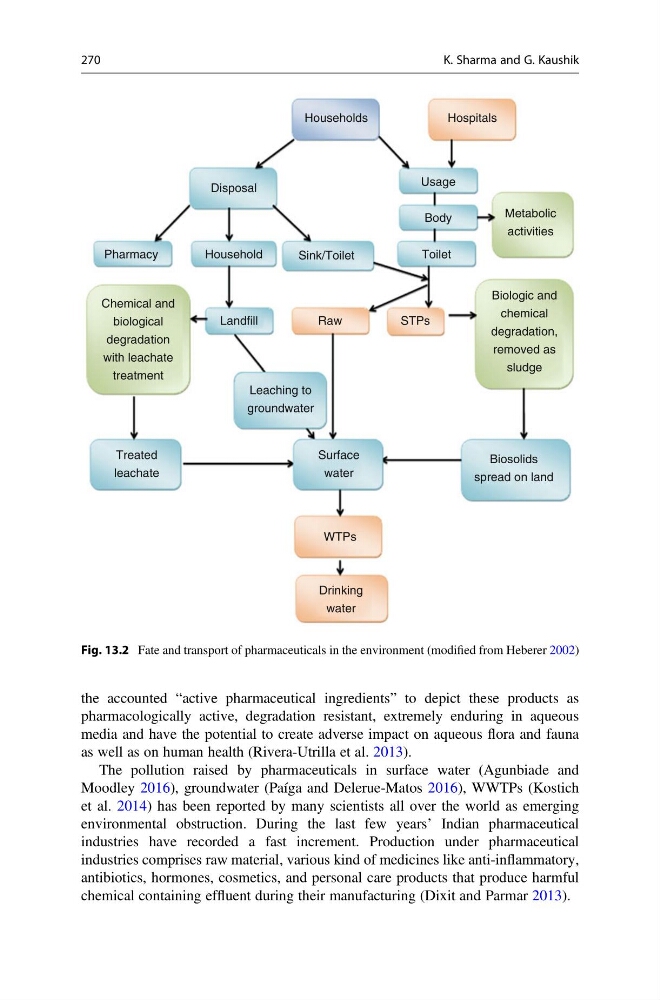
Fig. 13.2 Fate and transport of pharmaceuticals in the environment (modified from Heberer 2002)
270
K. Sharma and G. Kaushik
pharmacologically active, degradation resistant, extremely enduring in aqueous
media and have the potential to create adverse impact on aqueous flora and fauna
as well as on human health (Rivera-Utrilla et al. 2013).
The pollution raised by pharmaceuticals in surface water (Agunbiade and
Moodley 2016), groundwater (Paíga and Delerue-Matos 2016), WWTPs (Kostich
et al. 2014) has been reported by many scientists all over the world as emerging
environmental obstruction. During the last few years’ Indian pharmaceutical
industries have recorded a fast increment. Production under pharmaceutical
industries comprises raw material, various kind of medicines like anti-inflammatory,
antibiotics, hormones, cosmetics, and personal care products that produce harmful
chemical containing effluent during their manufacturing (Dixit and Parmar 2013).
Households
Hospitals
Usage
Body
Toilet
STPs
Raw
Landfill
Sink/Toilet
Household
Pharmacy
Disposal
Biologic and
chemical
degradation,
removed as
sludge
Chemical and
biological
degradation
with leachate
treatment
Treated
leachate
Surface
water
Biosolids
spread on land
Leaching to
groundwater
WTPs
Drinking
water
Metabolic
activities
Fig. 13.2 Fate and transport of pharmaceuticals in the environment (modified from Heberer 2002)
270
K. Sharma and G. Kaushik