

purpose and constantly introduced into ecosystems which exhibit “pseudo- persistence” (Radke et al. 2010). Stumm-Zollinger and Fair in 1965 first observed the
harmful effects of pharmaceutical compounds in municipal wastewater and the
occurrence of pharmaceutical residuals in environment was articulated by Tabak
and Bunch in 1970 (Jones et al. 2005). They are categorized as recalcitrant
bioaccumulative compounds and are thus regarded as hazardous chemicals
(Homem and Santos 2011). A large amount of pharmaceuticals is excreted in the
aquatic and terrestrial environment in various ways. Generally, hospitals, industrial
wastewater, uncontrolled drug disposal are an important source of aquatic pollution
and loss of aquatic organisms due to the presence of a higher concentration of
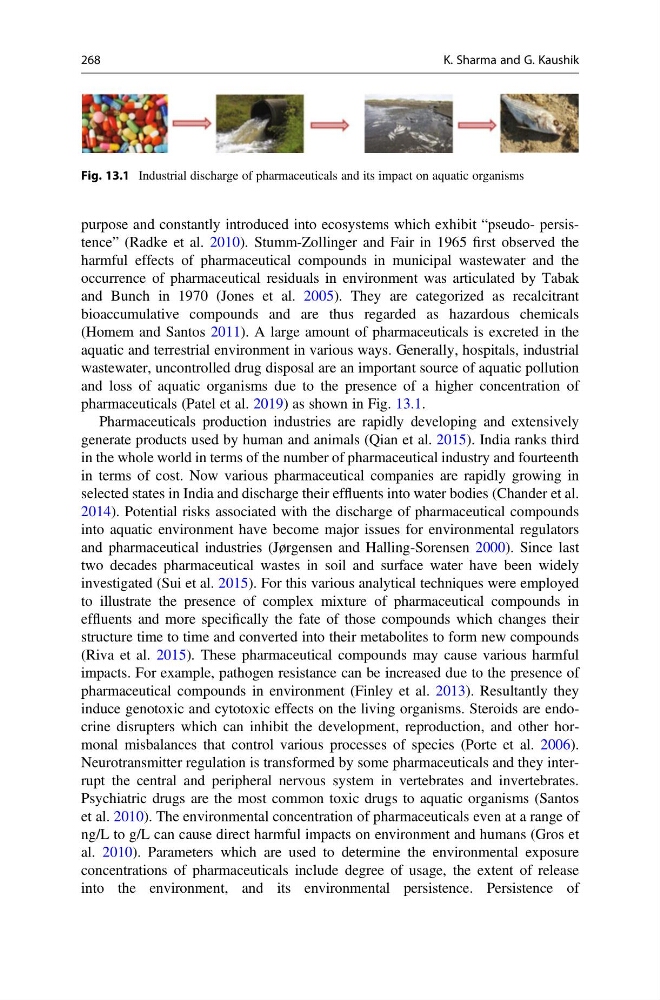
pharmaceuticals (Patel et al. 2019) as shown in Fig. 13.1.
Pharmaceuticals production industries are rapidly developing and extensively
generate products used by human and animals (Qian et al. 2015). India ranks third
in the whole world in terms of the number of pharmaceutical industry and fourteenth
in terms of cost. Now various pharmaceutical companies are rapidly growing in
selected states in India and discharge their effluents into water bodies (Chander et al.
2014). Potential risks associated with the discharge of pharmaceutical compounds
into aquatic environment have become major issues for environmental regulators
and pharmaceutical industries (Jørgensen and Halling-Sorensen 2000). Since last
two decades pharmaceutical wastes in soil and surface water have been widely
investigated (Sui et al. 2015). For this various analytical techniques were employed
to illustrate the presence of complex mixture of pharmaceutical compounds in
effluents and more specifically the fate of those compounds which changes their
structure time to time and converted into their metabolites to form new compounds
(Riva et al. 2015). These pharmaceutical compounds may cause various harmful
impacts. For example, pathogen resistance can be increased due to the presence of
pharmaceutical compounds in environment (Finley et al. 2013). Resultantly they
induce genotoxic and cytotoxic effects on the living organisms. Steroids are endocrine disrupters which can inhibit the development, reproduction, and other hormonal misbalances that control various processes of species (Porte et al. 2006).
Neurotransmitter regulation is transformed by some pharmaceuticals and they interrupt the central and peripheral nervous system in vertebrates and invertebrates.
Psychiatric drugs are the most common toxic drugs to aquatic organisms (Santos
et al. 2010). The environmental concentration of pharmaceuticals even at a range of
ng/L to g/L can cause direct harmful impacts on environment and humans (Gros et
al. 2010). Parameters which are used to determine the environmental exposure
concentrations of pharmaceuticals include degree of usage, the extent of release
into the environment, and its environmental persistence. Persistence of
Fig. 13.1 Industrial discharge of pharmaceuticals and its impact on aquatic organisms
268
K. Sharma and G. Kaushik
harmful effects of pharmaceutical compounds in municipal wastewater and the
occurrence of pharmaceutical residuals in environment was articulated by Tabak
and Bunch in 1970 (Jones et al. 2005). They are categorized as recalcitrant
bioaccumulative compounds and are thus regarded as hazardous chemicals
(Homem and Santos 2011). A large amount of pharmaceuticals is excreted in the
aquatic and terrestrial environment in various ways. Generally, hospitals, industrial
wastewater, uncontrolled drug disposal are an important source of aquatic pollution
and loss of aquatic organisms due to the presence of a higher concentration of
pharmaceuticals (Patel et al. 2019) as shown in Fig. 13.1.
Pharmaceuticals production industries are rapidly developing and extensively
generate products used by human and animals (Qian et al. 2015). India ranks third
in the whole world in terms of the number of pharmaceutical industry and fourteenth
in terms of cost. Now various pharmaceutical companies are rapidly growing in
selected states in India and discharge their effluents into water bodies (Chander et al.
2014). Potential risks associated with the discharge of pharmaceutical compounds
into aquatic environment have become major issues for environmental regulators
and pharmaceutical industries (Jørgensen and Halling-Sorensen 2000). Since last
two decades pharmaceutical wastes in soil and surface water have been widely
investigated (Sui et al. 2015). For this various analytical techniques were employed
to illustrate the presence of complex mixture of pharmaceutical compounds in
effluents and more specifically the fate of those compounds which changes their
structure time to time and converted into their metabolites to form new compounds
(Riva et al. 2015). These pharmaceutical compounds may cause various harmful
impacts. For example, pathogen resistance can be increased due to the presence of
pharmaceutical compounds in environment (Finley et al. 2013). Resultantly they
induce genotoxic and cytotoxic effects on the living organisms. Steroids are endocrine disrupters which can inhibit the development, reproduction, and other hormonal misbalances that control various processes of species (Porte et al. 2006).
Neurotransmitter regulation is transformed by some pharmaceuticals and they interrupt the central and peripheral nervous system in vertebrates and invertebrates.
Psychiatric drugs are the most common toxic drugs to aquatic organisms (Santos
et al. 2010). The environmental concentration of pharmaceuticals even at a range of
ng/L to g/L can cause direct harmful impacts on environment and humans (Gros et
al. 2010). Parameters which are used to determine the environmental exposure
concentrations of pharmaceuticals include degree of usage, the extent of release
into the environment, and its environmental persistence. Persistence of
Fig. 13.1 Industrial discharge of pharmaceuticals and its impact on aquatic organisms
268
K. Sharma and G. Kaushik