

O 2 (t ¼ VCKO/VOKCO 2 where VC and VO are the maximum velocities of
carboxylation and oxygenation, respectively, and KO and KCO 2 are the Michaelis–
Menten constants for O 2 and CO 2 (Scott et al. 2007). High KCO 2 values and low
specificity factors generally indicate that Rubisco is better adapted for a higher CO 2
and lower O 2 environment while low KCO 2 values and high specificity factors are
found in those organisms which are adapted for CO 2 limited environments (Badger
and Bek 2008). Organisms having carbon concentrating mechanisms (CCMs) can
have higher KCO 2 values and lower specificity factors possibly because the CCM
compensates for the catalytic limitation of the enzyme by increasing intracellular
DIC levels (Badger and Bek 2008).
The lowest specificity factors are of Form II Rubisco and its value has ranges
from 9 to 15 in organisms such as Rhodobacter sphaeroides and Rhodospirillum
rubrum. These organisms are adapted for low O 2 environments (Gibson and Tabita
1977) Specificity factors of Form I Rubisco can range from 30 to 38 and it is present
in proteobacteria, cyanobacteria, and green algae (Badger and Bek 2008). Specificity
factors can also vary within the same type of Rubisco. For example, in
proteobacteria, the specificity range of non-carboxysomal form IA is 30–35, while
in cyanobacteria and some proteobacteria, carboxysome-associated form IA has a
more narrow range from 33 to 37 (Badger and Bek 2008). The enzymes specificity
factor are higher in organisms that are well adapted to high O 2 environments. In
plants specificity factor of form IB varies from 78 to 90 and in non-green algae,
specificity factors of form ID varies from 129 to 238; (Badger and Bek 2008).
There is also a great variation between different forms of Rubisco with respect to
the affinities of the enzyme for CO 2. This is probably due to the great difference of
CO 2 concentrations in diverse habitats. Form II Rubisco, which is generally fit for
high concentrated CO 2 environments, has its KCO 2 values in the range of
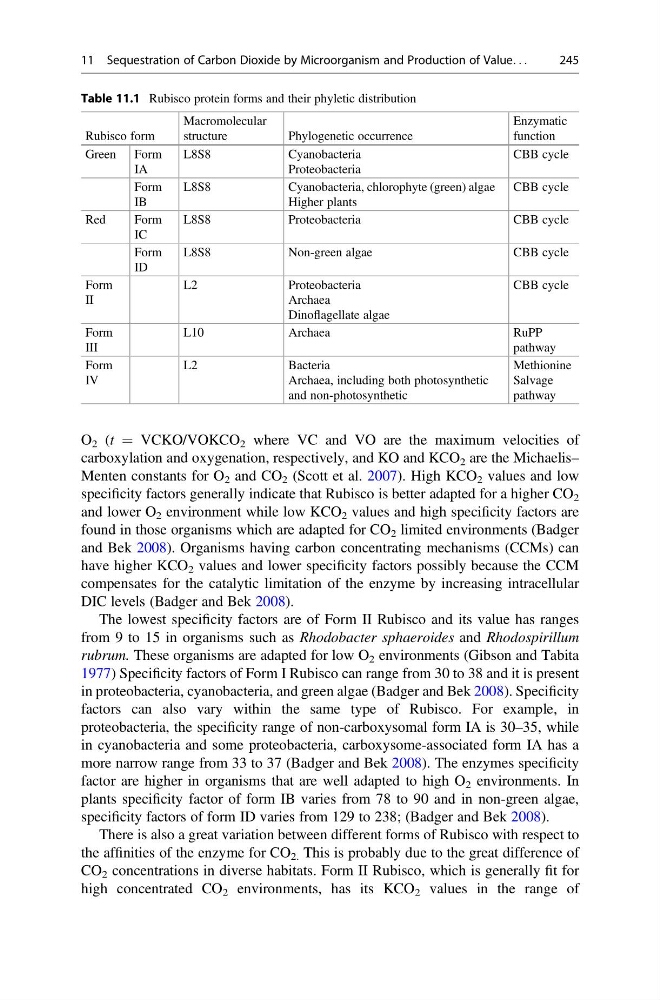
Table 11.1 Rubisco protein forms and their phyletic distribution
Rubisco form
Macromolecular
structure
Phylogenetic occurrence
Enzymatic
function
Green Form
IA
L8S8
Cyanobacteria
Proteobacteria
CBB cycle
Form
IB
L8S8
Cyanobacteria, chlorophyte (green) algae
Higher plants
CBB cycle
Red
Form
IC
L8S8
Proteobacteria
CBB cycle
Form
ID
L8S8
Non-green algae
CBB cycle
Form
II
L2
Proteobacteria
Archaea
Dinoflagellate algae
CBB cycle
Form
III
L10
Archaea
RuPP
pathway
Form
IV
L2
Bacteria
Archaea, including both photosynthetic
and non-photosynthetic
Methionine
Salvage
pathway
11 Sequestration of Carbon Dioxide by Microorganism and Production of Value. . .
245
carboxylation and oxygenation, respectively, and KO and KCO 2 are the Michaelis–
Menten constants for O 2 and CO 2 (Scott et al. 2007). High KCO 2 values and low
specificity factors generally indicate that Rubisco is better adapted for a higher CO 2
and lower O 2 environment while low KCO 2 values and high specificity factors are
found in those organisms which are adapted for CO 2 limited environments (Badger
and Bek 2008). Organisms having carbon concentrating mechanisms (CCMs) can
have higher KCO 2 values and lower specificity factors possibly because the CCM
compensates for the catalytic limitation of the enzyme by increasing intracellular
DIC levels (Badger and Bek 2008).
The lowest specificity factors are of Form II Rubisco and its value has ranges
from 9 to 15 in organisms such as Rhodobacter sphaeroides and Rhodospirillum
rubrum. These organisms are adapted for low O 2 environments (Gibson and Tabita
1977) Specificity factors of Form I Rubisco can range from 30 to 38 and it is present
in proteobacteria, cyanobacteria, and green algae (Badger and Bek 2008). Specificity
factors can also vary within the same type of Rubisco. For example, in
proteobacteria, the specificity range of non-carboxysomal form IA is 30–35, while
in cyanobacteria and some proteobacteria, carboxysome-associated form IA has a
more narrow range from 33 to 37 (Badger and Bek 2008). The enzymes specificity
factor are higher in organisms that are well adapted to high O 2 environments. In
plants specificity factor of form IB varies from 78 to 90 and in non-green algae,
specificity factors of form ID varies from 129 to 238; (Badger and Bek 2008).
There is also a great variation between different forms of Rubisco with respect to
the affinities of the enzyme for CO 2. This is probably due to the great difference of
CO 2 concentrations in diverse habitats. Form II Rubisco, which is generally fit for
high concentrated CO 2 environments, has its KCO 2 values in the range of
Table 11.1 Rubisco protein forms and their phyletic distribution
Rubisco form
Macromolecular
structure
Phylogenetic occurrence
Enzymatic
function
Green Form
IA
L8S8
Cyanobacteria
Proteobacteria
CBB cycle
Form
IB
L8S8
Cyanobacteria, chlorophyte (green) algae
Higher plants
CBB cycle
Red
Form
IC
L8S8
Proteobacteria
CBB cycle
Form
ID
L8S8
Non-green algae
CBB cycle
Form
II
L2
Proteobacteria
Archaea
Dinoflagellate algae
CBB cycle
Form
III
L10
Archaea
RuPP
pathway
Form
IV
L2
Bacteria
Archaea, including both photosynthetic
and non-photosynthetic
Methionine
Salvage
pathway
11 Sequestration of Carbon Dioxide by Microorganism and Production of Value. . .
245