

11.4.6 Carbon Concentration Mechanism and the Carboxysome
Carboxysomes are proteinceous microcompartments looks like icosahedral and its
diameter is 800–1500 A (Yeates et al. 2008). The carboxysomes shell is made up of
hexameric protein with 20A thickness and diameter of pore is 4–7 A (Yeates et al.
2008). Rubisco and carbonic anhydrase are tightly packed inside carboxysomes.
(Badger and Bek 2008). In this time, there are two known types of carboxysomes.
α-carboxysomes and β-carboxysomes. α-carboxysomes are present in oceanic
cyanobacteria and in proteobacteria. They include form IA Rubisco and
β-carbonic anhydrase (Peña et al. 2010; Yeates et al. 2008). β-carboxysomes
found in freshwater cyanobacteria and it have form IB Rubisco, β-carbonic
anhydrase, γ-carbonic anhydrase, or a combination of both (Peña et al. 2010).
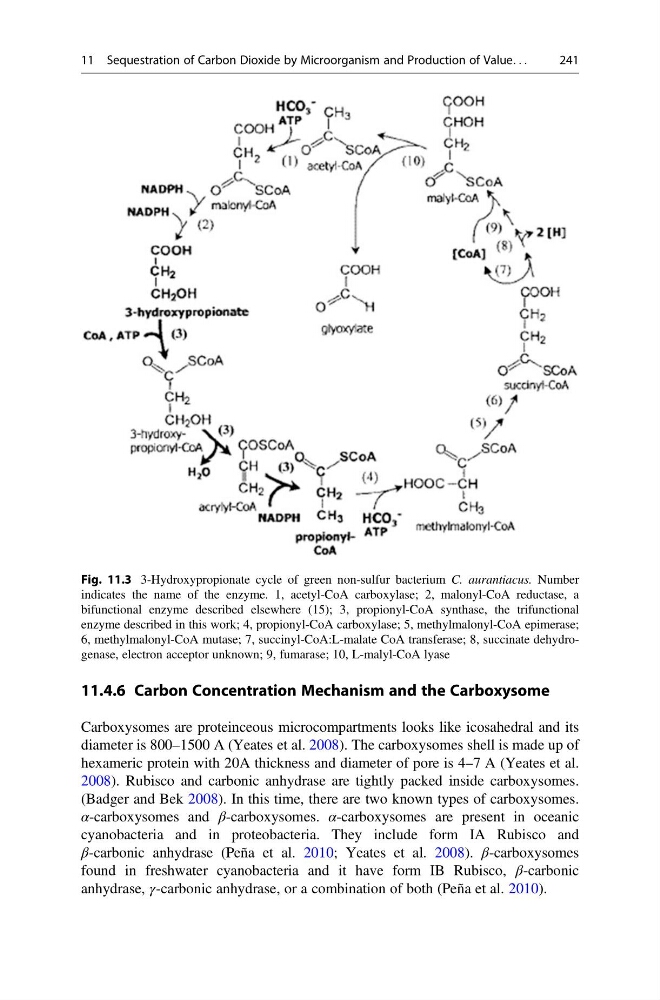
Fig. 11.3 3-Hydroxypropionate cycle of green non-sulfur bacterium C. aurantiacus. Number
indicates the name of the enzyme. 1, acetyl-CoA carboxylase; 2, malonyl-CoA reductase, a
bifunctional enzyme described elsewhere (15); 3, propionyl-CoA synthase, the trifunctional
enzyme described in this work; 4, propionyl-CoA carboxylase; 5, methylmalonyl-CoA epimerase;
6, methylmalonyl-CoA mutase; 7, succinyl-CoA:L-malate CoA transferase; 8, succinate dehydrogenase, electron acceptor unknown; 9, fumarase; 10, L-malyl-CoA lyase
11 Sequestration of Carbon Dioxide by Microorganism and Production of Value. . .
241
Carboxysomes are proteinceous microcompartments looks like icosahedral and its
diameter is 800–1500 A (Yeates et al. 2008). The carboxysomes shell is made up of
hexameric protein with 20A thickness and diameter of pore is 4–7 A (Yeates et al.
2008). Rubisco and carbonic anhydrase are tightly packed inside carboxysomes.
(Badger and Bek 2008). In this time, there are two known types of carboxysomes.
α-carboxysomes and β-carboxysomes. α-carboxysomes are present in oceanic
cyanobacteria and in proteobacteria. They include form IA Rubisco and
β-carbonic anhydrase (Peña et al. 2010; Yeates et al. 2008). β-carboxysomes
found in freshwater cyanobacteria and it have form IB Rubisco, β-carbonic
anhydrase, γ-carbonic anhydrase, or a combination of both (Peña et al. 2010).
Fig. 11.3 3-Hydroxypropionate cycle of green non-sulfur bacterium C. aurantiacus. Number
indicates the name of the enzyme. 1, acetyl-CoA carboxylase; 2, malonyl-CoA reductase, a
bifunctional enzyme described elsewhere (15); 3, propionyl-CoA synthase, the trifunctional
enzyme described in this work; 4, propionyl-CoA carboxylase; 5, methylmalonyl-CoA epimerase;
6, methylmalonyl-CoA mutase; 7, succinyl-CoA:L-malate CoA transferase; 8, succinate dehydrogenase, electron acceptor unknown; 9, fumarase; 10, L-malyl-CoA lyase
11 Sequestration of Carbon Dioxide by Microorganism and Production of Value. . .
241