

well as in the Oriental population while only two polymorphisms (RsaI and DraI)
are reported in Indian populations (Soya et al. 2005). Caucasians and Indians have
similar prevalence of the minor allele c2 while the Orientals carry a higher frequency. For DraI polymorphism (CYP2E1*6), the minor allele frequency is higher
in Indian or Oriental (20–30%) populations compared to the Caucasians (7–12%).
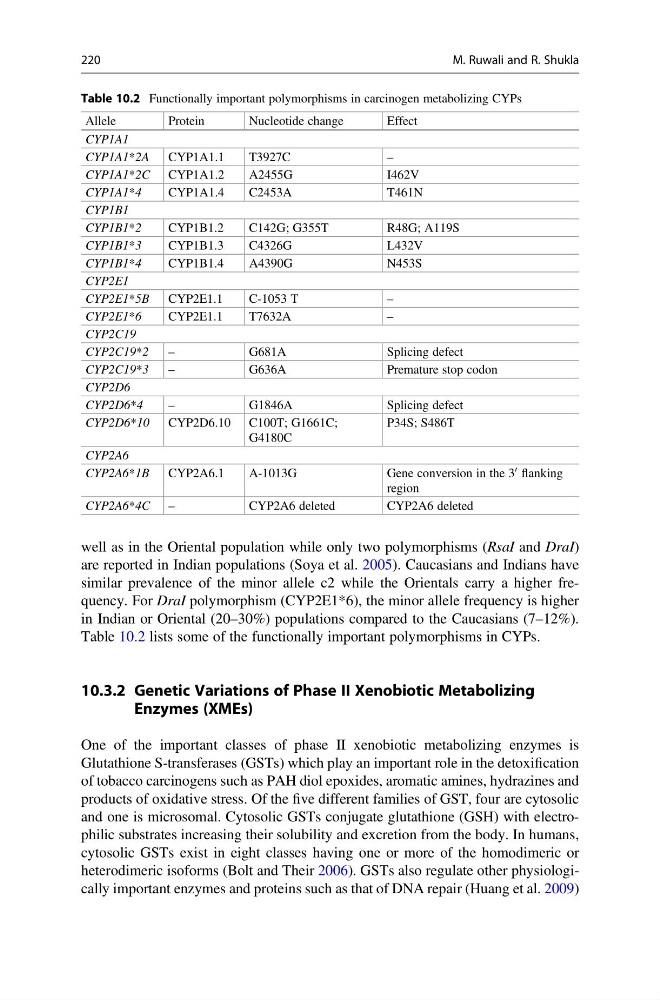
Table 10.2 lists some of the functionally important polymorphisms in CYPs.
10.3.2 Genetic Variations of Phase II Xenobiotic Metabolizing
Enzymes (XMEs)
One of the important classes of phase II xenobiotic metabolizing enzymes is
Glutathione S-transferases (GSTs) which play an important role in the detoxification
of tobacco carcinogens such as PAH diol epoxides, aromatic amines, hydrazines and
products of oxidative stress. Of the five different families of GST, four are cytosolic
and one is microsomal. Cytosolic GSTs conjugate glutathione (GSH) with electrophilic substrates increasing their solubility and excretion from the body. In humans,
cytosolic GSTs exist in eight classes having one or more of the homodimeric or
heterodimeric isoforms (Bolt and Their 2006). GSTs also regulate other physiologically important enzymes and proteins such as that of DNA repair (Huang et al. 2009)
Table 10.2 Functionally important polymorphisms in carcinogen metabolizing CYPs
Allele
Protein
Nucleotide change
Effect
CYP1A1
CYP1A1*2A CYP1A1.1
T3927C
–
CYP1A1*2C CYP1A1.2
A2455G
I462V
CYP1A1*4
CYP1A1.4
C2453A
T461N
CYP1B1
CYP1B1*2
CYP1B1.2
C142G; G355T
R48G; A119S
CYP1B1*3
CYP1B1.3
C4326G
L432V
CYP1B1*4
CYP1B1.4
A4390G
N453S
CYP2E1
CYP2E1*5B CYP2E1.1
C-1053 T
–
CYP2E1*6
CYP2E1.1
T7632A
–
CYP2C19
CYP2C19*2
–
G681A
Splicing defect
CYP2C19*3
–
G636A
Premature stop codon
CYP2D6
CYP2D6*4
–
G1846A
Splicing defect
CYP2D6*10 CYP2D6.10 C100T; G1661C;
G4180C
P34S; S486T
CYP2A6
CYP2A6*1B CYP2A6.1
A-1013G
Gene conversion in the 3
0 flanking
region
CYP2A6*4C –
CYP2A6 deleted
CYP2A6 deleted
220
M. Ruwali and R. Shukla
are reported in Indian populations (Soya et al. 2005). Caucasians and Indians have
similar prevalence of the minor allele c2 while the Orientals carry a higher frequency. For DraI polymorphism (CYP2E1*6), the minor allele frequency is higher
in Indian or Oriental (20–30%) populations compared to the Caucasians (7–12%).
Table 10.2 lists some of the functionally important polymorphisms in CYPs.
10.3.2 Genetic Variations of Phase II Xenobiotic Metabolizing
Enzymes (XMEs)
One of the important classes of phase II xenobiotic metabolizing enzymes is
Glutathione S-transferases (GSTs) which play an important role in the detoxification
of tobacco carcinogens such as PAH diol epoxides, aromatic amines, hydrazines and
products of oxidative stress. Of the five different families of GST, four are cytosolic
and one is microsomal. Cytosolic GSTs conjugate glutathione (GSH) with electrophilic substrates increasing their solubility and excretion from the body. In humans,
cytosolic GSTs exist in eight classes having one or more of the homodimeric or
heterodimeric isoforms (Bolt and Their 2006). GSTs also regulate other physiologically important enzymes and proteins such as that of DNA repair (Huang et al. 2009)
Table 10.2 Functionally important polymorphisms in carcinogen metabolizing CYPs
Allele
Protein
Nucleotide change
Effect
CYP1A1
CYP1A1*2A CYP1A1.1
T3927C
–
CYP1A1*2C CYP1A1.2
A2455G
I462V
CYP1A1*4
CYP1A1.4
C2453A
T461N
CYP1B1
CYP1B1*2
CYP1B1.2
C142G; G355T
R48G; A119S
CYP1B1*3
CYP1B1.3
C4326G
L432V
CYP1B1*4
CYP1B1.4
A4390G
N453S
CYP2E1
CYP2E1*5B CYP2E1.1
C-1053 T
–
CYP2E1*6
CYP2E1.1
T7632A
–
CYP2C19
CYP2C19*2
–
G681A
Splicing defect
CYP2C19*3
–
G636A
Premature stop codon
CYP2D6
CYP2D6*4
–
G1846A
Splicing defect
CYP2D6*10 CYP2D6.10 C100T; G1661C;
G4180C
P34S; S486T
CYP2A6
CYP2A6*1B CYP2A6.1
A-1013G
Gene conversion in the 3
0 flanking
region
CYP2A6*4C –
CYP2A6 deleted
CYP2A6 deleted
220
M. Ruwali and R. Shukla