

Microalgae contain high amount of these amino acids. Thus they have proven
application as dietary supplements to fulfill the requirement of proteins for all age
groups (Dewapriya and Kim 2014). Minerals such as phosphorus, sodium, zinc,
potassium, magnesium, manganese, iron, and calcium are very important for growth
and nutrition in case of human and animals. Microalgae contain high amount of these
minerals (Tokuşoglu 2003; Fabregas and Herrero 1990) which suggests its potential
role as a nutraceutical agent. Several compounds isolated form microalgae have been
reported for their potential use in biomedical domain such as naviculana polysaccharide isolated from Navicula directa reported as antiviral agent (Lee et al. 2006),
compounds from Phaeodactylum tricornutum to induce leukemia cell death
(Prestegard et al. 2009), marennine from Haslea ostrearia as antimicrobial agent
(Gastineau et al. 2014), fucoxanthin and some microalgae as anti-inflammatory,
anticancer, antidiabetic, and antimalarial activities (Peng et al. 2011; Lauritano et al.
2016), Halidrys siliquosa as anti-biofilm agent (Busetti et al. 2015). Several
microalgal genera such as Arthrospira, Chlorella, Dunaliella, and Haematococcus
are used as animal fodder which increases the production and quality of meat from
livestock species such as pigs, ruminants, rabbits, and poultry (Madeira et al. 2017).
Apart from all these biological activities, microalgae like Chlorella, Spirulina,
Nannochloropsis, Botryococcus braunii, Nannochloropsis gaditana have been
used to synthesize the bio plastics (Rahman and Miller 2017).
7.2.1 Microalgae from the Biotechnology Perspective
Microalgae are commercially used for human nutrition (Chlorella, Spirulina,
Dunaliella) (Sathasivam et al. 2019), source of vitamins as dietary supplements
(vitamin B 12 , K 1 ) (Grossman 2016; Tarento et al. 2018), animal and aquatic feed
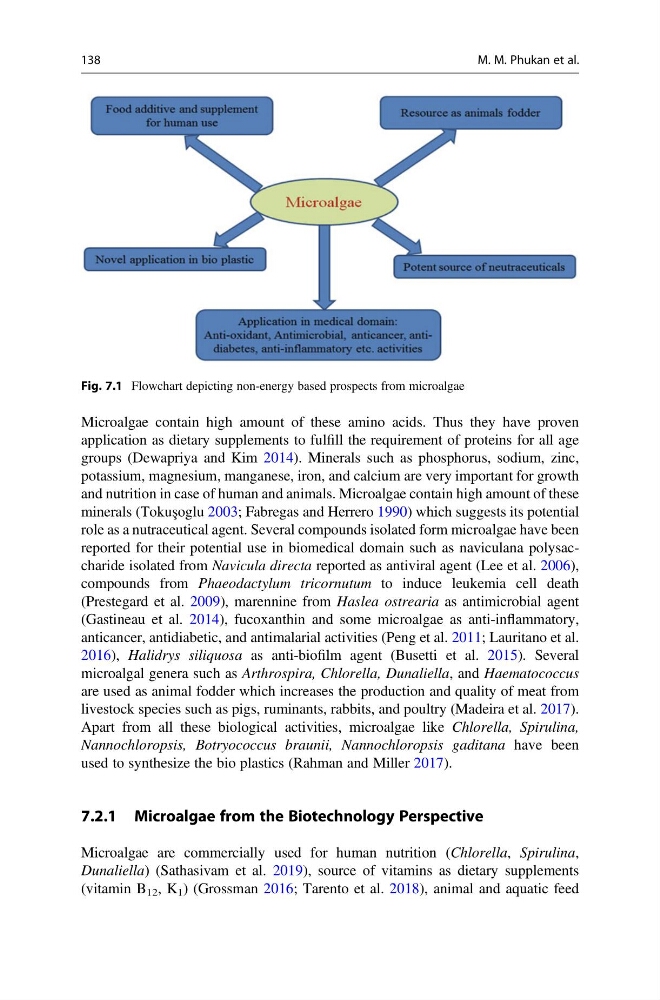
Fig. 7.1 Flowchart depicting non-energy based prospects from microalgae
138
M. M. Phukan et al.
application as dietary supplements to fulfill the requirement of proteins for all age
groups (Dewapriya and Kim 2014). Minerals such as phosphorus, sodium, zinc,
potassium, magnesium, manganese, iron, and calcium are very important for growth
and nutrition in case of human and animals. Microalgae contain high amount of these
minerals (Tokuşoglu 2003; Fabregas and Herrero 1990) which suggests its potential
role as a nutraceutical agent. Several compounds isolated form microalgae have been
reported for their potential use in biomedical domain such as naviculana polysaccharide isolated from Navicula directa reported as antiviral agent (Lee et al. 2006),
compounds from Phaeodactylum tricornutum to induce leukemia cell death
(Prestegard et al. 2009), marennine from Haslea ostrearia as antimicrobial agent
(Gastineau et al. 2014), fucoxanthin and some microalgae as anti-inflammatory,
anticancer, antidiabetic, and antimalarial activities (Peng et al. 2011; Lauritano et al.
2016), Halidrys siliquosa as anti-biofilm agent (Busetti et al. 2015). Several
microalgal genera such as Arthrospira, Chlorella, Dunaliella, and Haematococcus
are used as animal fodder which increases the production and quality of meat from
livestock species such as pigs, ruminants, rabbits, and poultry (Madeira et al. 2017).
Apart from all these biological activities, microalgae like Chlorella, Spirulina,
Nannochloropsis, Botryococcus braunii, Nannochloropsis gaditana have been
used to synthesize the bio plastics (Rahman and Miller 2017).
7.2.1 Microalgae from the Biotechnology Perspective
Microalgae are commercially used for human nutrition (Chlorella, Spirulina,
Dunaliella) (Sathasivam et al. 2019), source of vitamins as dietary supplements
(vitamin B 12 , K 1 ) (Grossman 2016; Tarento et al. 2018), animal and aquatic feed
Fig. 7.1 Flowchart depicting non-energy based prospects from microalgae
138
M. M. Phukan et al.