

72
conventional oil resources like Al-Ghawar or the East Texas oilfields all the more
amazing.
Unconventional O&G resources, on the other hand, are produced directly from
the source rock itself, or sometimes from an adjacent rock unit. These are called
“continuous resources” by the USGS (Charpentier and Cook 2011) because they do
not require reservoir rocks, traps and seals, or migration pathways. The geological
definition for an unconventional resource is that the hydrocarbons are produced out
of the rock where they formed. However, because these rocks are usually finegrained and impermeable, petroleum engineering techniques of reservoir stimulation are required to improve production, often involving hydraulic fracturing. Thus
the engineering definition for an unconventional resource is that some form of stimulation must be applied to achieve economic production.
Unconventional hydrocarbon resources include light tight oil (LTO) in shales,
limestones, and other low-permeability rocks, tight gas sands, shale gas, natural gas
liquids (NGL) also known as “condensate”, heavy oil sands or “tar” sands, coalbed
methane, methane hydrates, and oil shale (Nash 2018). Oil shale is different from
shale oil or LTO resources; instead of liquid hydrocarbons, it contains solid kerogen
that must be heated to a higher level of thermal maturity to create petroleum. Oil
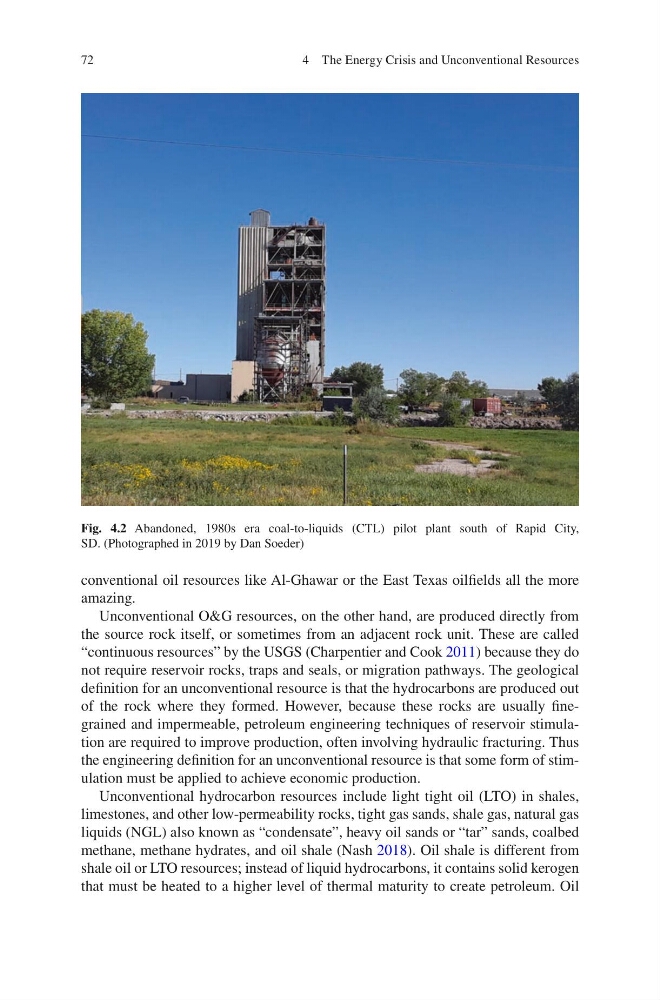
Fig. 4.2 Abandoned, 1980s era coal-to-liquids (CTL) pilot plant south of Rapid City,
SD. (Photographed in 2019 by Dan Soeder)
4 The Energy Crisis and Unconventional Resources
conventional oil resources like Al-Ghawar or the East Texas oilfields all the more
amazing.
Unconventional O&G resources, on the other hand, are produced directly from
the source rock itself, or sometimes from an adjacent rock unit. These are called
“continuous resources” by the USGS (Charpentier and Cook 2011) because they do
not require reservoir rocks, traps and seals, or migration pathways. The geological
definition for an unconventional resource is that the hydrocarbons are produced out
of the rock where they formed. However, because these rocks are usually finegrained and impermeable, petroleum engineering techniques of reservoir stimulation are required to improve production, often involving hydraulic fracturing. Thus
the engineering definition for an unconventional resource is that some form of stimulation must be applied to achieve economic production.
Unconventional hydrocarbon resources include light tight oil (LTO) in shales,
limestones, and other low-permeability rocks, tight gas sands, shale gas, natural gas
liquids (NGL) also known as “condensate”, heavy oil sands or “tar” sands, coalbed
methane, methane hydrates, and oil shale (Nash 2018). Oil shale is different from
shale oil or LTO resources; instead of liquid hydrocarbons, it contains solid kerogen
that must be heated to a higher level of thermal maturity to create petroleum. Oil
Fig. 4.2 Abandoned, 1980s era coal-to-liquids (CTL) pilot plant south of Rapid City,
SD. (Photographed in 2019 by Dan Soeder)
4 The Energy Crisis and Unconventional Resources