

51
Spindletop was not the largest oil field in the United States, or even in Texas. The
U.S. honor goes to Prudhoe Bay in Alaska, discovered in 1968 with the completion
of the Prudhoe Bay State #1 well, drilled by Humble Oil and Atlantic Richfield
(ARCO) under the watchful eye of the Alaska Oil and Gas Conservation Commission.
The biggest oilfield in Texas is the East Texas oil field, discovered in 1930 by a
colorful character named Columbus Marion Joiner, known in the oilfields as “Dad.”
Joiner was born in Alabama and worked as an attorney and state legislator in
Tennessee in the late 1800s (White 1968). He got involved in oil drilling after moving to Oklahoma in 1897, where he made and lost two oil fortunes by 1926. Joiner
decided to try his luck in Texas, and ignoring prevailing geologic opinions he drilled
three wildcat wells in Rusk County using a flimsy rig and battered tools. The first
two wells came up dry, but the third well, Daisy Bradford No. 3 was productive and
became the discovery well for the East Texas oil field. Since its discovery on October
5, 1930, some 30,340 wells have been drilled within the East Texas oilfield yielding
nearly 5.2 billion barrels of oil out of the Cretaceous Eagle Ford-Woodbine group.
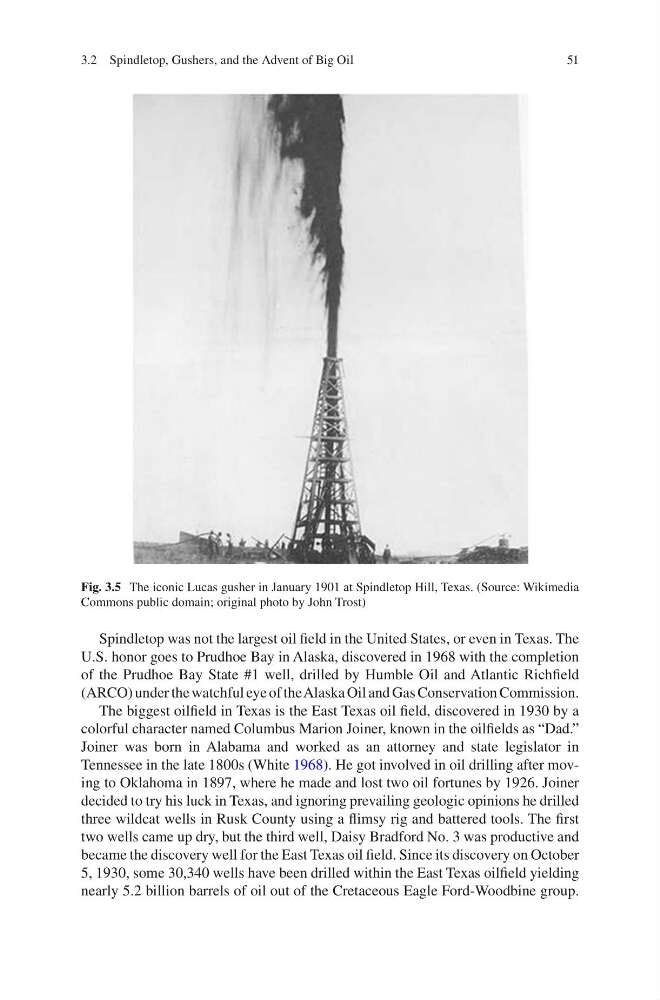
Fig. 3.5 The iconic Lucas gusher in January 1901 at Spindletop Hill, Texas. (Source: Wikimedia
Commons public domain; original photo by John Trost)
3.2 Spindletop, Gushers, and the Advent of Big Oil
Spindletop was not the largest oil field in the United States, or even in Texas. The
U.S. honor goes to Prudhoe Bay in Alaska, discovered in 1968 with the completion
of the Prudhoe Bay State #1 well, drilled by Humble Oil and Atlantic Richfield
(ARCO) under the watchful eye of the Alaska Oil and Gas Conservation Commission.
The biggest oilfield in Texas is the East Texas oil field, discovered in 1930 by a
colorful character named Columbus Marion Joiner, known in the oilfields as “Dad.”
Joiner was born in Alabama and worked as an attorney and state legislator in
Tennessee in the late 1800s (White 1968). He got involved in oil drilling after moving to Oklahoma in 1897, where he made and lost two oil fortunes by 1926. Joiner
decided to try his luck in Texas, and ignoring prevailing geologic opinions he drilled
three wildcat wells in Rusk County using a flimsy rig and battered tools. The first
two wells came up dry, but the third well, Daisy Bradford No. 3 was productive and
became the discovery well for the East Texas oil field. Since its discovery on October
5, 1930, some 30,340 wells have been drilled within the East Texas oilfield yielding
nearly 5.2 billion barrels of oil out of the Cretaceous Eagle Ford-Woodbine group.
Fig. 3.5 The iconic Lucas gusher in January 1901 at Spindletop Hill, Texas. (Source: Wikimedia
Commons public domain; original photo by John Trost)
3.2 Spindletop, Gushers, and the Advent of Big Oil