

41
combustion tube inside a glass chimney where it would burn brightly at a high temperature without producing smoke. This design can still be found in many modern
kerosene lanterns, not all sold as nostalgia items.
By 1854, Kier had established first a one-barrel, then a five-barrel crude oil distillery in the city of Pittsburgh on Seventh Avenue near Grant Street to make his
Carbon Oil. A historical marker at the site in present-day downtown reads: “Kier
Refinery – Using a five-barrel still, Samuel M. Kier erected on this site about 1854
the first commercial refinery to produce illuminating oil from petroleum” (Ginsberg
2009). Kier had a thriving business and a good income selling kerosene and lanterns, but he never bothered to patent any of his inventions and they were developed
on a massive scale by others. Instead of becoming a famous multi-millionaire industrialist like J.P. Morgan, Carnegie, or Rockefeller, Samuel M. Kier has been largely
forgotten as a pioneer of the petroleum business.
Kerosene from petroleum was substantially cheaper than whale oil, and the popularity of kerosene-fired lamps grew quickly. Demand for whale oil fell to low levels and eventually to zero as people switched fuels to kerosene. Commercial whaling
ceased to be an income-producing profession, and it was the whalers that became
extinct, rather than the whales. The historical fact that the fledgling petroleum
industry was responsible for saving sperm whales from extinction does not sit well
with some people, but it is what it is. Subsequent replacement of the kerosene
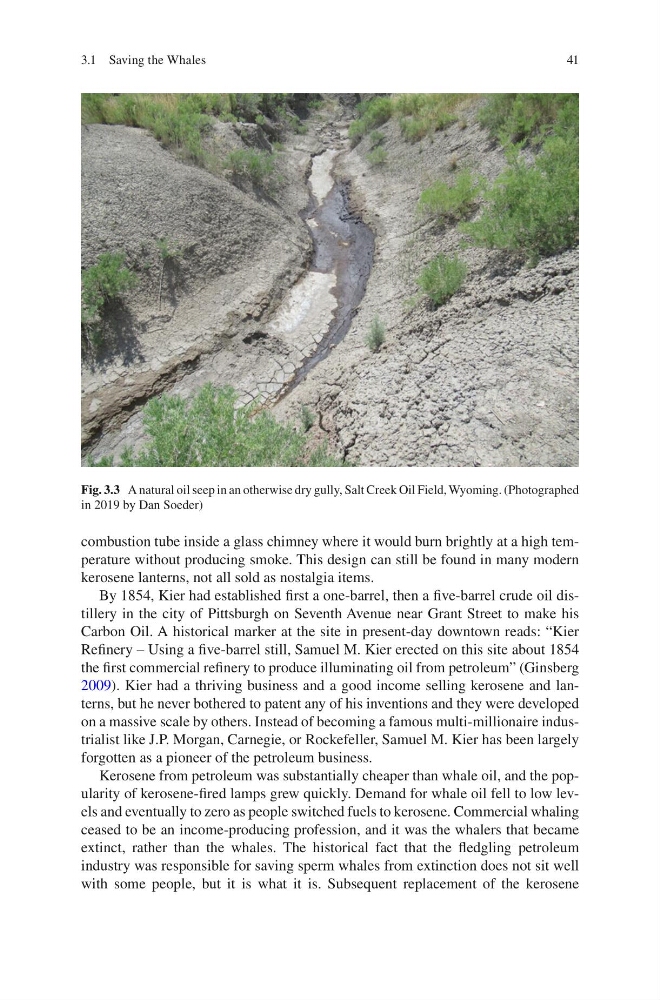
Fig. 3.3 A natural oil seep in an otherwise dry gully, Salt Creek Oil Field, Wyoming. (Photographed
in 2019 by Dan Soeder)
3.1 Saving the Whales
combustion tube inside a glass chimney where it would burn brightly at a high temperature without producing smoke. This design can still be found in many modern
kerosene lanterns, not all sold as nostalgia items.
By 1854, Kier had established first a one-barrel, then a five-barrel crude oil distillery in the city of Pittsburgh on Seventh Avenue near Grant Street to make his
Carbon Oil. A historical marker at the site in present-day downtown reads: “Kier
Refinery – Using a five-barrel still, Samuel M. Kier erected on this site about 1854
the first commercial refinery to produce illuminating oil from petroleum” (Ginsberg
2009). Kier had a thriving business and a good income selling kerosene and lanterns, but he never bothered to patent any of his inventions and they were developed
on a massive scale by others. Instead of becoming a famous multi-millionaire industrialist like J.P. Morgan, Carnegie, or Rockefeller, Samuel M. Kier has been largely
forgotten as a pioneer of the petroleum business.
Kerosene from petroleum was substantially cheaper than whale oil, and the popularity of kerosene-fired lamps grew quickly. Demand for whale oil fell to low levels and eventually to zero as people switched fuels to kerosene. Commercial whaling
ceased to be an income-producing profession, and it was the whalers that became
extinct, rather than the whales. The historical fact that the fledgling petroleum
industry was responsible for saving sperm whales from extinction does not sit well
with some people, but it is what it is. Subsequent replacement of the kerosene
Fig. 3.3 A natural oil seep in an otherwise dry gully, Salt Creek Oil Field, Wyoming. (Photographed
in 2019 by Dan Soeder)
3.1 Saving the Whales