

10
Chemical contamination of drinking water aquifers from frack fluid additives
moving up from below is even less of a risk than upward gas migration. Gas at least
has a property of buoyancy, and can move upward if there is an open pathway. Frack
fluid, on the other hand, is mostly water and is held down by gravity. Much of the
water remains downhole, and is thought to either reside in the bottoms of fractures,
or imbibe into the rock matrix (Soeder 2017). One case where frack chemicals were
thought to have contaminated an aquifer in Pavillion, Wyoming, was found instead
to be the result of grease, paint and other materials introduced into the aquifer during the careless installation of monitoring wells (Wyoming Department of
Environmental Quality 2019).
Aquifers are at much greater risk from spills or leaks of chemicals onto the
ground surface that then infiltrate into the soil and reach the water table from above,
driven by gravity. These include the chemical additives used in fracking, along with
the returned solids and fluids.
Other actual environmental risks related to shale gas development include air
pollution as the frack fluid returns to the surface and off-gasses methane and other
volatile organic compounds (VOCs) into the air, and potential biological risks as
microbes in recycled frack water develop resistance to the biocides used to control
downhole microbial activity, including sulfate-reducing bacteria (Soeder and
Kent 2018).
Panics created by celebrity spokespeople or movie makers by publicizing perceived risks like large-scale groundwater contamination may sell books and movies,
but it also results in the diversion of funds and expertise to investigate and debunk
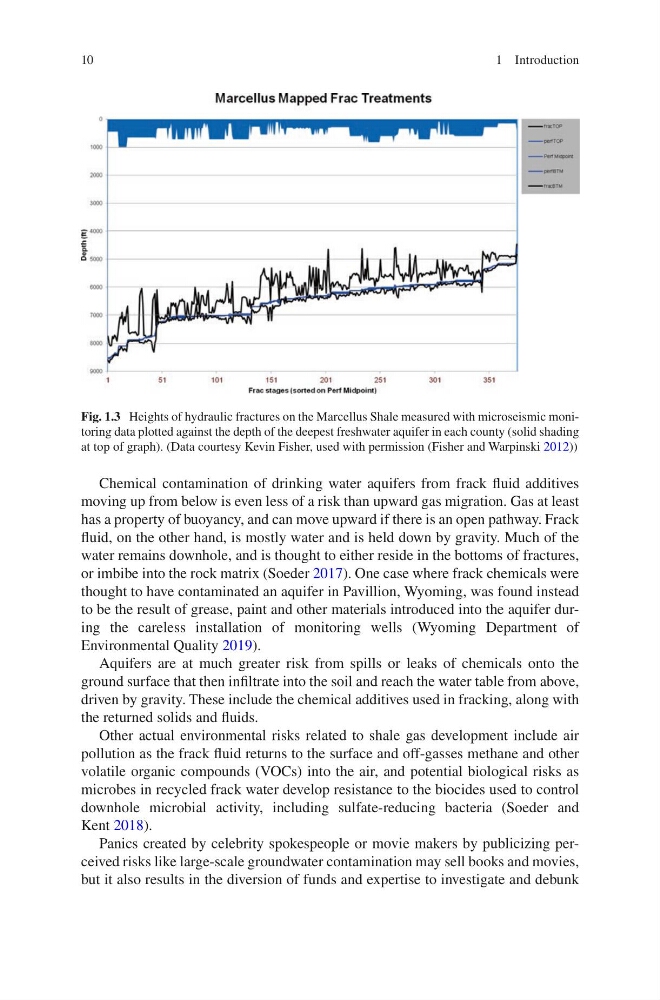
Fig. 1.3 Heights of hydraulic fractures on the Marcellus Shale measured with microseismic monitoring data plotted against the depth of the deepest freshwater aquifer in each county (solid shading
at top of graph). (Data courtesy Kevin Fisher, used with permission (Fisher and Warpinski 2012))
1 Introduction
Chemical contamination of drinking water aquifers from frack fluid additives
moving up from below is even less of a risk than upward gas migration. Gas at least
has a property of buoyancy, and can move upward if there is an open pathway. Frack
fluid, on the other hand, is mostly water and is held down by gravity. Much of the
water remains downhole, and is thought to either reside in the bottoms of fractures,
or imbibe into the rock matrix (Soeder 2017). One case where frack chemicals were
thought to have contaminated an aquifer in Pavillion, Wyoming, was found instead
to be the result of grease, paint and other materials introduced into the aquifer during the careless installation of monitoring wells (Wyoming Department of
Environmental Quality 2019).
Aquifers are at much greater risk from spills or leaks of chemicals onto the
ground surface that then infiltrate into the soil and reach the water table from above,
driven by gravity. These include the chemical additives used in fracking, along with
the returned solids and fluids.
Other actual environmental risks related to shale gas development include air
pollution as the frack fluid returns to the surface and off-gasses methane and other
volatile organic compounds (VOCs) into the air, and potential biological risks as
microbes in recycled frack water develop resistance to the biocides used to control
downhole microbial activity, including sulfate-reducing bacteria (Soeder and
Kent 2018).
Panics created by celebrity spokespeople or movie makers by publicizing perceived risks like large-scale groundwater contamination may sell books and movies,
but it also results in the diversion of funds and expertise to investigate and debunk
Fig. 1.3 Heights of hydraulic fractures on the Marcellus Shale measured with microseismic monitoring data plotted against the depth of the deepest freshwater aquifer in each county (solid shading
at top of graph). (Data courtesy Kevin Fisher, used with permission (Fisher and Warpinski 2012))
1 Introduction