

190
vulnerabilities that resulted from an over-reliance on imported energy in the
1973–74 energy crisis (refer back to Fig. 4.1).
Fracking has been banned in a number of places, at least temporarily in the U.K.,
and permanently in the countries of France and Germany, the Canadian province of
Quebec, and several U.S. states, including New York, Maryland, and New Jersey.
Banning fracking was easy for Maryland, which has relatively small amounts of
shale gas in only the two westernmost counties. The gas here is “dry” without the
valuable condensate that makes it more attractive in West Virginia, and industry was
only mildly interested in the area anyway. New Jersey doesn’t really have any significant shale gas either, except possibly some small amounts in the Triassic rift
basins on the coastal plain (Milici et al. 2012), so this was also an easy decision for
that state. In New York, however, it was a different story, and fracking ignited a
contentious debate that raged for years.
The Marcellus Shale gas resource was first developed in southwestern
Pennsylvania by Range Resources in 2007, after several years spent figuring out
how to modify the Mitchell Energy horizontal drilling and staged hydraulic fracturing techniques from the Barnett to get these to work in the Marcellus (Soeder 2017).
Southwestern PA was considered favorable because a number of interstate gas
transmission pipelines run through the area, so there was somewhere to market the
produced gas. However, from a geologic standpoint, the Marcellus thickens to the
northeast and becomes even richer in organic matter, suggesting that some of the
northern tier Pennsylvania counties might be more gas productive than those in the
southwest. As pipeline companies began to develop capacity in the northeastern part
of the state, Marcellus Shale drilling and production became focused on
Susquehanna, Bradford and Tioga counties to the south of the New York state line.
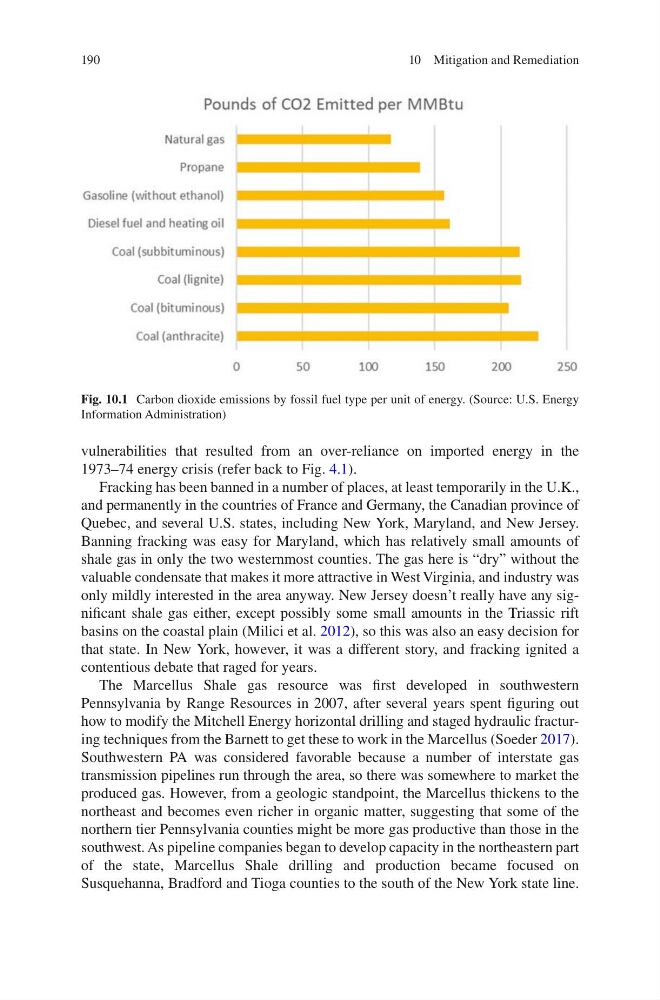
Fig. 10.1 Carbon dioxide emissions by fossil fuel type per unit of energy. (Source: U.S. Energy
Information Administration)
10 Mitigation and Remediation
vulnerabilities that resulted from an over-reliance on imported energy in the
1973–74 energy crisis (refer back to Fig. 4.1).
Fracking has been banned in a number of places, at least temporarily in the U.K.,
and permanently in the countries of France and Germany, the Canadian province of
Quebec, and several U.S. states, including New York, Maryland, and New Jersey.
Banning fracking was easy for Maryland, which has relatively small amounts of
shale gas in only the two westernmost counties. The gas here is “dry” without the
valuable condensate that makes it more attractive in West Virginia, and industry was
only mildly interested in the area anyway. New Jersey doesn’t really have any significant shale gas either, except possibly some small amounts in the Triassic rift
basins on the coastal plain (Milici et al. 2012), so this was also an easy decision for
that state. In New York, however, it was a different story, and fracking ignited a
contentious debate that raged for years.
The Marcellus Shale gas resource was first developed in southwestern
Pennsylvania by Range Resources in 2007, after several years spent figuring out
how to modify the Mitchell Energy horizontal drilling and staged hydraulic fracturing techniques from the Barnett to get these to work in the Marcellus (Soeder 2017).
Southwestern PA was considered favorable because a number of interstate gas
transmission pipelines run through the area, so there was somewhere to market the
produced gas. However, from a geologic standpoint, the Marcellus thickens to the
northeast and becomes even richer in organic matter, suggesting that some of the
northern tier Pennsylvania counties might be more gas productive than those in the
southwest. As pipeline companies began to develop capacity in the northeastern part
of the state, Marcellus Shale drilling and production became focused on
Susquehanna, Bradford and Tioga counties to the south of the New York state line.
Fig. 10.1 Carbon dioxide emissions by fossil fuel type per unit of energy. (Source: U.S. Energy
Information Administration)
10 Mitigation and Remediation