

178
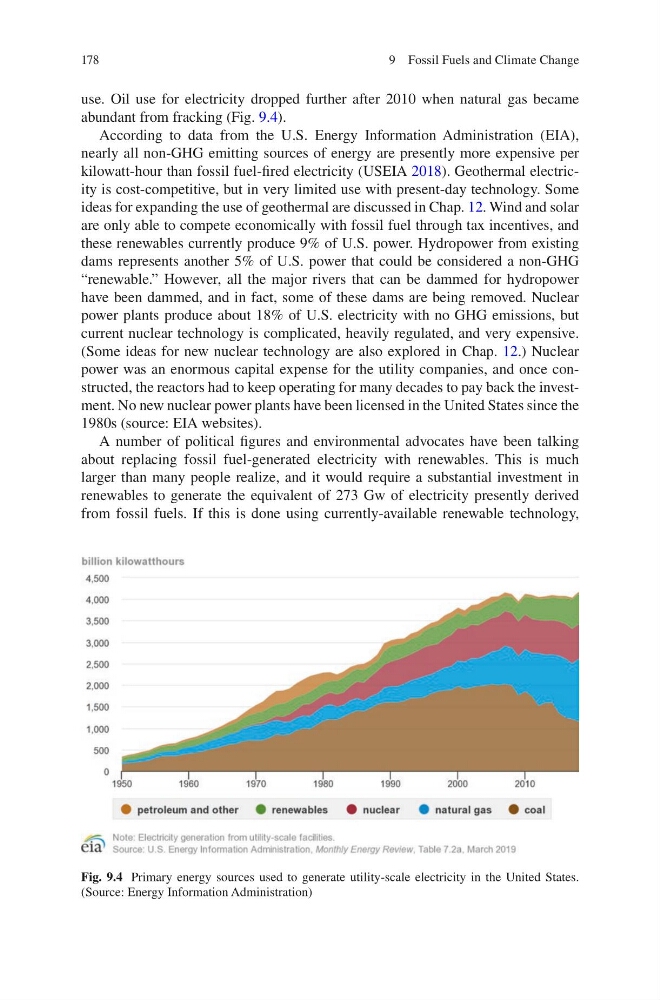
use. Oil use for electricity dropped further after 2010 when natural gas became
abundant from fracking (Fig. 9.4).
According to data from the U.S. Energy Information Administration (EIA),
nearly all non-GHG emitting sources of energy are presently more expensive per
kilowatt-hour than fossil fuel-fired electricity (USEIA 2018). Geothermal electricity is cost-competitive, but in very limited use with present-day technology. Some
ideas for expanding the use of geothermal are discussed in Chap. 12. Wind and solar
are only able to compete economically with fossil fuel through tax incentives, and
these renewables currently produce 9% of U.S. power. Hydropower from existing
dams represents another 5% of U.S. power that could be considered a non-GHG
“renewable.” However, all the major rivers that can be dammed for hydropower
have been dammed, and in fact, some of these dams are being removed. Nuclear
power plants produce about 18% of U.S. electricity with no GHG emissions, but
current nuclear technology is complicated, heavily regulated, and very expensive.
(Some ideas for new nuclear technology are also explored in Chap. 12.) Nuclear
power was an enormous capital expense for the utility companies, and once constructed, the reactors had to keep operating for many decades to pay back the investment. No new nuclear power plants have been licensed in the United States since the
1980s (source: EIA websites).
A number of political figures and environmental advocates have been talking
about replacing fossil fuel-generated electricity with renewables. This is much
larger than many people realize, and it would require a substantial investment in
renewables to generate the equivalent of 273 Gw of electricity presently derived
from fossil fuels. If this is done using currently-available renewable technology,
Fig. 9.4 Primary energy sources used to generate utility-scale electricity in the United States.
(Source: Energy Information Administration)
9 Fossil Fuels and Climate Change
use. Oil use for electricity dropped further after 2010 when natural gas became
abundant from fracking (Fig. 9.4).
According to data from the U.S. Energy Information Administration (EIA),
nearly all non-GHG emitting sources of energy are presently more expensive per
kilowatt-hour than fossil fuel-fired electricity (USEIA 2018). Geothermal electricity is cost-competitive, but in very limited use with present-day technology. Some
ideas for expanding the use of geothermal are discussed in Chap. 12. Wind and solar
are only able to compete economically with fossil fuel through tax incentives, and
these renewables currently produce 9% of U.S. power. Hydropower from existing
dams represents another 5% of U.S. power that could be considered a non-GHG
“renewable.” However, all the major rivers that can be dammed for hydropower
have been dammed, and in fact, some of these dams are being removed. Nuclear
power plants produce about 18% of U.S. electricity with no GHG emissions, but
current nuclear technology is complicated, heavily regulated, and very expensive.
(Some ideas for new nuclear technology are also explored in Chap. 12.) Nuclear
power was an enormous capital expense for the utility companies, and once constructed, the reactors had to keep operating for many decades to pay back the investment. No new nuclear power plants have been licensed in the United States since the
1980s (source: EIA websites).
A number of political figures and environmental advocates have been talking
about replacing fossil fuel-generated electricity with renewables. This is much
larger than many people realize, and it would require a substantial investment in
renewables to generate the equivalent of 273 Gw of electricity presently derived
from fossil fuels. If this is done using currently-available renewable technology,
Fig. 9.4 Primary energy sources used to generate utility-scale electricity in the United States.
(Source: Energy Information Administration)
9 Fossil Fuels and Climate Change