

108
• surface spills of hydraulic fracturing fluids, chemicals, or produced water
• contamination of shallow aquifers by injection of hydraulic fracturing fluid into
wells with wellbore integrity problems
• discharge of inadequately treated wastewater directly to surface waters
• the use of unlined pits for wastewater storage or disposal.
For each activity, a number of alternative practices were identified that could
reduce the frequency and severity of potentially negative effects on water resources
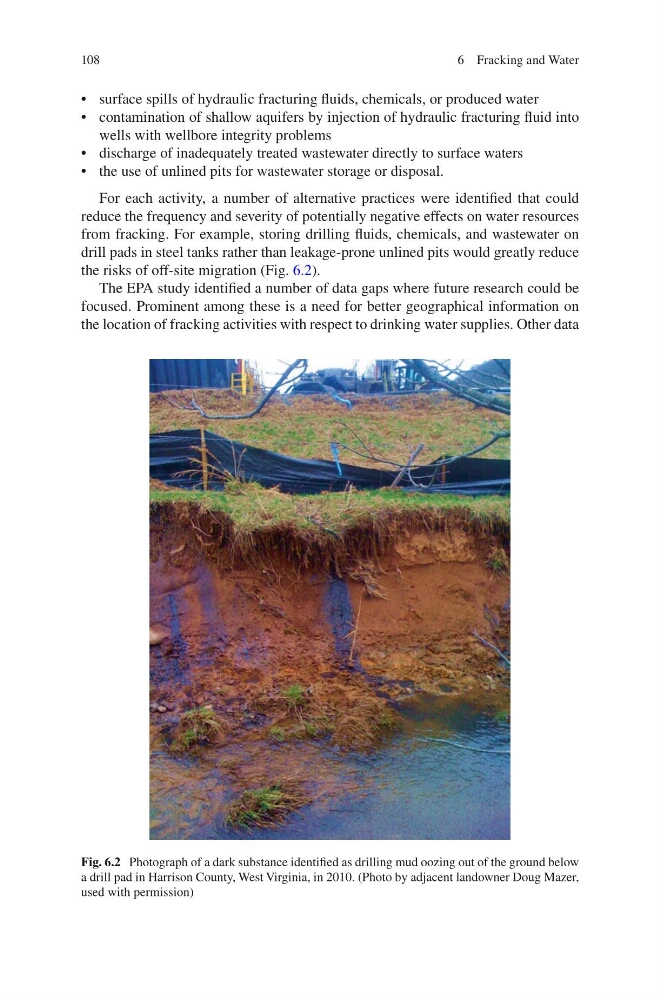
from fracking. For example, storing drilling fluids, chemicals, and wastewater on
drill pads in steel tanks rather than leakage-prone unlined pits would greatly reduce
the risks of off-site migration (Fig. 6.2).
The EPA study identified a number of data gaps where future research could be
focused. Prominent among these is a need for better geographical information on
the location of fracking activities with respect to drinking water supplies. Other data
Fig. 6.2 Photograph of a dark substance identified as drilling mud oozing out of the ground below
a drill pad in Harrison County, West Virginia, in 2010. (Photo by adjacent landowner Doug Mazer,
used with permission)
6 Fracking and Water
• surface spills of hydraulic fracturing fluids, chemicals, or produced water
• contamination of shallow aquifers by injection of hydraulic fracturing fluid into
wells with wellbore integrity problems
• discharge of inadequately treated wastewater directly to surface waters
• the use of unlined pits for wastewater storage or disposal.
For each activity, a number of alternative practices were identified that could
reduce the frequency and severity of potentially negative effects on water resources
from fracking. For example, storing drilling fluids, chemicals, and wastewater on
drill pads in steel tanks rather than leakage-prone unlined pits would greatly reduce
the risks of off-site migration (Fig. 6.2).
The EPA study identified a number of data gaps where future research could be
focused. Prominent among these is a need for better geographical information on
the location of fracking activities with respect to drinking water supplies. Other data
Fig. 6.2 Photograph of a dark substance identified as drilling mud oozing out of the ground below
a drill pad in Harrison County, West Virginia, in 2010. (Photo by adjacent landowner Doug Mazer,
used with permission)
6 Fracking and Water