

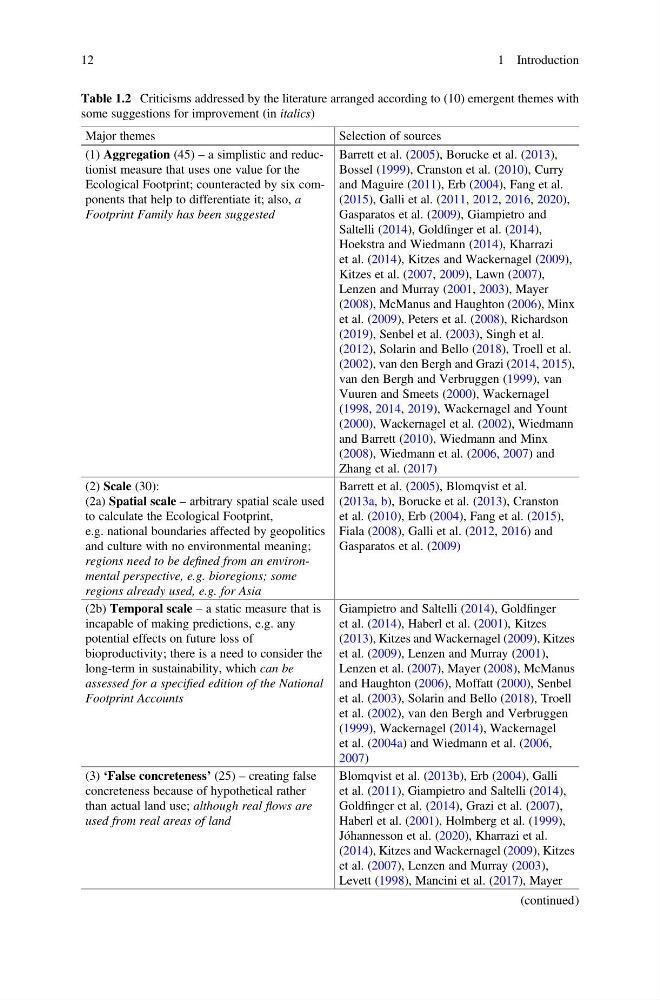
Table 1.2 Criticisms addressed by the literature arranged according to (10) emergent themes with
some suggestions for improvement (in italics)
Major themes
Selection of sources
(1) Aggregation (45) – a simplistic and reductionist measure that uses one value for the
Ecological Footprint; counteracted by six components that help to differentiate it; also, a
Footprint Family has been suggested
Barrett et al. (2005), Borucke et al. (2013),
Bossel (1999), Cranston et al. (2010), Curry
and Maguire (2011), Erb (2004), Fang et al.
(2015), Galli et al. (2011, 2012, 2016, 2020),
Gasparatos et al. (2009), Giampietro and
Saltelli (2014), Goldfinger et al. (2014),
Hoekstra and Wiedmann (2014), Kharrazi
et al. (2014), Kitzes and Wackernagel (2009),
Kitzes et al. (2007, 2009), Lawn (2007),
Lenzen and Murray (2001, 2003), Mayer
(2008), McManus and Haughton (2006), Minx
et al. (2009), Peters et al. (2008), Richardson
(2019), Senbel et al. (2003), Singh et al.
(2012), Solarin and Bello (2018), Troell et al.
(2002), van den Bergh and Grazi (2014, 2015),
van den Bergh and Verbruggen (1999), van
Vuuren and Smeets (2000), Wackernagel
(1998, 2014, 2019), Wackernagel and Yount
(2000), Wackernagel et al. (2002), Wiedmann
and Barrett (2010), Wiedmann and Minx
(2008), Wiedmann et al. (2006, 2007) and
Zhang et al. (2017)
(2) Scale (30):
(2a) Spatial scale – arbitrary spatial scale used
to calculate the Ecological Footprint,
e.g. national boundaries affected by geopolitics
and culture with no environmental meaning;
regions need to be defined from an environmental perspective, e.g. bioregions; some
regions already used, e.g. for Asia
Barrett et al. (2005), Blomqvist et al.
(2013a, b), Borucke et al. (2013), Cranston
et al. (2010), Erb (2004), Fang et al. (2015),
Fiala (2008), Galli et al. (2012, 2016) and
Gasparatos et al. (2009)
(2b) Temporal scale – a static measure that is
incapable of making predictions, e.g. any
potential effects on future loss of
bioproductivity; there is a need to consider the
long-term in sustainability, which can be
assessed for a specified edition of the National
Footprint Accounts
Giampietro and Saltelli (2014), Goldfinger
et al. (2014), Haberl et al. (2001), Kitzes
(2013), Kitzes and Wackernagel (2009), Kitzes
et al. (2009), Lenzen and Murray (2001),
Lenzen et al. (2007), Mayer (2008), McManus
and Haughton (2006), Moffatt (2000), Senbel
et al. (2003), Solarin and Bello (2018), Troell
et al. (2002), van den Bergh and Verbruggen
(1999), Wackernagel (2014), Wackernagel
et al. (2004a) and Wiedmann et al. (2006,
2007)
(3) ‘False concreteness’ (25) – creating false
concreteness because of hypothetical rather
than actual land use; although real flows are
used from real areas of land
Blomqvist et al. (2013b), Erb (2004), Galli
et al. (2011), Giampietro and Saltelli (2014),
Goldfinger et al. (2014), Grazi et al. (2007),
Haberl et al. (2001), Holmberg et al. (1999),
Jóhannesson et al. (2020), Kharrazi et al.
(2014), Kitzes and Wackernagel (2009), Kitzes
et al. (2007), Lenzen and Murray (2003),
Levett (1998), Mancini et al. (2017), Mayer
(continued)
12
1 Introduction
some suggestions for improvement (in italics)
Major themes
Selection of sources
(1) Aggregation (45) – a simplistic and reductionist measure that uses one value for the
Ecological Footprint; counteracted by six components that help to differentiate it; also, a
Footprint Family has been suggested
Barrett et al. (2005), Borucke et al. (2013),
Bossel (1999), Cranston et al. (2010), Curry
and Maguire (2011), Erb (2004), Fang et al.
(2015), Galli et al. (2011, 2012, 2016, 2020),
Gasparatos et al. (2009), Giampietro and
Saltelli (2014), Goldfinger et al. (2014),
Hoekstra and Wiedmann (2014), Kharrazi
et al. (2014), Kitzes and Wackernagel (2009),
Kitzes et al. (2007, 2009), Lawn (2007),
Lenzen and Murray (2001, 2003), Mayer
(2008), McManus and Haughton (2006), Minx
et al. (2009), Peters et al. (2008), Richardson
(2019), Senbel et al. (2003), Singh et al.
(2012), Solarin and Bello (2018), Troell et al.
(2002), van den Bergh and Grazi (2014, 2015),
van den Bergh and Verbruggen (1999), van
Vuuren and Smeets (2000), Wackernagel
(1998, 2014, 2019), Wackernagel and Yount
(2000), Wackernagel et al. (2002), Wiedmann
and Barrett (2010), Wiedmann and Minx
(2008), Wiedmann et al. (2006, 2007) and
Zhang et al. (2017)
(2) Scale (30):
(2a) Spatial scale – arbitrary spatial scale used
to calculate the Ecological Footprint,
e.g. national boundaries affected by geopolitics
and culture with no environmental meaning;
regions need to be defined from an environmental perspective, e.g. bioregions; some
regions already used, e.g. for Asia
Barrett et al. (2005), Blomqvist et al.
(2013a, b), Borucke et al. (2013), Cranston
et al. (2010), Erb (2004), Fang et al. (2015),
Fiala (2008), Galli et al. (2012, 2016) and
Gasparatos et al. (2009)
(2b) Temporal scale – a static measure that is
incapable of making predictions, e.g. any
potential effects on future loss of
bioproductivity; there is a need to consider the
long-term in sustainability, which can be
assessed for a specified edition of the National
Footprint Accounts
Giampietro and Saltelli (2014), Goldfinger
et al. (2014), Haberl et al. (2001), Kitzes
(2013), Kitzes and Wackernagel (2009), Kitzes
et al. (2009), Lenzen and Murray (2001),
Lenzen et al. (2007), Mayer (2008), McManus
and Haughton (2006), Moffatt (2000), Senbel
et al. (2003), Solarin and Bello (2018), Troell
et al. (2002), van den Bergh and Verbruggen
(1999), Wackernagel (2014), Wackernagel
et al. (2004a) and Wiedmann et al. (2006,
2007)
(3) ‘False concreteness’ (25) – creating false
concreteness because of hypothetical rather
than actual land use; although real flows are
used from real areas of land
Blomqvist et al. (2013b), Erb (2004), Galli
et al. (2011), Giampietro and Saltelli (2014),
Goldfinger et al. (2014), Grazi et al. (2007),
Haberl et al. (2001), Holmberg et al. (1999),
Jóhannesson et al. (2020), Kharrazi et al.
(2014), Kitzes and Wackernagel (2009), Kitzes
et al. (2007), Lenzen and Murray (2003),
Levett (1998), Mancini et al. (2017), Mayer
(continued)
12
1 Introduction