

makers recognize the most limiting soil factors. Assessing the
potential for improvement of manageable limiting soil factors
such as soil salinity, exchangeable sodium, and drainage may
increase the level of improvement in soil suitability.
6.5 Crop Production and Cropping Pattern
6.5.1 Crop Production
In general, cultivation in Libya is mostly constrained by very
scarce freshwater resources, limited agricultural land, and
low soil fertility. Consequently, it is characterized by an
extensive production system with low productivity. Agricultural activities in Libya typically rely on groundwater to
meet their irrigation needs (FAO 2015). Private farms owned
by individuals provide the biggest part of the agriculture
products in the country. Some other projects supported by
the government were established under the irrigation system
in the desert; these projects are predominantly for cereal and
forage production (Al-Idrissi et al. 1996). Crop productions
essentially depend on the private sector, where most of the
farms are relatively small (5–20 ha), which limits the cultivated areas with grains (barley and wheat), vegetables
(tomatoes, potatoes, onions, carrots, and turnips), fruits
(olives, dates, peaches, amniotes, melons, grapes, and
oranges), and forage crops. Figure 6.6 shows the values of
the main produced crops in Libya (Zurqani et al. 2019).
Nearly 80% of Libya’s agricultural production consists of
fruit sand vegetables grown for domestic consumption. Climatic conditions limit grain production to barley and wheat.
Due to the extremely low precipitation rate, most agriculture
(over 80%) is heavily reliant on irrigation. Approximately
75% of Libya’s food is imported, and agricultural activity is
almost entirely for domestic consumption. In 2019, cereal
production was estimated at 219,000 tons, which is almost
exactly the same as in the previous year, but about 15% below
the average. The country relies heavily on imports (up to
90%) to cover its grain consumption needs, mostly wheat and
barley. In the marketing year 2020 (July/June), the actual
import requirements are expected to reach 3.2 million tons,
which is the same rate as the previous year (FAO 2019).
6.5.2 Cropping Pattern
The cropping pattern of Libya is mainly based on barley and
wheat crops. They dominate the major cropping pattern
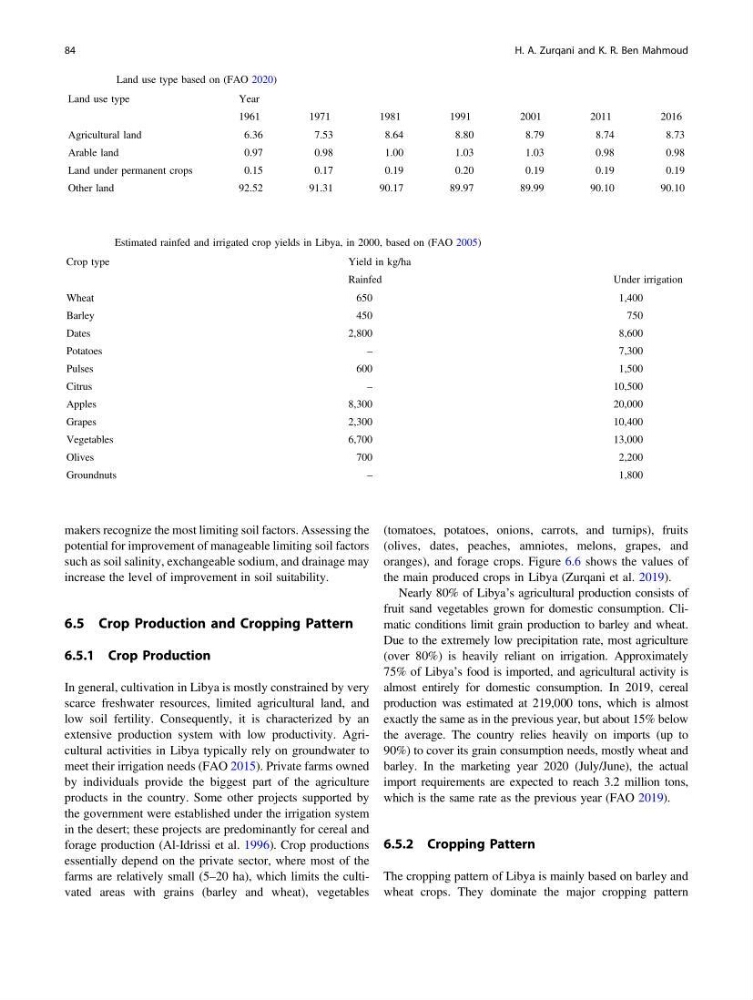
Table 6.3 Land use type based on (FAO 2020)
Land use type
Year
1961
1971
1981
1991
2001
2011
2016
Agricultural land
6.36
7.53
8.64
8.80
8.79
8.74
8.73
Arable land
0.97
0.98
1.00
1.03
1.03
0.98
0.98
Land under permanent crops
0.15
0.17
0.19
0.20
0.19
0.19
0.19
Other land
92.52
91.31
90.17
89.97
89.99
90.10
90.10
Table 6.4 Estimated rainfed and irrigated crop yields in Libya, in 2000, based on (FAO 2005)
Crop type
Yield in kg/ha
Rainfed
Under irrigation
Wheat
650
1,400
Barley
450
750
Dates
2,800
8,600
Potatoes
–
7,300
Pulses
600
1,500
Citrus
–
10,500
Apples
8,300
20,000
Grapes
2,300
10,400
Vegetables
6,700
13,000
Olives
700
2,200
Groundnuts
–
1,800
84
H. A. Zurqani and K. R. Ben Mahmoud
potential for improvement of manageable limiting soil factors
such as soil salinity, exchangeable sodium, and drainage may
increase the level of improvement in soil suitability.
6.5 Crop Production and Cropping Pattern
6.5.1 Crop Production
In general, cultivation in Libya is mostly constrained by very
scarce freshwater resources, limited agricultural land, and
low soil fertility. Consequently, it is characterized by an
extensive production system with low productivity. Agricultural activities in Libya typically rely on groundwater to
meet their irrigation needs (FAO 2015). Private farms owned
by individuals provide the biggest part of the agriculture
products in the country. Some other projects supported by
the government were established under the irrigation system
in the desert; these projects are predominantly for cereal and
forage production (Al-Idrissi et al. 1996). Crop productions
essentially depend on the private sector, where most of the
farms are relatively small (5–20 ha), which limits the cultivated areas with grains (barley and wheat), vegetables
(tomatoes, potatoes, onions, carrots, and turnips), fruits
(olives, dates, peaches, amniotes, melons, grapes, and
oranges), and forage crops. Figure 6.6 shows the values of
the main produced crops in Libya (Zurqani et al. 2019).
Nearly 80% of Libya’s agricultural production consists of
fruit sand vegetables grown for domestic consumption. Climatic conditions limit grain production to barley and wheat.
Due to the extremely low precipitation rate, most agriculture
(over 80%) is heavily reliant on irrigation. Approximately
75% of Libya’s food is imported, and agricultural activity is
almost entirely for domestic consumption. In 2019, cereal
production was estimated at 219,000 tons, which is almost
exactly the same as in the previous year, but about 15% below
the average. The country relies heavily on imports (up to
90%) to cover its grain consumption needs, mostly wheat and
barley. In the marketing year 2020 (July/June), the actual
import requirements are expected to reach 3.2 million tons,
which is the same rate as the previous year (FAO 2019).
6.5.2 Cropping Pattern
The cropping pattern of Libya is mainly based on barley and
wheat crops. They dominate the major cropping pattern
Table 6.3 Land use type based on (FAO 2020)
Land use type
Year
1961
1971
1981
1991
2001
2011
2016
Agricultural land
6.36
7.53
8.64
8.80
8.79
8.74
8.73
Arable land
0.97
0.98
1.00
1.03
1.03
0.98
0.98
Land under permanent crops
0.15
0.17
0.19
0.20
0.19
0.19
0.19
Other land
92.52
91.31
90.17
89.97
89.99
90.10
90.10
Table 6.4 Estimated rainfed and irrigated crop yields in Libya, in 2000, based on (FAO 2005)
Crop type
Yield in kg/ha
Rainfed
Under irrigation
Wheat
650
1,400
Barley
450
750
Dates
2,800
8,600
Potatoes
–
7,300
Pulses
600
1,500
Citrus
–
10,500
Apples
8,300
20,000
Grapes
2,300
10,400
Vegetables
6,700
13,000
Olives
700
2,200
Groundnuts
–
1,800
84
H. A. Zurqani and K. R. Ben Mahmoud