

These scholarships applied to students studying in international universities. Table 2.3 shows some of the Ph.D. thesis
topics applied by Libyan students in the area of soil genesis,
classification, and mapping in some international
universities.
In addition to these student projects, a few books were
published by Libyan soil science experts in the area of soil
genesis, classification, and mapping, and most of these
books were written in the Arabic language. For example, a
comprehensive literature review regarding Libyan soils can
be found in the flowing books: Soil study in the field (1984)
by Khaled ben Mahmoud and Adnan Ajendeel, Libyan
Soils (Their Genesis Classification, Properties and Agricultural Potential) and Towards a National Strategy for the
Sustainability of Natural Resources and Enhancing Food
Security in Libya which were written in 1995 and 2013,
respectively, by Prof. Khaled Ben Mahmoud. Furthermore,
more than 500 scientific papers were accomplished by Libyan soil science researchers in different branches of soil
science, and they are written in Arabic or English languages
and published in national or international journals. Table 2.4.
shows the examples of what has been accomplished in the
area of soil genesis, classification, and mapping papers
which were published in national or international journals or
conferences.
2.6 Conclusions
The soil survey reports and maps created over the past
decade differ in their contents, types of maps, scale of
mapping, classification systems used, methods of soil analysis, criteria on which the interpretation of data based, etc.
The major soil classification systems used in these reports
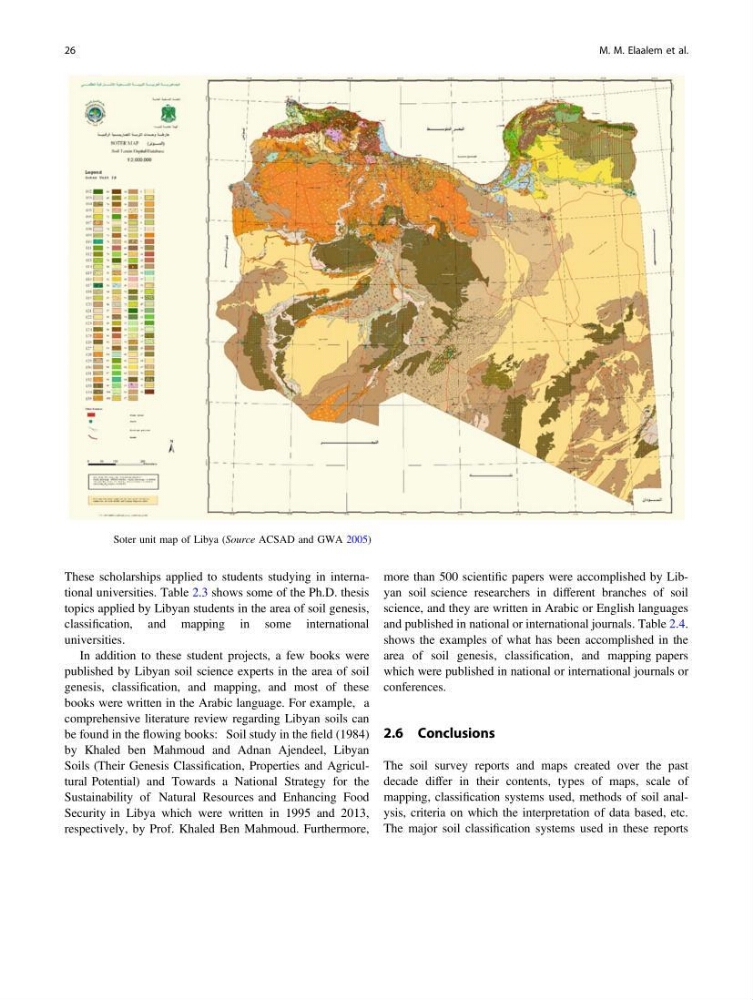
Fig. 2.13 Soter unit map of Libya (Source ACSAD and GWA 2005)
26
M. M. Elaalem et al.
topics applied by Libyan students in the area of soil genesis,
classification, and mapping in some international
universities.
In addition to these student projects, a few books were
published by Libyan soil science experts in the area of soil
genesis, classification, and mapping, and most of these
books were written in the Arabic language. For example, a
comprehensive literature review regarding Libyan soils can
be found in the flowing books: Soil study in the field (1984)
by Khaled ben Mahmoud and Adnan Ajendeel, Libyan
Soils (Their Genesis Classification, Properties and Agricultural Potential) and Towards a National Strategy for the
Sustainability of Natural Resources and Enhancing Food
Security in Libya which were written in 1995 and 2013,
respectively, by Prof. Khaled Ben Mahmoud. Furthermore,
more than 500 scientific papers were accomplished by Libyan soil science researchers in different branches of soil
science, and they are written in Arabic or English languages
and published in national or international journals. Table 2.4.
shows the examples of what has been accomplished in the
area of soil genesis, classification, and mapping papers
which were published in national or international journals or
conferences.
2.6 Conclusions
The soil survey reports and maps created over the past
decade differ in their contents, types of maps, scale of
mapping, classification systems used, methods of soil analysis, criteria on which the interpretation of data based, etc.
The major soil classification systems used in these reports
Fig. 2.13 Soter unit map of Libya (Source ACSAD and GWA 2005)
26
M. M. Elaalem et al.