

winds are commonly strong westerlies, volcanic materials
blown into the air by eruptions fall predominantly to the east
of the volcanoes. Therefore, Regosolic Andosols and Allophanic Andosols are mainly developed on the east side of the
volcanic line. Non-allophanic Andosols are the second most
dominant, and this soil group is distributed in the northern
part of Hokkaido, the northern part of Tokai–Hokuriku, and
the northern part of Kinki–Chugoku–Shikoku (Fig. 3.4).
These areas partially coincide with the distribution area of
Brown Forest soils where fresh volcanic ash was not
deposited. It is thought that Allophanic Andosols contain
short-range order clay minerals such as allophane and
imogolite generated from fresh volcanic ash after the
Holocene, while Non-allophanic Andosols contain crystalline minerals due to contamination with eolian dust and/or
Non-allophanic parent materials and a decrease in the formation of short-range order clay minerals from fresh volcanic ash (Saigusa et al. 1992; Matsuyama et al. 1994; Fujita
et al. 2007; Okuda et al. 2007).
Due to the limitations of soil survey data, the distribution
pattern of Podzolic Andosols was not able to be delineated in
the national soil map. However, Nishiue et al. (2014)
reported that weak podzolization on Allopanic Andosols was
recognized on the high-elevation plateau of the Tohoku
region. In the northern part of the Tohoku region, the podzolization of ash-derived soils appeared in association with
the hiba tree (Thujopsis dolabrata var. Hondai Makino), a
strong podzolizer, at elevations of 150–300 m (Takahashi
et al. 1989). Further soil surveys are required to delineate the
spatial distribution pattern of Podzolic Andosols.
(3) Fluvic Soils
Fluvic soils are the third dominant soil great group in Japan
and cover 13.7% of the total area of Japan. Fluvic soils are
found along rivers and lakes and in areas of recent marine
deposits. The distribution areas of Gley Fluvic soils and
Gray Fluvic soils show a close spatial relationship. Gley
Fluvic soils have a nearly permanently saturated gley horizon, and Gray Fluvic soils have a mottled horizon formed
under seasonal saturation of groundwater. The difference
between Gley and Gray soils is the groundwater level, and
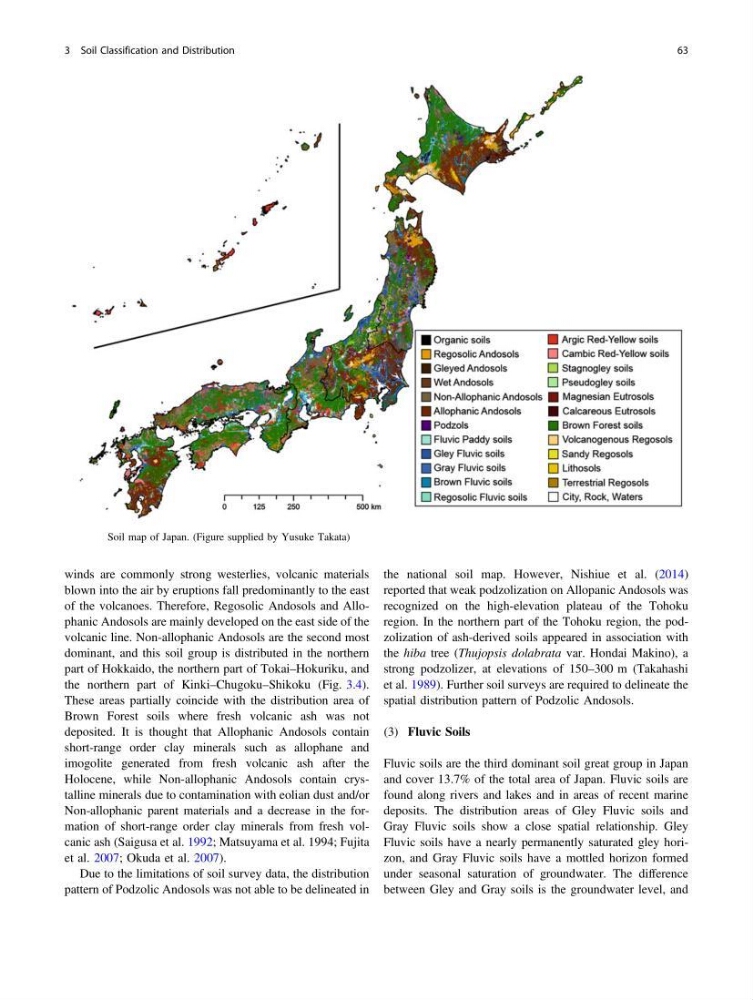
Fig. 3.2 Soil map of Japan. (Figure supplied by Yusuke Takata)
3 Soil Classification and Distribution
63
blown into the air by eruptions fall predominantly to the east
of the volcanoes. Therefore, Regosolic Andosols and Allophanic Andosols are mainly developed on the east side of the
volcanic line. Non-allophanic Andosols are the second most
dominant, and this soil group is distributed in the northern
part of Hokkaido, the northern part of Tokai–Hokuriku, and
the northern part of Kinki–Chugoku–Shikoku (Fig. 3.4).
These areas partially coincide with the distribution area of
Brown Forest soils where fresh volcanic ash was not
deposited. It is thought that Allophanic Andosols contain
short-range order clay minerals such as allophane and
imogolite generated from fresh volcanic ash after the
Holocene, while Non-allophanic Andosols contain crystalline minerals due to contamination with eolian dust and/or
Non-allophanic parent materials and a decrease in the formation of short-range order clay minerals from fresh volcanic ash (Saigusa et al. 1992; Matsuyama et al. 1994; Fujita
et al. 2007; Okuda et al. 2007).
Due to the limitations of soil survey data, the distribution
pattern of Podzolic Andosols was not able to be delineated in
the national soil map. However, Nishiue et al. (2014)
reported that weak podzolization on Allopanic Andosols was
recognized on the high-elevation plateau of the Tohoku
region. In the northern part of the Tohoku region, the podzolization of ash-derived soils appeared in association with
the hiba tree (Thujopsis dolabrata var. Hondai Makino), a
strong podzolizer, at elevations of 150–300 m (Takahashi
et al. 1989). Further soil surveys are required to delineate the
spatial distribution pattern of Podzolic Andosols.
(3) Fluvic Soils
Fluvic soils are the third dominant soil great group in Japan
and cover 13.7% of the total area of Japan. Fluvic soils are
found along rivers and lakes and in areas of recent marine
deposits. The distribution areas of Gley Fluvic soils and
Gray Fluvic soils show a close spatial relationship. Gley
Fluvic soils have a nearly permanently saturated gley horizon, and Gray Fluvic soils have a mottled horizon formed
under seasonal saturation of groundwater. The difference
between Gley and Gray soils is the groundwater level, and
Fig. 3.2 Soil map of Japan. (Figure supplied by Yusuke Takata)
3 Soil Classification and Distribution
63