

when the Higher or Middle Terraces were formed (Matsui
and Kato 1962). At that time, the Chubu region was in a
subtropical humid climatic zone with a mean annual temperature of 20
°
C or more, annual precipitation of 1500–
3000 mm, and an annual cumulative temperature of more
than 5000
°
C. Kimura (1973a, b) studied the geomorphic
surfaces and geology of the middle part of the west coast
area of Ise Bay. The “Highest Terrace,” “Higher Terrace,”
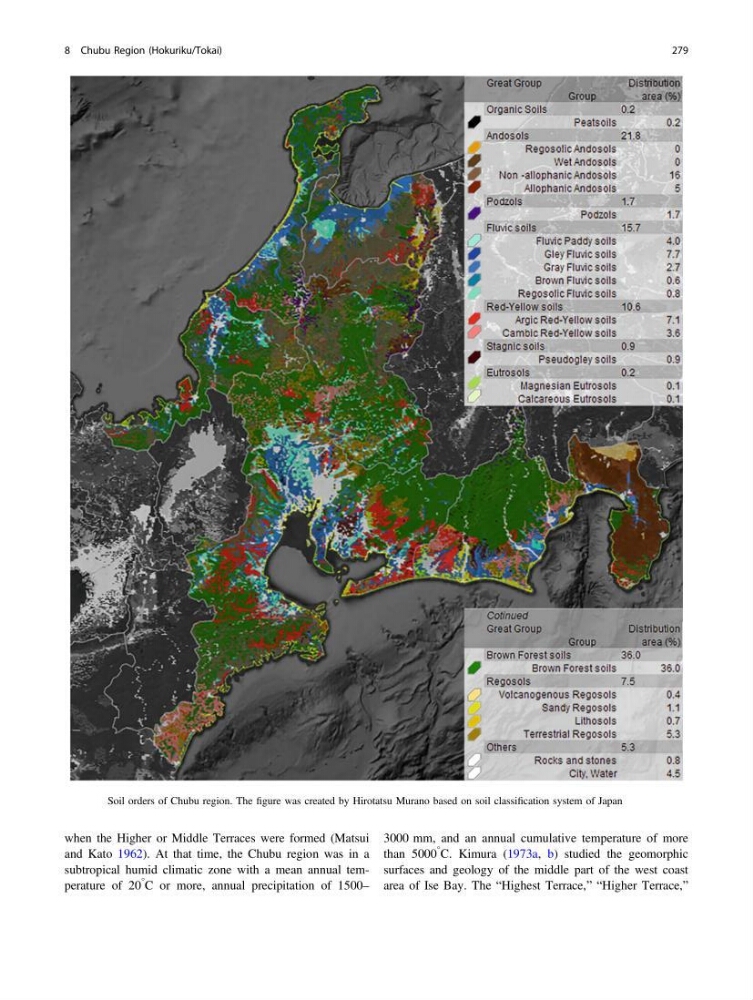
Fig. 8.5 Soil orders of Chubu region. The figure was created by Hirotatsu Murano based on soil classification system of Japan
8 Chubu Region (Hokuriku/Tokai)
279
and Kato 1962). At that time, the Chubu region was in a
subtropical humid climatic zone with a mean annual temperature of 20
°
C or more, annual precipitation of 1500–
3000 mm, and an annual cumulative temperature of more
than 5000
°
C. Kimura (1973a, b) studied the geomorphic
surfaces and geology of the middle part of the west coast
area of Ise Bay. The “Highest Terrace,” “Higher Terrace,”
Fig. 8.5 Soil orders of Chubu region. The figure was created by Hirotatsu Murano based on soil classification system of Japan
8 Chubu Region (Hokuriku/Tokai)
279