

Under anaerobic conditions such as those in wetlands,
methane (CH 4 ) is emitted, which has a global warming
potential 25 times that of CO 2 . Meanwhile,
methane-oxidizing bacteria in the forest soil turn CH 4 to
CO 2 . In soil with a low oxygen content, denitrifying bacteria
convert NO 3
– into N 2 gas. During nitrification and denitrification, nitrous oxide (N 2 O), which has a global warming
potential 298 times that of CO 2 , and nitric oxide (NO),
which produces ozone, are also emitted.
During such material cycling, clay minerals are formed
from rock minerals, humus is generated in soil from the
decomposition of dead plant bodies, and levels of soil
organic carbon and nitrogen increase. Clay and humus are
negatively charged and buffer acids, adsorb basic cations
such as potassium, calcium, and magnesium, and also inhibit
the leaching of these cations. Clay and humus form
organo-mineral complexes and cross-link large particles
such as sand to form aggregates. As a result, a soil structure
is formed with coarse pores between the aggregates, which
improves drainage and aeration, and capillary pore spaces
within the aggregates, which improves water retention, both
of which improve the growth of plants. In agriculture, this
natural material cycling system is utilized to cultivate crops
and feed livestock.
(2) Influence of agriculture on the material cycle
Agriculture has a strong influence on material cycling via the
input and output of substances through fertilization and
harvesting. If an amount of organic matter corresponding to
the amount of organic matter removed by harvesting is not
input to the soil by compost, and so on, then soil humus is
decomposed by microorganisms, and the organic carbon
stored in the soil is thereby converted to CO 2 and released to
the atmosphere, contributing to global warming. Additionally, the soil structure deteriorates and drainage and aeration
are reduced, causing the growth of crops to stagnate. However, if a large amount of compost is applied along with
fertilization, an increase in the volatilization of NH 3 occurs,
which in turn increases the nitrogen fallout to the forest and
acidifies the soil (because nitrification releases protons).
Furthermore, leaching of NO 3
– increases in agricultural land,
causing groundwater contamination and the eutrophication
of coastal areas.
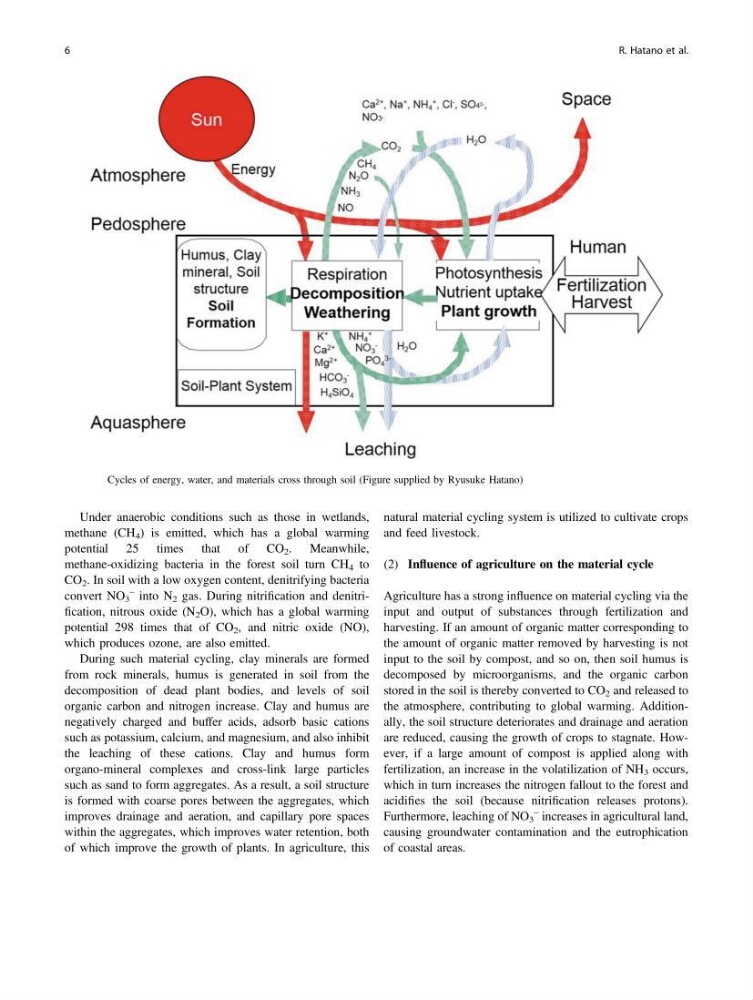
Fig. 1.2 Cycles of energy, water, and materials cross through soil (Figure supplied by Ryusuke Hatano)
6
R. Hatano et al.
methane (CH 4 ) is emitted, which has a global warming
potential 25 times that of CO 2 . Meanwhile,
methane-oxidizing bacteria in the forest soil turn CH 4 to
CO 2 . In soil with a low oxygen content, denitrifying bacteria
convert NO 3
– into N 2 gas. During nitrification and denitrification, nitrous oxide (N 2 O), which has a global warming
potential 298 times that of CO 2 , and nitric oxide (NO),
which produces ozone, are also emitted.
During such material cycling, clay minerals are formed
from rock minerals, humus is generated in soil from the
decomposition of dead plant bodies, and levels of soil
organic carbon and nitrogen increase. Clay and humus are
negatively charged and buffer acids, adsorb basic cations
such as potassium, calcium, and magnesium, and also inhibit
the leaching of these cations. Clay and humus form
organo-mineral complexes and cross-link large particles
such as sand to form aggregates. As a result, a soil structure
is formed with coarse pores between the aggregates, which
improves drainage and aeration, and capillary pore spaces
within the aggregates, which improves water retention, both
of which improve the growth of plants. In agriculture, this
natural material cycling system is utilized to cultivate crops
and feed livestock.
(2) Influence of agriculture on the material cycle
Agriculture has a strong influence on material cycling via the
input and output of substances through fertilization and
harvesting. If an amount of organic matter corresponding to
the amount of organic matter removed by harvesting is not
input to the soil by compost, and so on, then soil humus is
decomposed by microorganisms, and the organic carbon
stored in the soil is thereby converted to CO 2 and released to
the atmosphere, contributing to global warming. Additionally, the soil structure deteriorates and drainage and aeration
are reduced, causing the growth of crops to stagnate. However, if a large amount of compost is applied along with
fertilization, an increase in the volatilization of NH 3 occurs,
which in turn increases the nitrogen fallout to the forest and
acidifies the soil (because nitrification releases protons).
Furthermore, leaching of NO 3
– increases in agricultural land,
causing groundwater contamination and the eutrophication
of coastal areas.
Fig. 1.2 Cycles of energy, water, and materials cross through soil (Figure supplied by Ryusuke Hatano)
6
R. Hatano et al.