

deposits. Most of the rocks of this belt are also thought to be
Jurassic to Cretaceous accretionary deposits. The Shimanto
belt consists mainly of alternating beds of sandstone and
mudstone and occasionally intercalated mélange units. The
rocks of the Shimanto belt are interpreted to be Cretaceous to
Paleogene accretionary deposits (Takahashi 2000).
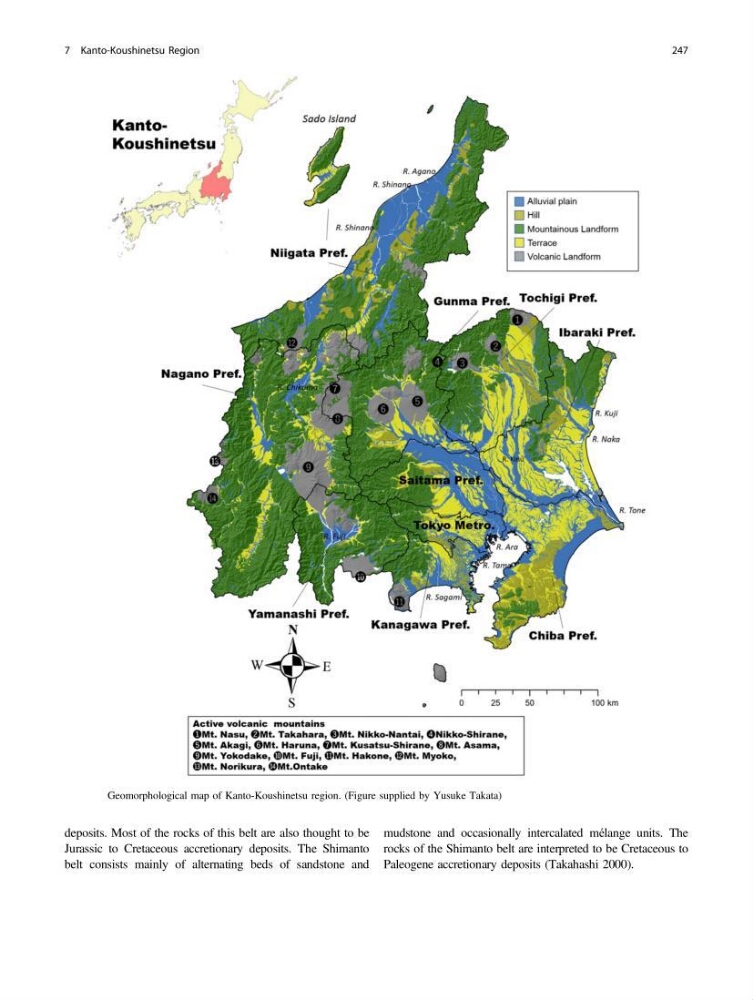
Fig. 7.1 Geomorphological map of Kanto-Koushinetsu region. (Figure supplied by Yusuke Takata)
7 Kanto-Koushinetsu Region
247
Jurassic to Cretaceous accretionary deposits. The Shimanto
belt consists mainly of alternating beds of sandstone and
mudstone and occasionally intercalated mélange units. The
rocks of the Shimanto belt are interpreted to be Cretaceous to
Paleogene accretionary deposits (Takahashi 2000).
Fig. 7.1 Geomorphological map of Kanto-Koushinetsu region. (Figure supplied by Yusuke Takata)
7 Kanto-Koushinetsu Region
247