

For groundwater aquic soils, the relationship between
groundwater dynamics and the diagnostic horizon (e.g., gley
horizon, mottled horizon) was clarified (Hamazaki 1993).
In the new Soil Classification System of Japan (2017),
Fluvic soils are subdivided into five soil groups by degree
and type of aquic condition and degree of weathering. The
aquic (reduced) condition forms the basis of the classification of Fluvic soils. Gley Fluvic soils are developed under
permanently wet and strongly reduced conditions at shallow
depth with high groundwater level. Brown Fluvic soils are
developed in non-aquic or slightly aquic conditions. Gray
Fluvic soils are intermediate between Gley and Brown
Fluvic soils and are seasonally saturated with groundwater.
Fluvic Paddy soils are characterized by anthraquic diagnostic horizons that developed under aquic conditions
caused by irrigation water (Fig. 4.32). Regosolic Fluvic soils
are young soils that show no changes after deposition; the
gray color of sediments has not changed to brown even in
non-aquic conditions.
(1) Fluvic Paddy soils
In the Japanese soil classification system (2017),
irrigation-aquic soil and groundwater aquic soil are classified
separately, and irrigation-aquic soil is first keyed out from
the Fluvic soil group. Fluvic Paddy soils developed under
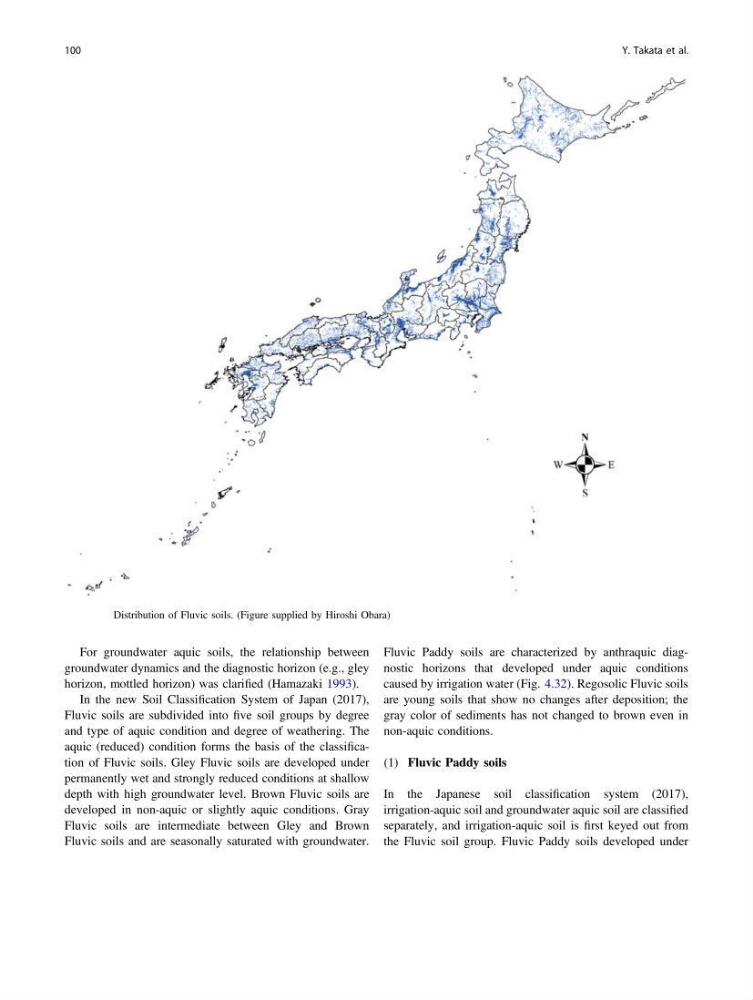
Fig. 4.30 Distribution of Fluvic soils. (Figure supplied by Hiroshi Obara)
100
Y. Takata et al.
groundwater dynamics and the diagnostic horizon (e.g., gley
horizon, mottled horizon) was clarified (Hamazaki 1993).
In the new Soil Classification System of Japan (2017),
Fluvic soils are subdivided into five soil groups by degree
and type of aquic condition and degree of weathering. The
aquic (reduced) condition forms the basis of the classification of Fluvic soils. Gley Fluvic soils are developed under
permanently wet and strongly reduced conditions at shallow
depth with high groundwater level. Brown Fluvic soils are
developed in non-aquic or slightly aquic conditions. Gray
Fluvic soils are intermediate between Gley and Brown
Fluvic soils and are seasonally saturated with groundwater.
Fluvic Paddy soils are characterized by anthraquic diagnostic horizons that developed under aquic conditions
caused by irrigation water (Fig. 4.32). Regosolic Fluvic soils
are young soils that show no changes after deposition; the
gray color of sediments has not changed to brown even in
non-aquic conditions.
(1) Fluvic Paddy soils
In the Japanese soil classification system (2017),
irrigation-aquic soil and groundwater aquic soil are classified
separately, and irrigation-aquic soil is first keyed out from
the Fluvic soil group. Fluvic Paddy soils developed under
Fig. 4.30 Distribution of Fluvic soils. (Figure supplied by Hiroshi Obara)
100
Y. Takata et al.