

162
Generatoin
1
•Collection
point/cen
tre
•Transfer
station
2
Treatment
3
Disposal
4
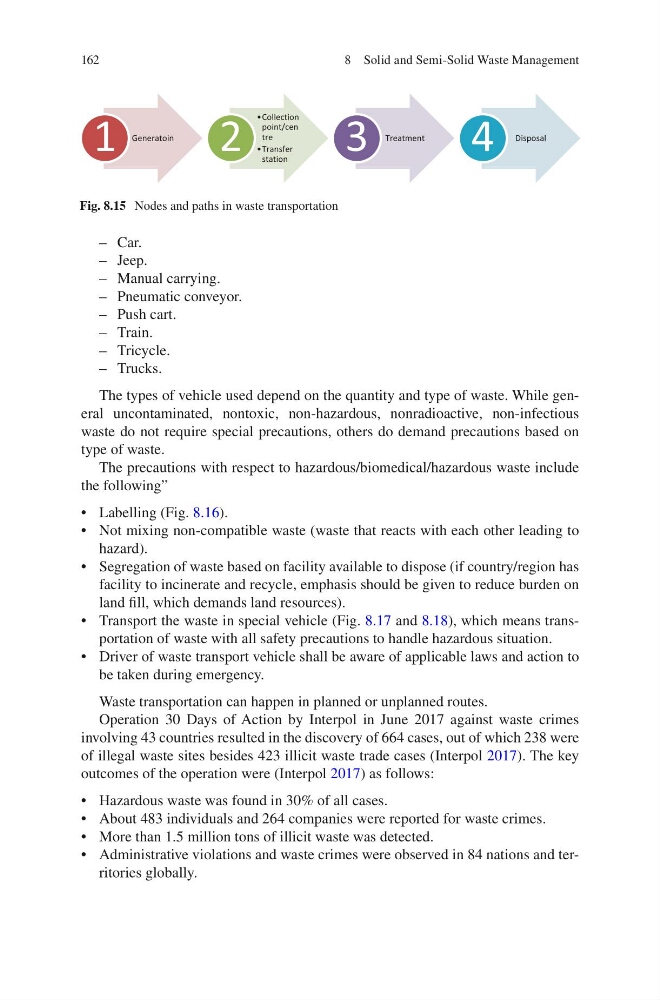
Fig. 8.15 Nodes and paths in waste transportation
– Car.
– Jeep.
– Manual carrying.
– Pneumatic conveyor.
– Push cart.
– Train.
– Tricycle.
– Trucks.
The types of vehicle used depend on the quantity and type of waste. While general uncontaminated, nontoxic, non-hazardous, nonradioactive, non-infectious
waste do not require special precautions, others do demand precautions based on
type of waste.
The precautions with respect to hazardous/biomedical/hazardous waste include
the following”
• Labelling (Fig. 8.16).
• Not mixing non-compatible waste (waste that reacts with each other leading to
hazard).
• Segregation of waste based on facility available to dispose (if country/region has
facility to incinerate and recycle, emphasis should be given to reduce burden on
land fill, which demands land resources).
• Transport the waste in special vehicle (Fig. 8.17 and 8.18), which means transportation of waste with all safety precautions to handle hazardous situation.
• Driver of waste transport vehicle shall be aware of applicable laws and action to
be taken during emergency.
Waste transportation can happen in planned or unplanned routes.
Operation 30 Days of Action by Interpol in June 2017 against waste crimes
involving 43 countries resulted in the discovery of 664 cases, out of which 238 were
of illegal waste sites besides 423 illicit waste trade cases (Interpol 2017). The key
outcomes of the operation were (Interpol 2017) as follows:
• Hazardous waste was found in 30% of all cases.
• About 483 individuals and 264 companies were reported for waste crimes.
• More than 1.5 million tons of illicit waste was detected.
• Administrative violations and waste crimes were observed in 84 nations and territories globally.
8 Solid and Semi-Solid Waste Management
Generatoin
1
•Collection
point/cen
tre
•Transfer
station
2
Treatment
3
Disposal
4
Fig. 8.15 Nodes and paths in waste transportation
– Car.
– Jeep.
– Manual carrying.
– Pneumatic conveyor.
– Push cart.
– Train.
– Tricycle.
– Trucks.
The types of vehicle used depend on the quantity and type of waste. While general uncontaminated, nontoxic, non-hazardous, nonradioactive, non-infectious
waste do not require special precautions, others do demand precautions based on
type of waste.
The precautions with respect to hazardous/biomedical/hazardous waste include
the following”
• Labelling (Fig. 8.16).
• Not mixing non-compatible waste (waste that reacts with each other leading to
hazard).
• Segregation of waste based on facility available to dispose (if country/region has
facility to incinerate and recycle, emphasis should be given to reduce burden on
land fill, which demands land resources).
• Transport the waste in special vehicle (Fig. 8.17 and 8.18), which means transportation of waste with all safety precautions to handle hazardous situation.
• Driver of waste transport vehicle shall be aware of applicable laws and action to
be taken during emergency.
Waste transportation can happen in planned or unplanned routes.
Operation 30 Days of Action by Interpol in June 2017 against waste crimes
involving 43 countries resulted in the discovery of 664 cases, out of which 238 were
of illegal waste sites besides 423 illicit waste trade cases (Interpol 2017). The key
outcomes of the operation were (Interpol 2017) as follows:
• Hazardous waste was found in 30% of all cases.
• About 483 individuals and 264 companies were reported for waste crimes.
• More than 1.5 million tons of illicit waste was detected.
• Administrative violations and waste crimes were observed in 84 nations and territories globally.
8 Solid and Semi-Solid Waste Management