

117
5.2.2.8 Oxidation Pond
Oxidation ponds, or stabilization ponds, are shallow and large ponds with hydraulic
detection period of 10–20 days depending on the solar radiation they receive. The
greater the solar flux, the lesser is the detention period as the oxidation pond allows
growth of more algae, thereby releasing more oxygen. The purification occurs in
natural set-up through symbiotic relationship of bacteria and algae. Algae grow by
utilizing solar energy and carbon dioxide, as well as other inorganic compounds
released by decomposition of organic matter by bacteria in water. Oxidation pond
cannot treat all types of wastewater and in all climatic conditions. Oxidation pond is
suitable for sewage at the climatic regions that favour growth of algae and bacteria.
The disadvantages like odour nuisance and mosquito menace due to stagnation of
water cannot be ruled out.
5.2.2.9 Waste Stabilization Ponds
Waste stabilization ponds (or waste stabilization lagoons or stabilization ponds) are
ponds designed to decrease the organic content, as well as eliminate pathogens from
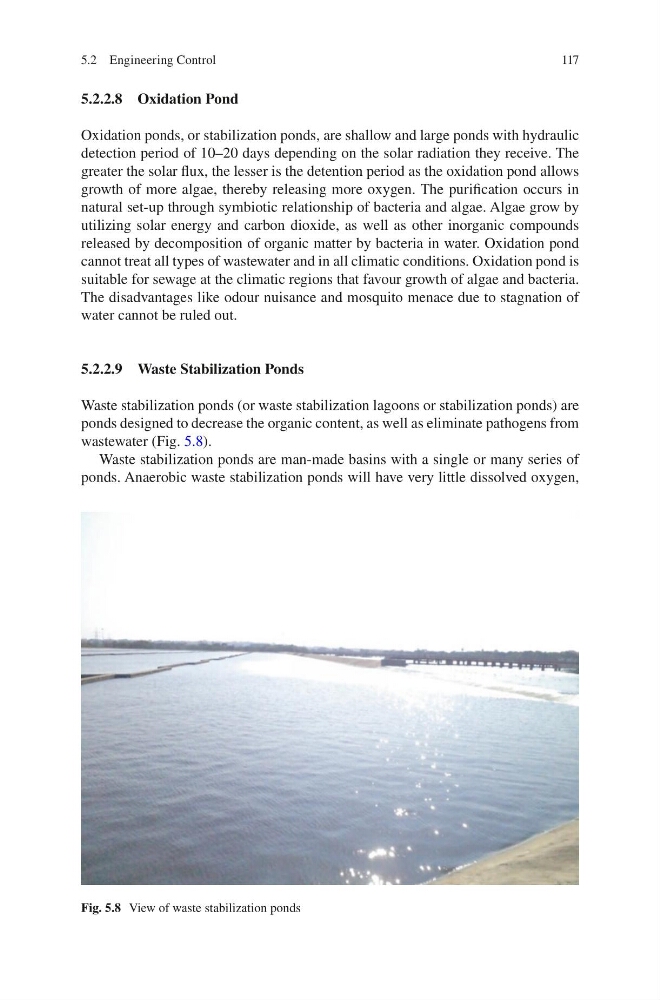
wastewater (Fig. 5.8).
Waste stabilization ponds are man-made basins with a single or many series of
ponds. Anaerobic waste stabilization ponds will have very little dissolved oxygen,
Fig. 5.8 View of waste stabilization ponds
5.2 Engineering Control
5.2.2.8 Oxidation Pond
Oxidation ponds, or stabilization ponds, are shallow and large ponds with hydraulic
detection period of 10–20 days depending on the solar radiation they receive. The
greater the solar flux, the lesser is the detention period as the oxidation pond allows
growth of more algae, thereby releasing more oxygen. The purification occurs in
natural set-up through symbiotic relationship of bacteria and algae. Algae grow by
utilizing solar energy and carbon dioxide, as well as other inorganic compounds
released by decomposition of organic matter by bacteria in water. Oxidation pond
cannot treat all types of wastewater and in all climatic conditions. Oxidation pond is
suitable for sewage at the climatic regions that favour growth of algae and bacteria.
The disadvantages like odour nuisance and mosquito menace due to stagnation of
water cannot be ruled out.
5.2.2.9 Waste Stabilization Ponds
Waste stabilization ponds (or waste stabilization lagoons or stabilization ponds) are
ponds designed to decrease the organic content, as well as eliminate pathogens from
wastewater (Fig. 5.8).
Waste stabilization ponds are man-made basins with a single or many series of
ponds. Anaerobic waste stabilization ponds will have very little dissolved oxygen,
Fig. 5.8 View of waste stabilization ponds
5.2 Engineering Control