

13 Climate Budget Tagging: Amplifying Sub-National Government’s …
269
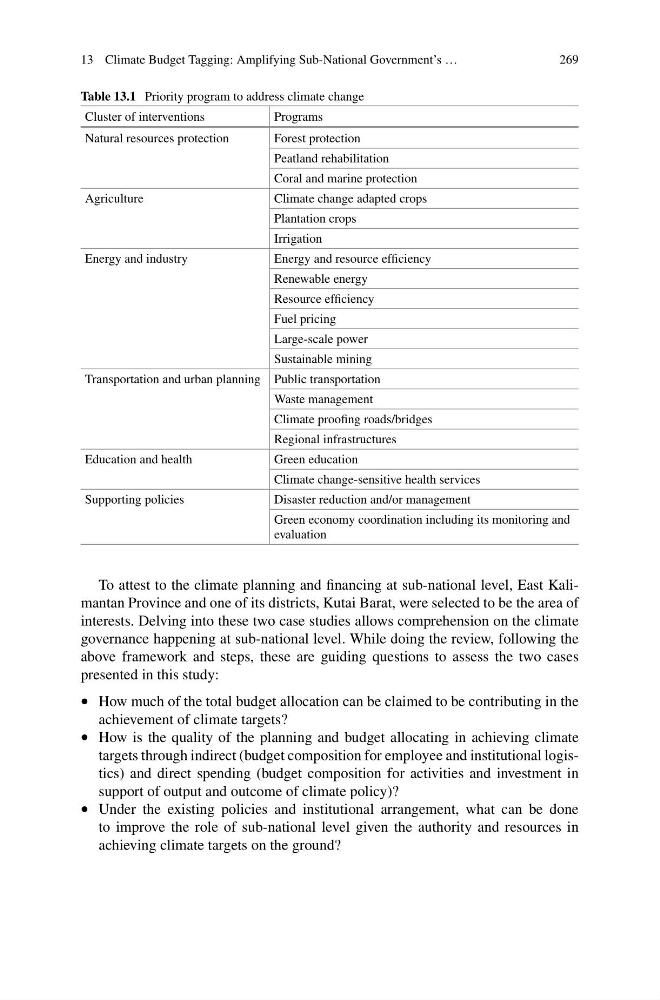
Table 13.1 Priority program to address climate change
Cluster of interventions
Programs
Natural resources protection
Forest protection
Peatland rehabilitation
Coral and marine protection
Agriculture
Climate change adapted crops
Plantation crops
Irrigation
Energy and industry
Energy and resource efficiency
Renewable energy
Resource efficiency
Fuel pricing
Large-scale power
Sustainable mining
Transportation and urban planning Public transportation
Waste management
Climate proofing roads/bridges
Regional infrastructures
Education and health
Green education
Climate change-sensitive health services
Supporting policies
Disaster reduction and/or management
Green economy coordination including its monitoring and
evaluation
To attest to the climate planning and financing at sub-national level, East Kalimantan Province and one of its districts, Kutai Barat, were selected to be the area of
interests. Delving into these two case studies allows comprehension on the climate
governance happening at sub-national level. While doing the review, following the
above framework and steps, these are guiding questions to assess the two cases
presented in this study:
• How much of the total budget allocation can be claimed to be contributing in the
achievement of climate targets?
• How is the quality of the planning and budget allocating in achieving climate
targets through indirect (budget composition for employee and institutional logistics) and direct spending (budget composition for activities and investment in
support of output and outcome of climate policy)?
• Under the existing policies and institutional arrangement, what can be done
to improve the role of sub-national level given the authority and resources in
achieving climate targets on the ground?
269
Table 13.1 Priority program to address climate change
Cluster of interventions
Programs
Natural resources protection
Forest protection
Peatland rehabilitation
Coral and marine protection
Agriculture
Climate change adapted crops
Plantation crops
Irrigation
Energy and industry
Energy and resource efficiency
Renewable energy
Resource efficiency
Fuel pricing
Large-scale power
Sustainable mining
Transportation and urban planning Public transportation
Waste management
Climate proofing roads/bridges
Regional infrastructures
Education and health
Green education
Climate change-sensitive health services
Supporting policies
Disaster reduction and/or management
Green economy coordination including its monitoring and
evaluation
To attest to the climate planning and financing at sub-national level, East Kalimantan Province and one of its districts, Kutai Barat, were selected to be the area of
interests. Delving into these two case studies allows comprehension on the climate
governance happening at sub-national level. While doing the review, following the
above framework and steps, these are guiding questions to assess the two cases
presented in this study:
• How much of the total budget allocation can be claimed to be contributing in the
achievement of climate targets?
• How is the quality of the planning and budget allocating in achieving climate
targets through indirect (budget composition for employee and institutional logistics) and direct spending (budget composition for activities and investment in
support of output and outcome of climate policy)?
• Under the existing policies and institutional arrangement, what can be done
to improve the role of sub-national level given the authority and resources in
achieving climate targets on the ground?