

222
N. Novita et al.
0
200
400
600
800
1000
1200
1400
1600
1800
2000
Forest
Oil Palm
Carbon Stock (Mg C/ha)
Belowground Aboveground
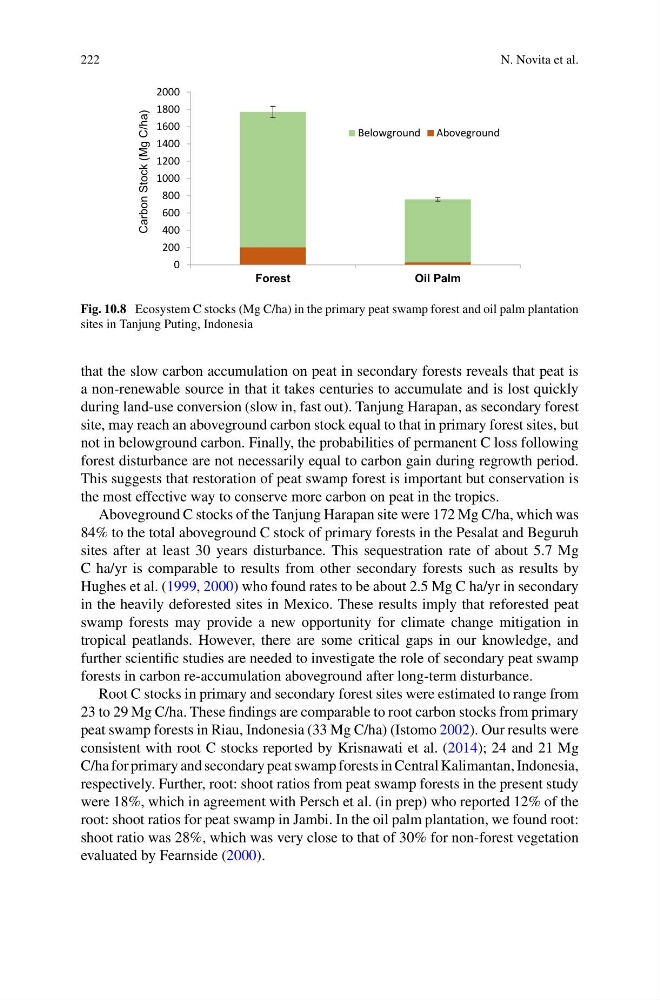
Fig. 10.8 Ecosystem C stocks (Mg C/ha) in the primary peat swamp forest and oil palm plantation
sites in Tanjung Puting, Indonesia
that the slow carbon accumulation on peat in secondary forests reveals that peat is
a non-renewable source in that it takes centuries to accumulate and is lost quickly
during land-use conversion (slow in, fast out). Tanjung Harapan, as secondary forest
site, may reach an aboveground carbon stock equal to that in primary forest sites, but
not in belowground carbon. Finally, the probabilities of permanent C loss following
forest disturbance are not necessarily equal to carbon gain during regrowth period.
This suggests that restoration of peat swamp forest is important but conservation is
the most effective way to conserve more carbon on peat in the tropics.
Aboveground C stocks of the Tanjung Harapan site were 172 Mg C/ha, which was
84% to the total aboveground C stock of primary forests in the Pesalat and Beguruh
sites after at least 30 years disturbance. This sequestration rate of about 5.7 Mg
C ha/yr is comparable to results from other secondary forests such as results by
Hughes et al. (1999, 2000) who found rates to be about 2.5 Mg C ha/yr in secondary
in the heavily deforested sites in Mexico. These results imply that reforested peat
swamp forests may provide a new opportunity for climate change mitigation in
tropical peatlands. However, there are some critical gaps in our knowledge, and
further scientific studies are needed to investigate the role of secondary peat swamp
forests in carbon re-accumulation aboveground after long-term disturbance.
Root C stocks in primary and secondary forest sites were estimated to range from
23 to 29 Mg C/ha. These findings are comparable to root carbon stocks from primary
peat swamp forests in Riau, Indonesia (33 Mg C/ha) (Istomo 2002). Our results were
consistent with root C stocks reported by Krisnawati et al. (2014); 24 and 21 Mg
C/ha for primary and secondary peat swamp forests in Central Kalimantan, Indonesia,
respectively. Further, root: shoot ratios from peat swamp forests in the present study
were 18%, which in agreement with Persch et al. (in prep) who reported 12% of the
root: shoot ratios for peat swamp in Jambi. In the oil palm plantation, we found root:
shoot ratio was 28%, which was very close to that of 30% for non-forest vegetation
evaluated by Fearnside (2000).
N. Novita et al.
0
200
400
600
800
1000
1200
1400
1600
1800
2000
Forest
Oil Palm
Carbon Stock (Mg C/ha)
Belowground Aboveground
Fig. 10.8 Ecosystem C stocks (Mg C/ha) in the primary peat swamp forest and oil palm plantation
sites in Tanjung Puting, Indonesia
that the slow carbon accumulation on peat in secondary forests reveals that peat is
a non-renewable source in that it takes centuries to accumulate and is lost quickly
during land-use conversion (slow in, fast out). Tanjung Harapan, as secondary forest
site, may reach an aboveground carbon stock equal to that in primary forest sites, but
not in belowground carbon. Finally, the probabilities of permanent C loss following
forest disturbance are not necessarily equal to carbon gain during regrowth period.
This suggests that restoration of peat swamp forest is important but conservation is
the most effective way to conserve more carbon on peat in the tropics.
Aboveground C stocks of the Tanjung Harapan site were 172 Mg C/ha, which was
84% to the total aboveground C stock of primary forests in the Pesalat and Beguruh
sites after at least 30 years disturbance. This sequestration rate of about 5.7 Mg
C ha/yr is comparable to results from other secondary forests such as results by
Hughes et al. (1999, 2000) who found rates to be about 2.5 Mg C ha/yr in secondary
in the heavily deforested sites in Mexico. These results imply that reforested peat
swamp forests may provide a new opportunity for climate change mitigation in
tropical peatlands. However, there are some critical gaps in our knowledge, and
further scientific studies are needed to investigate the role of secondary peat swamp
forests in carbon re-accumulation aboveground after long-term disturbance.
Root C stocks in primary and secondary forest sites were estimated to range from
23 to 29 Mg C/ha. These findings are comparable to root carbon stocks from primary
peat swamp forests in Riau, Indonesia (33 Mg C/ha) (Istomo 2002). Our results were
consistent with root C stocks reported by Krisnawati et al. (2014); 24 and 21 Mg
C/ha for primary and secondary peat swamp forests in Central Kalimantan, Indonesia,
respectively. Further, root: shoot ratios from peat swamp forests in the present study
were 18%, which in agreement with Persch et al. (in prep) who reported 12% of the
root: shoot ratios for peat swamp in Jambi. In the oil palm plantation, we found root:
shoot ratio was 28%, which was very close to that of 30% for non-forest vegetation
evaluated by Fearnside (2000).