

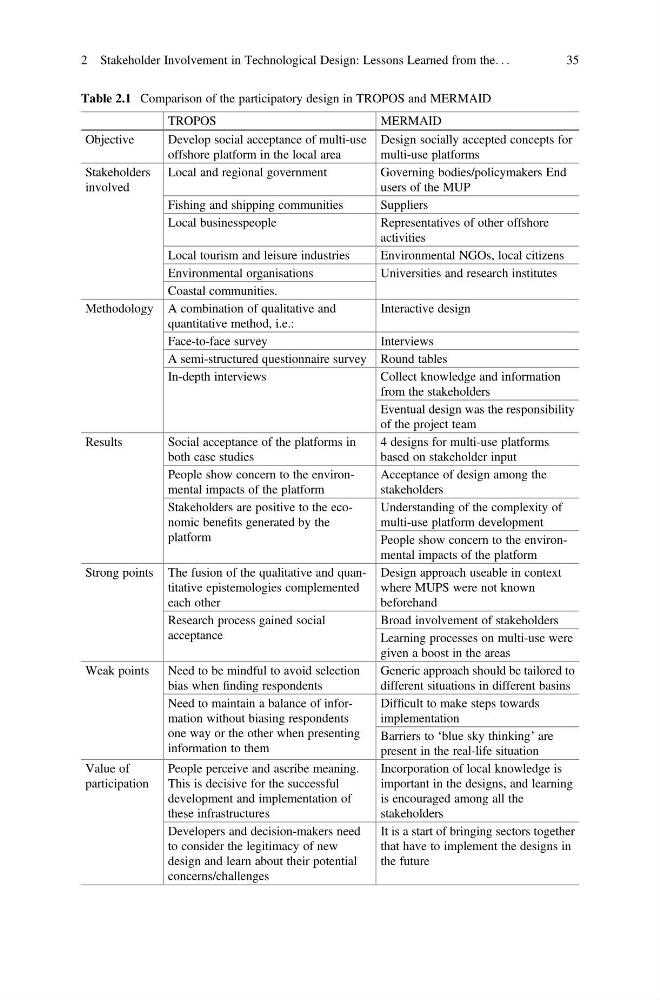
Table 2.1 Comparison of the participatory design in TROPOS and MERMAID
TROPOS
MERMAID
Objective
Develop social acceptance of multi-use
offshore platform in the local area
Design socially accepted concepts for
multi-use platforms
Stakeholders
involved
Local and regional government
Governing bodies/policymakers End
users of the MUP
Fishing and shipping communities
Suppliers
Local businesspeople
Representatives of other offshore
activities
Local tourism and leisure industries
Environmental NGOs, local citizens
Environmental organisations
Universities and research institutes
Coastal communities.
Methodology A combination of qualitative and
quantitative method, i.e.:
Interactive design
Face-to-face survey
Interviews
A semi-structured questionnaire survey Round tables
In-depth interviews
Collect knowledge and information
from the stakeholders
Eventual design was the responsibility
of the project team
Results
Social acceptance of the platforms in
both case studies
4 designs for multi-use platforms
based on stakeholder input
People show concern to the environmental impacts of the platform
Acceptance of design among the
stakeholders
Stakeholders are positive to the economic benefits generated by the
platform
Understanding of the complexity of
multi-use platform development
People show concern to the environmental impacts of the platform
Strong points The fusion of the qualitative and quantitative epistemologies complemented
each other
Design approach useable in context
where MUPS were not known
beforehand
Research process gained social
acceptance
Broad involvement of stakeholders
Learning processes on multi-use were
given a boost in the areas
Weak points Need to be mindful to avoid selection
bias when finding respondents
Generic approach should be tailored to
different situations in different basins
Need to maintain a balance of information without biasing respondents
one way or the other when presenting
information to them
Difficult to make steps towards
implementation
Barriers to ‘blue sky thinking’ are
present in the real-life situation
Value of
participation
People perceive and ascribe meaning.
This is decisive for the successful
development and implementation of
these infrastructures
Incorporation of local knowledge is
important in the designs, and learning
is encouraged among all the
stakeholders
Developers and decision-makers need
to consider the legitimacy of new
design and learn about their potential
concerns/challenges
It is a start of bringing sectors together
that have to implement the designs in
the future
2 Stakeholder Involvement in Technological Design: Lessons Learned from the. . .
35
TROPOS
MERMAID
Objective
Develop social acceptance of multi-use
offshore platform in the local area
Design socially accepted concepts for
multi-use platforms
Stakeholders
involved
Local and regional government
Governing bodies/policymakers End
users of the MUP
Fishing and shipping communities
Suppliers
Local businesspeople
Representatives of other offshore
activities
Local tourism and leisure industries
Environmental NGOs, local citizens
Environmental organisations
Universities and research institutes
Coastal communities.
Methodology A combination of qualitative and
quantitative method, i.e.:
Interactive design
Face-to-face survey
Interviews
A semi-structured questionnaire survey Round tables
In-depth interviews
Collect knowledge and information
from the stakeholders
Eventual design was the responsibility
of the project team
Results
Social acceptance of the platforms in
both case studies
4 designs for multi-use platforms
based on stakeholder input
People show concern to the environmental impacts of the platform
Acceptance of design among the
stakeholders
Stakeholders are positive to the economic benefits generated by the
platform
Understanding of the complexity of
multi-use platform development
People show concern to the environmental impacts of the platform
Strong points The fusion of the qualitative and quantitative epistemologies complemented
each other
Design approach useable in context
where MUPS were not known
beforehand
Research process gained social
acceptance
Broad involvement of stakeholders
Learning processes on multi-use were
given a boost in the areas
Weak points Need to be mindful to avoid selection
bias when finding respondents
Generic approach should be tailored to
different situations in different basins
Need to maintain a balance of information without biasing respondents
one way or the other when presenting
information to them
Difficult to make steps towards
implementation
Barriers to ‘blue sky thinking’ are
present in the real-life situation
Value of
participation
People perceive and ascribe meaning.
This is decisive for the successful
development and implementation of
these infrastructures
Incorporation of local knowledge is
important in the designs, and learning
is encouraged among all the
stakeholders
Developers and decision-makers need
to consider the legitimacy of new
design and learn about their potential
concerns/challenges
It is a start of bringing sectors together
that have to implement the designs in
the future
2 Stakeholder Involvement in Technological Design: Lessons Learned from the. . .
35