

• Reproducibility of analysis
A researcher should be able to reproduce their analysis, that is, run the same
model with the same assumptions based on the exact same set of data. That would
allow also for comparison based on dataset enhancements and changes. For that
purpose, a data versioning system could be added into the tool.
• Automation of data preprocessing and curation
The tool could potentially give the user the ability to be able to preprocess raw
climate data (wind, wave, currents, etc.) from existing repositories and shape
them in the appropriate input format for the tool using graphical tools. That would
allow for a more sophisticated model and the expansion of the tool in other
domains such as spatial analysis.
• Spatial placement of the platforms
The enhanced tool could include a spatial data planning component that would
use relevant project data (climate, engineering, ecological, socio-economic) to
present the spatial alternatives, creating a suitability map. The user should be able
to revise suggested placements and evaluate new areas for placement based on the
constraints fed in the tool.
• Expandability in other projects with different socio-economic activities
The data modeling of the socio-economic activities can be generic enough to
expand any number of characteristics.
• Sensitivity analysis
The enhanced tool could visualize the outputs of sensitivity analysis as
proposed in the underlying methodology. More specifically, it could allow for
numerous model runs to assess how changes in model parameters will affect
model outputs, thus allowing the user to assess the parameters in which the model
is most sensitive to.
In the described tool could perform manually cross-validation to refine parameter
selection for the simulation. In the future, this fine-tuning of the simulation could be
performed automatically. MERMAID’s assessment tool provided researchers with
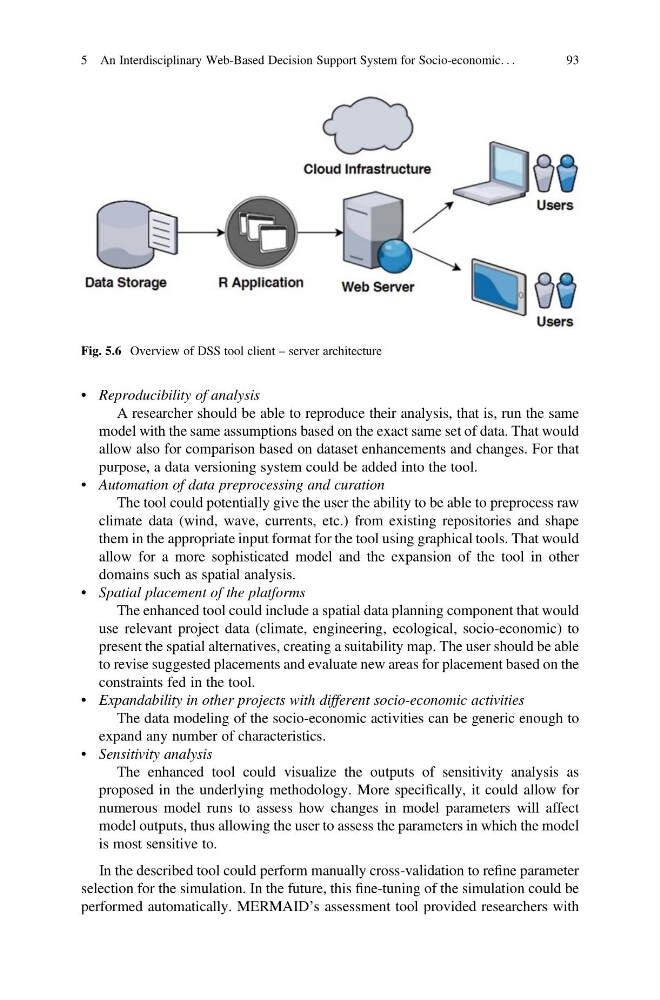
Fig. 5.6 Overview of DSS tool client – server architecture
5 An Interdisciplinary Web-Based Decision Support System for Socio-economic. . .
93
A researcher should be able to reproduce their analysis, that is, run the same
model with the same assumptions based on the exact same set of data. That would
allow also for comparison based on dataset enhancements and changes. For that
purpose, a data versioning system could be added into the tool.
• Automation of data preprocessing and curation
The tool could potentially give the user the ability to be able to preprocess raw
climate data (wind, wave, currents, etc.) from existing repositories and shape
them in the appropriate input format for the tool using graphical tools. That would
allow for a more sophisticated model and the expansion of the tool in other
domains such as spatial analysis.
• Spatial placement of the platforms
The enhanced tool could include a spatial data planning component that would
use relevant project data (climate, engineering, ecological, socio-economic) to
present the spatial alternatives, creating a suitability map. The user should be able
to revise suggested placements and evaluate new areas for placement based on the
constraints fed in the tool.
• Expandability in other projects with different socio-economic activities
The data modeling of the socio-economic activities can be generic enough to
expand any number of characteristics.
• Sensitivity analysis
The enhanced tool could visualize the outputs of sensitivity analysis as
proposed in the underlying methodology. More specifically, it could allow for
numerous model runs to assess how changes in model parameters will affect
model outputs, thus allowing the user to assess the parameters in which the model
is most sensitive to.
In the described tool could perform manually cross-validation to refine parameter
selection for the simulation. In the future, this fine-tuning of the simulation could be
performed automatically. MERMAID’s assessment tool provided researchers with
Fig. 5.6 Overview of DSS tool client – server architecture
5 An Interdisciplinary Web-Based Decision Support System for Socio-economic. . .
93