

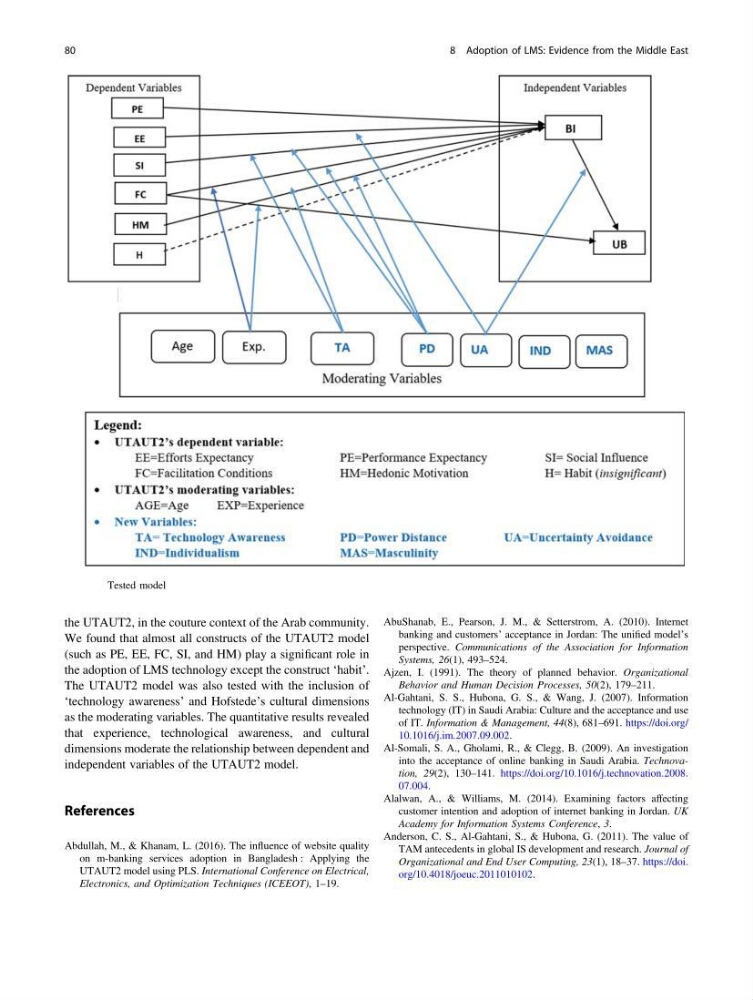
the UTAUT2, in the couture context of the Arab community.
We found that almost all constructs of the UTAUT2 model
(such as PE, EE, FC, SI, and HM) play a significant role in
the adoption of LMS technology except the construct ‘habit’.
The UTAUT2 model was also tested with the inclusion of
‘technology awareness’ and Hofstede’s cultural dimensions
as the moderating variables. The quantitative results revealed
that experience, technological awareness, and cultural
dimensions moderate the relationship between dependent and
independent variables of the UTAUT2 model.
References
Abdullah, M., & Khanam, L. (2016). The influence of website quality
on m-banking services adoption in Bangladesh : Applying the
UTAUT2 model using PLS. International Conference on Electrical,
Electronics, and Optimization Techniques (ICEEOT), 1–19.
AbuShanab, E., Pearson, J. M., & Setterstrom, A. (2010). Internet
banking and customers’ acceptance in Jordan: The unified model’s
perspective. Communications of the Association for Information
Systems, 26(1), 493–524.
Ajzen, I. (1991). The theory of planned behavior. Organizational
Behavior and Human Decision Processes, 50(2), 179–211.
Al-Gahtani, S. S., Hubona, G. S., & Wang, J. (2007). Information
technology (IT) in Saudi Arabia: Culture and the acceptance and use
of IT. Information & Management, 44(8), 681–691. https://doi.org/
10.1016/j.im.2007.09.002.
Al-Somali, S. A., Gholami, R., & Clegg, B. (2009). An investigation
into the acceptance of online banking in Saudi Arabia. Technovation, 29(2), 130–141. https://doi.org/10.1016/j.technovation.2008.
07.004.
Alalwan, A., & Williams, M. (2014). Examining factors affecting
customer intention and adoption of internet banking in Jordan. UK
Academy for Information Systems Conference, 3.
Anderson, C. S., Al-Gahtani, S., & Hubona, G. (2011). The value of
TAM antecedents in global IS development and research. Journal of
Organizational and End User Computing, 23(1), 18–37. https://doi.
org/10.4018/joeuc.2011010102.
Fig. 8.1 Tested model
80
8 Adoption of LMS: Evidence from the Middle East
We found that almost all constructs of the UTAUT2 model
(such as PE, EE, FC, SI, and HM) play a significant role in
the adoption of LMS technology except the construct ‘habit’.
The UTAUT2 model was also tested with the inclusion of
‘technology awareness’ and Hofstede’s cultural dimensions
as the moderating variables. The quantitative results revealed
that experience, technological awareness, and cultural
dimensions moderate the relationship between dependent and
independent variables of the UTAUT2 model.
References
Abdullah, M., & Khanam, L. (2016). The influence of website quality
on m-banking services adoption in Bangladesh : Applying the
UTAUT2 model using PLS. International Conference on Electrical,
Electronics, and Optimization Techniques (ICEEOT), 1–19.
AbuShanab, E., Pearson, J. M., & Setterstrom, A. (2010). Internet
banking and customers’ acceptance in Jordan: The unified model’s
perspective. Communications of the Association for Information
Systems, 26(1), 493–524.
Ajzen, I. (1991). The theory of planned behavior. Organizational
Behavior and Human Decision Processes, 50(2), 179–211.
Al-Gahtani, S. S., Hubona, G. S., & Wang, J. (2007). Information
technology (IT) in Saudi Arabia: Culture and the acceptance and use
of IT. Information & Management, 44(8), 681–691. https://doi.org/
10.1016/j.im.2007.09.002.
Al-Somali, S. A., Gholami, R., & Clegg, B. (2009). An investigation
into the acceptance of online banking in Saudi Arabia. Technovation, 29(2), 130–141. https://doi.org/10.1016/j.technovation.2008.
07.004.
Alalwan, A., & Williams, M. (2014). Examining factors affecting
customer intention and adoption of internet banking in Jordan. UK
Academy for Information Systems Conference, 3.
Anderson, C. S., Al-Gahtani, S., & Hubona, G. (2011). The value of
TAM antecedents in global IS development and research. Journal of
Organizational and End User Computing, 23(1), 18–37. https://doi.
org/10.4018/joeuc.2011010102.
Fig. 8.1 Tested model
80
8 Adoption of LMS: Evidence from the Middle East