

that make a culture. However, Hofstede calculated and
provided different values for every country within a cluster.
For instance, the Anglo cluster included Canada, USA,
Australia, UK, South Africa, Ireland, and New Zealand. The
power distance of the UAS is 91 whereas other countries
have different scores indicating cultural variation despite the
commonality of religion and language. Similarly, all Arab
countries were allotted similar scores by Hofstede for all
dimensions in the earlier Hofstede (1980a) model. Clustering all Arab regions together led to incorrect measurements
by overlooking at the small level cultural differences
between Arab countries. Having commonalities that share
the same religion and language does not justify clustering
into one group (Williamson, 2002). Al-Khatib, Vitell, Rexeisen, and Rawwas (2005) also challenged the supposition of
gathering Arabs in one cluster to make a homogenous
group. Kalliny and Gentry (2007) warned that basing similarities on Islam, as there are many, does not mean that Arab
Muslims and the Americans Muslims have a similar culture.
It was suggested that research should be carried out for
individual countries to get deeper insights rather than relying
on the clustering of countries. Western researchers such as
Hofstede claimed that all 22 Arab countries are homogenous
in their culture, while other studies show that there are differences in their values, attitudes and other cultural elements,
but the researchers have failed to provide depths and insights
about the adoption of technology.
4.6.2 Strengths of Hofstede’s Dimensions
Despite all criticism, Hofstede received huge support from
many researchers. When he published in 1980, not many
other studies were published on culture. Hofstede’s study is
considered a pioneer for many (Sondergaard, 1994). Many
researchers give credit to Hofstede for opening people’s eyes
to the significance of culture (Baptista & Oliveira, 2015).
According to Sondergaard (1994) in the majority of cases,
the results of Hofstede’s studies were found to be matched
with other researchers. Hofstede’s dimensions are the most
widely recognized and accepted for comparison of cultures
on a national-level and multiple countries. Hofstede’s
research on cultural dimensions has been extensively used
and cited in many studies by many other researchers.
4.7 The Comparison of Hofstede’s
Dimensions Between Saudi Arabia
and the UK
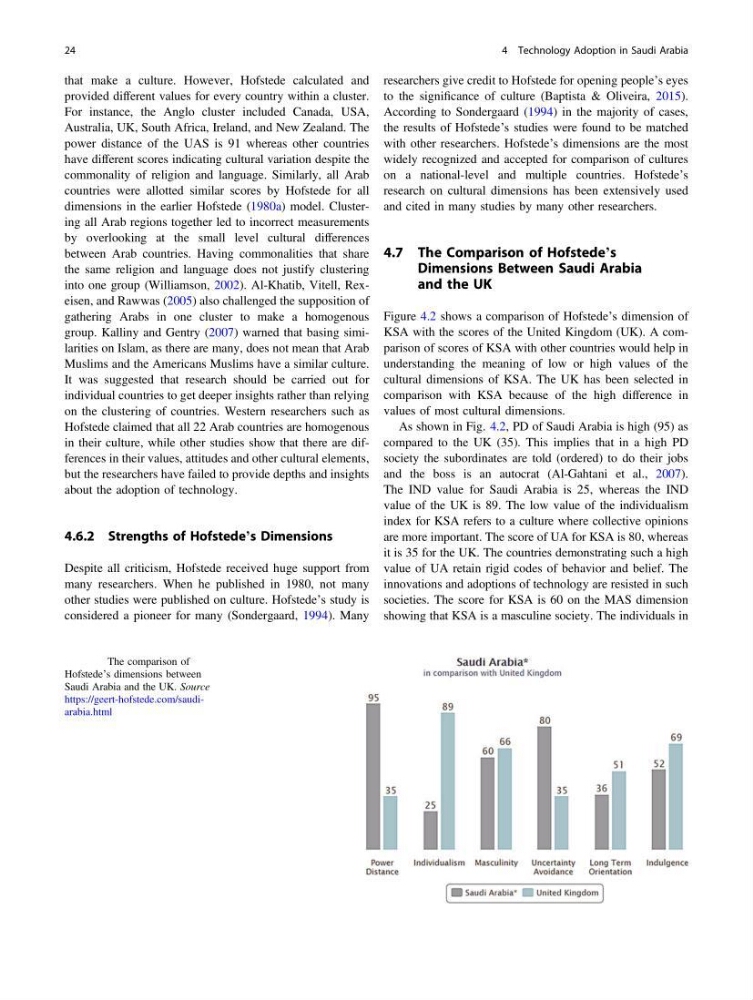
Figure 4.2 shows a comparison of Hofstede’s dimension of
KSA with the scores of the United Kingdom (UK). A comparison of scores of KSA with other countries would help in
understanding the meaning of low or high values of the
cultural dimensions of KSA. The UK has been selected in
comparison with KSA because of the high difference in
values of most cultural dimensions.
As shown in Fig. 4.2, PD of Saudi Arabia is high (95) as
compared to the UK (35). This implies that in a high PD
society the subordinates are told (ordered) to do their jobs
and the boss is an autocrat (Al-Gahtani et al., 2007).
The IND value for Saudi Arabia is 25, whereas the IND
value of the UK is 89. The low value of the individualism
index for KSA refers to a culture where collective opinions
are more important. The score of UA for KSA is 80, whereas
it is 35 for the UK. The countries demonstrating such a high
value of UA retain rigid codes of behavior and belief. The
innovations and adoptions of technology are resisted in such
societies. The score for KSA is 60 on the MAS dimension
showing that KSA is a masculine society. The individuals in
Fig. 4.2 The comparison of
Hofstede’s dimensions between
Saudi Arabia and the UK. Source
https://geert-hofstede.com/saudiarabia.html
24
4 Technology Adoption in Saudi Arabia
provided different values for every country within a cluster.
For instance, the Anglo cluster included Canada, USA,
Australia, UK, South Africa, Ireland, and New Zealand. The
power distance of the UAS is 91 whereas other countries
have different scores indicating cultural variation despite the
commonality of religion and language. Similarly, all Arab
countries were allotted similar scores by Hofstede for all
dimensions in the earlier Hofstede (1980a) model. Clustering all Arab regions together led to incorrect measurements
by overlooking at the small level cultural differences
between Arab countries. Having commonalities that share
the same religion and language does not justify clustering
into one group (Williamson, 2002). Al-Khatib, Vitell, Rexeisen, and Rawwas (2005) also challenged the supposition of
gathering Arabs in one cluster to make a homogenous
group. Kalliny and Gentry (2007) warned that basing similarities on Islam, as there are many, does not mean that Arab
Muslims and the Americans Muslims have a similar culture.
It was suggested that research should be carried out for
individual countries to get deeper insights rather than relying
on the clustering of countries. Western researchers such as
Hofstede claimed that all 22 Arab countries are homogenous
in their culture, while other studies show that there are differences in their values, attitudes and other cultural elements,
but the researchers have failed to provide depths and insights
about the adoption of technology.
4.6.2 Strengths of Hofstede’s Dimensions
Despite all criticism, Hofstede received huge support from
many researchers. When he published in 1980, not many
other studies were published on culture. Hofstede’s study is
considered a pioneer for many (Sondergaard, 1994). Many
researchers give credit to Hofstede for opening people’s eyes
to the significance of culture (Baptista & Oliveira, 2015).
According to Sondergaard (1994) in the majority of cases,
the results of Hofstede’s studies were found to be matched
with other researchers. Hofstede’s dimensions are the most
widely recognized and accepted for comparison of cultures
on a national-level and multiple countries. Hofstede’s
research on cultural dimensions has been extensively used
and cited in many studies by many other researchers.
4.7 The Comparison of Hofstede’s
Dimensions Between Saudi Arabia
and the UK
Figure 4.2 shows a comparison of Hofstede’s dimension of
KSA with the scores of the United Kingdom (UK). A comparison of scores of KSA with other countries would help in
understanding the meaning of low or high values of the
cultural dimensions of KSA. The UK has been selected in
comparison with KSA because of the high difference in
values of most cultural dimensions.
As shown in Fig. 4.2, PD of Saudi Arabia is high (95) as
compared to the UK (35). This implies that in a high PD
society the subordinates are told (ordered) to do their jobs
and the boss is an autocrat (Al-Gahtani et al., 2007).
The IND value for Saudi Arabia is 25, whereas the IND
value of the UK is 89. The low value of the individualism
index for KSA refers to a culture where collective opinions
are more important. The score of UA for KSA is 80, whereas
it is 35 for the UK. The countries demonstrating such a high
value of UA retain rigid codes of behavior and belief. The
innovations and adoptions of technology are resisted in such
societies. The score for KSA is 60 on the MAS dimension
showing that KSA is a masculine society. The individuals in
Fig. 4.2 The comparison of
Hofstede’s dimensions between
Saudi Arabia and the UK. Source
https://geert-hofstede.com/saudiarabia.html
24
4 Technology Adoption in Saudi Arabia