

3 THE IMPACT oF GERMAN ENERGY PoLICY oN HoUSEHoLD ENERGY USE
27
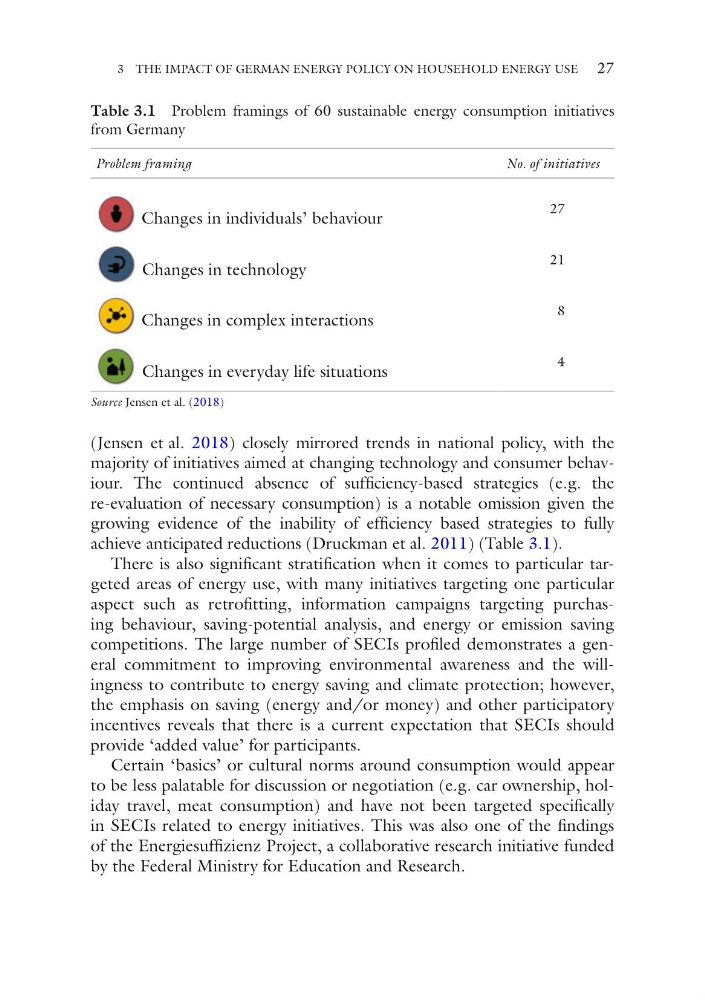
(Jensen et al. 2018) closely mirrored trends in national policy, with the
majority of initiatives aimed at changing technology and consumer behaviour. The continued absence of sufficiency-based strategies (e.g. the
re-evaluation of necessary consumption) is a notable omission given the
growing evidence of the inability of efficiency based strategies to fully
achieve anticipated reductions (Druckman et al. 2011) (Table 3.1).
There is also significant stratification when it comes to particular targeted areas of energy use, with many initiatives targeting one particular
aspect such as retrofitting, information campaigns targeting purchasing behaviour, saving-potential analysis, and energy or emission saving
competitions. The large number of SECIs profiled demonstrates a general commitment to improving environmental awareness and the willingness to contribute to energy saving and climate protection; however,
the emphasis on saving (energy and/or money) and other participatory
incentives reveals that there is a current expectation that SECIs should
provide ‘added value’ for participants.
Certain ‘basics’ or cultural norms around consumption would appear
to be less palatable for discussion or negotiation (e.g. car ownership, holiday travel, meat consumption) and have not been targeted specifically
in SECIs related to energy initiatives. This was also one of the findings
of the Energiesuffizienz Project, a collaborative research initiative funded
by the Federal Ministry for Education and Research.
Table 3.1 Problem framings of 60 sustainable energy consumption initiatives
from Germany
Source Jensen et al. (2018)
Problem framing
No. of initiatives
Changes in individuals’ behaviour
27
Changes in technology
21
Changes in complex interactions
8
Changes in everyday life situations
4
27
(Jensen et al. 2018) closely mirrored trends in national policy, with the
majority of initiatives aimed at changing technology and consumer behaviour. The continued absence of sufficiency-based strategies (e.g. the
re-evaluation of necessary consumption) is a notable omission given the
growing evidence of the inability of efficiency based strategies to fully
achieve anticipated reductions (Druckman et al. 2011) (Table 3.1).
There is also significant stratification when it comes to particular targeted areas of energy use, with many initiatives targeting one particular
aspect such as retrofitting, information campaigns targeting purchasing behaviour, saving-potential analysis, and energy or emission saving
competitions. The large number of SECIs profiled demonstrates a general commitment to improving environmental awareness and the willingness to contribute to energy saving and climate protection; however,
the emphasis on saving (energy and/or money) and other participatory
incentives reveals that there is a current expectation that SECIs should
provide ‘added value’ for participants.
Certain ‘basics’ or cultural norms around consumption would appear
to be less palatable for discussion or negotiation (e.g. car ownership, holiday travel, meat consumption) and have not been targeted specifically
in SECIs related to energy initiatives. This was also one of the findings
of the Energiesuffizienz Project, a collaborative research initiative funded
by the Federal Ministry for Education and Research.
Table 3.1 Problem framings of 60 sustainable energy consumption initiatives
from Germany
Source Jensen et al. (2018)
Problem framing
No. of initiatives
Changes in individuals’ behaviour
27
Changes in technology
21
Changes in complex interactions
8
Changes in everyday life situations
4