

10 FRoM EFFICIENCY To SUFFICIENCY: INSIGHTS …
109
policy that supported research programmes on energy issues in the
past decade, as mentioned above. As a result, numerous initiatives
aimed at improving household energy usage (and systems more generally) are underway in Switzerland, engaging with innovative processes such living labs and action research, with new collaborations
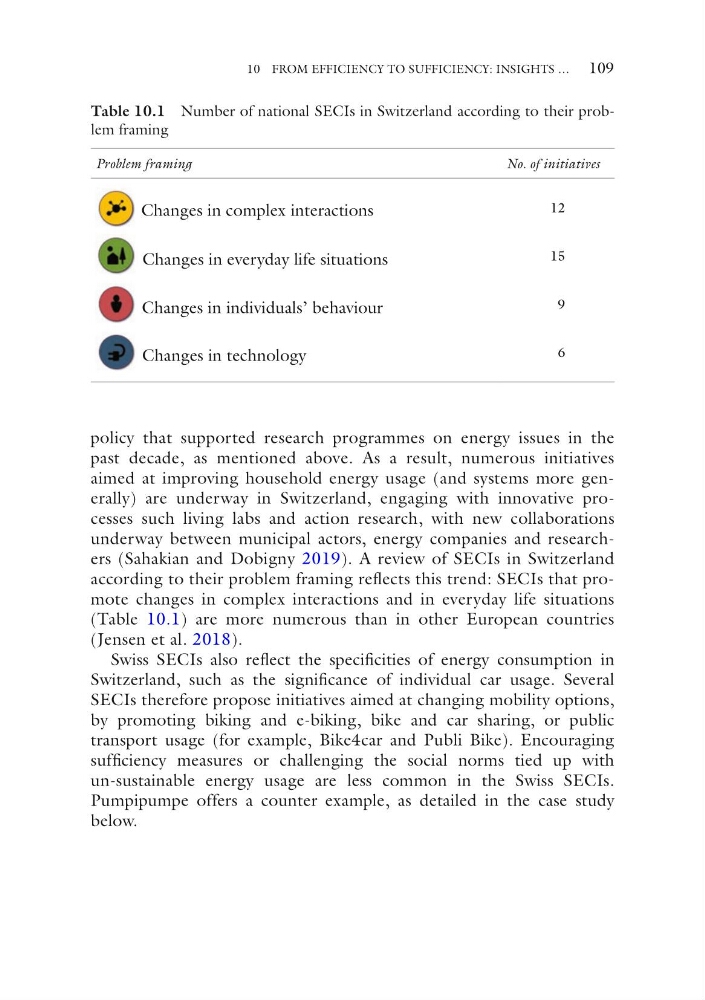
underway between municipal actors, energy companies and researchers (Sahakian and Dobigny 2019). A review of SECIs in Switzerland
according to their problem framing reflects this trend: SECIs that promote changes in complex interactions and in everyday life situations
(Table 10.1) are more numerous than in other European countries
(Jensen et al. 2018).
Swiss SECIs also reflect the specificities of energy consumption in
Switzerland, such as the significance of individual car usage. Several
SECIs therefore propose initiatives aimed at changing mobility options,
by promoting biking and e-biking, bike and car sharing, or public
transport usage (for example, Bike4car and Publi Bike). Encouraging
sufficiency measures or challenging the social norms tied up with
un-sustainable energy usage are less common in the Swiss SECIs.
Pumpipumpe offers a counter example, as detailed in the case study
below.
Table 10.1 Number of national SECIs in Switzerland according to their problem framing
Problem framing
No. of initiatives
Changes in complex interactions
12
Changes in everyday life situations
15
Changes in individuals’ behaviour
9
Changes in technology
6
109
policy that supported research programmes on energy issues in the
past decade, as mentioned above. As a result, numerous initiatives
aimed at improving household energy usage (and systems more generally) are underway in Switzerland, engaging with innovative processes such living labs and action research, with new collaborations
underway between municipal actors, energy companies and researchers (Sahakian and Dobigny 2019). A review of SECIs in Switzerland
according to their problem framing reflects this trend: SECIs that promote changes in complex interactions and in everyday life situations
(Table 10.1) are more numerous than in other European countries
(Jensen et al. 2018).
Swiss SECIs also reflect the specificities of energy consumption in
Switzerland, such as the significance of individual car usage. Several
SECIs therefore propose initiatives aimed at changing mobility options,
by promoting biking and e-biking, bike and car sharing, or public
transport usage (for example, Bike4car and Publi Bike). Encouraging
sufficiency measures or challenging the social norms tied up with
un-sustainable energy usage are less common in the Swiss SECIs.
Pumpipumpe offers a counter example, as detailed in the case study
below.
Table 10.1 Number of national SECIs in Switzerland according to their problem framing
Problem framing
No. of initiatives
Changes in complex interactions
12
Changes in everyday life situations
15
Changes in individuals’ behaviour
9
Changes in technology
6