

Due to its leadership role among emerging
economies, and its position as the world’s largest
energy consumer and greenhouse gas emitter,
China is uniquely placed to drive global energy
governance reforms.
China should undertake a major power’s
responsibilities in global energy governance. It
should drive change of the international energy
governance landscape dominated by developed
economies to make the global energy governance
regime more representative and better reflect the
interests of developing and emerging economies.
And it should propose building a shared future in
global energy to deliver win-win results with the
world. China has a responsibility to reduce
emissions, promote the energy revolution and
lead in the energy transition, and be open to the
outside world.
First, China should participate deeply in the
current cooperation between, and reform of,
existing international energy governance institutions. Specifically, China should actively advocate or lead the amendment of international
mechanisms and the establishment of new ones.
It should integrate with the international energy
market and participate in global energy governance in depth, thus becoming an active,
responsible, constructive and reliable contributor.
In particular, China should: (i) have comprehensive strategies and a roadmap for its
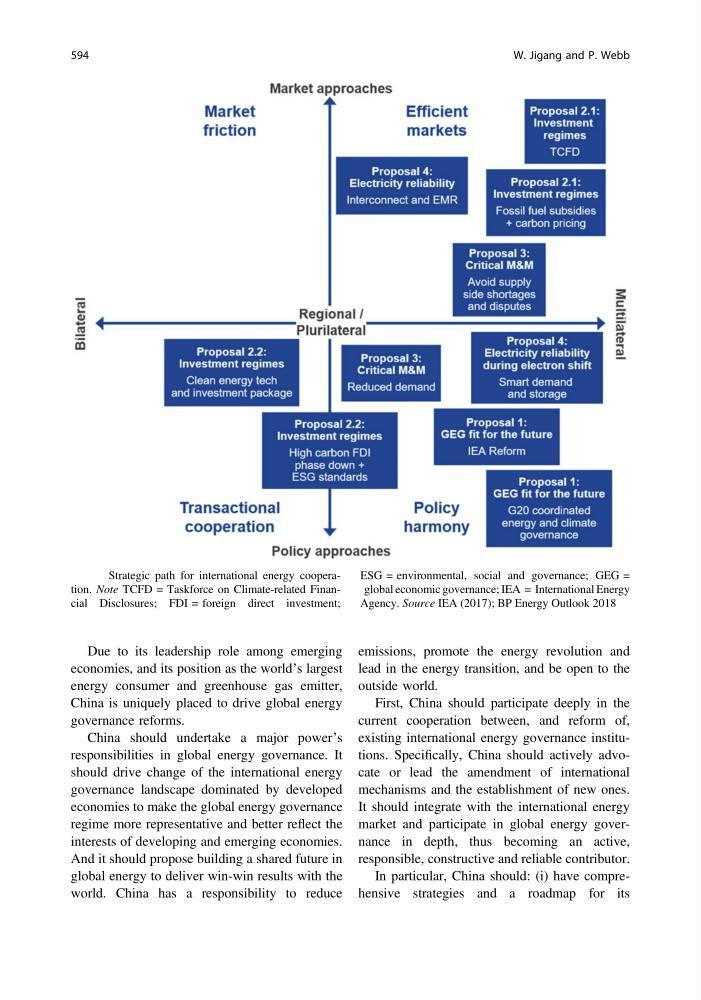
Fig. 1 Strategic path for international energy cooperation. Note TCFD = Taskforce on Climate-related Financial Disclosures; FDI = foreign direct investment;
ESG = environmental, social and governance; GEG =
global economic governance; IEA = International Energy
Agency. Source IEA (2017); BP Energy Outlook 2018
594
W. Jigang and P. Webb