

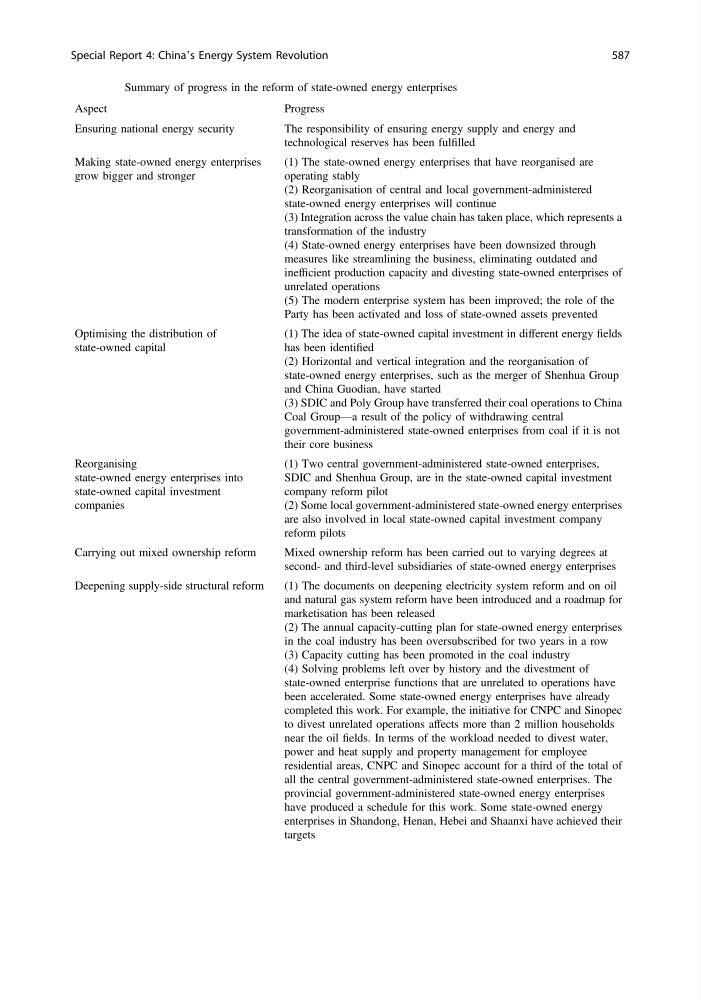
Table 18 Summary of progress in the reform of state-owned energy enterprises
Aspect
Progress
Ensuring national energy security
The responsibility of ensuring energy supply and energy and
technological reserves has been fulfilled
Making state-owned energy enterprises
grow bigger and stronger
(1) The state-owned energy enterprises that have reorganised are
operating stably
(2) Reorganisation of central and local government-administered
state-owned energy enterprises will continue
(3) Integration across the value chain has taken place, which represents a
transformation of the industry
(4) State-owned energy enterprises have been downsized through
measures like streamlining the business, eliminating outdated and
inefficient production capacity and divesting state-owned enterprises of
unrelated operations
(5) The modern enterprise system has been improved; the role of the
Party has been activated and loss of state-owned assets prevented
Optimising the distribution of
state-owned capital
(1) The idea of state-owned capital investment in different energy fields
has been identified
(2) Horizontal and vertical integration and the reorganisation of
state-owned energy enterprises, such as the merger of Shenhua Group
and China Guodian, have started
(3) SDIC and Poly Group have transferred their coal operations to China
Coal Group—a result of the policy of withdrawing central
government-administered state-owned enterprises from coal if it is not
their core business
Reorganising
state-owned energy enterprises into
state-owned capital investment
companies
(1) Two central government-administered state-owned enterprises,
SDIC and Shenhua Group, are in the state-owned capital investment
company reform pilot
(2) Some local government-administered state-owned energy enterprises
are also involved in local state-owned capital investment company
reform pilots
Carrying out mixed ownership reform
Mixed ownership reform has been carried out to varying degrees at
second- and third-level subsidiaries of state-owned energy enterprises
Deepening supply-side structural reform
(1) The documents on deepening electricity system reform and on oil
and natural gas system reform have been introduced and a roadmap for
marketisation has been released
(2) The annual capacity-cutting plan for state-owned energy enterprises
in the coal industry has been oversubscribed for two years in a row
(3) Capacity cutting has been promoted in the coal industry
(4) Solving problems left over by history and the divestment of
state-owned enterprise functions that are unrelated to operations have
been accelerated. Some state-owned energy enterprises have already
completed this work. For example, the initiative for CNPC and Sinopec
to divest unrelated operations affects more than 2 million households
near the oil fields. In terms of the workload needed to divest water,
power and heat supply and property management for employee
residential areas, CNPC and Sinopec account for a third of the total of
all the central government-administered state-owned enterprises. The
provincial government-administered state-owned energy enterprises
have produced a schedule for this work. Some state-owned energy
enterprises in Shandong, Henan, Hebei and Shaanxi have achieved their
targets
Special Report 4: China’s Energy System Revolution
587
Aspect
Progress
Ensuring national energy security
The responsibility of ensuring energy supply and energy and
technological reserves has been fulfilled
Making state-owned energy enterprises
grow bigger and stronger
(1) The state-owned energy enterprises that have reorganised are
operating stably
(2) Reorganisation of central and local government-administered
state-owned energy enterprises will continue
(3) Integration across the value chain has taken place, which represents a
transformation of the industry
(4) State-owned energy enterprises have been downsized through
measures like streamlining the business, eliminating outdated and
inefficient production capacity and divesting state-owned enterprises of
unrelated operations
(5) The modern enterprise system has been improved; the role of the
Party has been activated and loss of state-owned assets prevented
Optimising the distribution of
state-owned capital
(1) The idea of state-owned capital investment in different energy fields
has been identified
(2) Horizontal and vertical integration and the reorganisation of
state-owned energy enterprises, such as the merger of Shenhua Group
and China Guodian, have started
(3) SDIC and Poly Group have transferred their coal operations to China
Coal Group—a result of the policy of withdrawing central
government-administered state-owned enterprises from coal if it is not
their core business
Reorganising
state-owned energy enterprises into
state-owned capital investment
companies
(1) Two central government-administered state-owned enterprises,
SDIC and Shenhua Group, are in the state-owned capital investment
company reform pilot
(2) Some local government-administered state-owned energy enterprises
are also involved in local state-owned capital investment company
reform pilots
Carrying out mixed ownership reform
Mixed ownership reform has been carried out to varying degrees at
second- and third-level subsidiaries of state-owned energy enterprises
Deepening supply-side structural reform
(1) The documents on deepening electricity system reform and on oil
and natural gas system reform have been introduced and a roadmap for
marketisation has been released
(2) The annual capacity-cutting plan for state-owned energy enterprises
in the coal industry has been oversubscribed for two years in a row
(3) Capacity cutting has been promoted in the coal industry
(4) Solving problems left over by history and the divestment of
state-owned enterprise functions that are unrelated to operations have
been accelerated. Some state-owned energy enterprises have already
completed this work. For example, the initiative for CNPC and Sinopec
to divest unrelated operations affects more than 2 million households
near the oil fields. In terms of the workload needed to divest water,
power and heat supply and property management for employee
residential areas, CNPC and Sinopec account for a third of the total of
all the central government-administered state-owned enterprises. The
provincial government-administered state-owned energy enterprises
have produced a schedule for this work. Some state-owned energy
enterprises in Shandong, Henan, Hebei and Shaanxi have achieved their
targets
Special Report 4: China’s Energy System Revolution
587