

and cap setting; (ii) the distribution of allowances; (iii) governance of the market, such as
coverage, banking, offsets, price controls and
trading arrangements; and (iv) policy interactions
with other decarbonisation policies. We analysed
the experience of the European Union ETS, the
Regional Greenhouse Gas Initiative in the USA,
the New Zealand ETS and the California ETS,
for lessons on which choices in each of these sets
of design options lead to a robust carbon market.
China looks likely to use a slow start to
emissions trading. As such it should consider
adopting price controls and a clear reform path to
reduce the risk of becoming stuck in the transition trap. Design trade-offs in the early stages of
carbon pricing are common and can result in
fragility. This means that an active approach to
price management, such as a tight price corridor,
can be used to ensure that incentives are maintained while the market develops. This can be
supported by signalling the direction of climate
policy. For instance, committing to specific
changes through legislation can provide clear
guidance on the direction of policy. This can help
maintain prices and public support for carbon
markets in the event of a shock.
While the next stage of China’s ETS is being
planned, policymakers should consider whether
China should adopt an evolutionary or a
revolutionary approach to carbon markets. Climate change has aspects that suggest a balance
between evolutionary and revolutionary change.
The rate and level of the required emissions
reduction suggests the need for revolutionary
change. However, the difficult politics of such a
change, and limitations in institutional capacity,
suggest that an evolutionary approach may be
more feasible. The choice of approach is for
Chinese policymakers to make. We provide a
detailed roadmap for both options, across the
four sets of design choices, so that the required
actions and pace of reform are clear, whether an
evolutionary or revolutionary approach is taken.
These roadmaps, presented in Sect. 8.4, reflect
best practice from international experience,
drawn from the examples provided in Sect. 8.3.
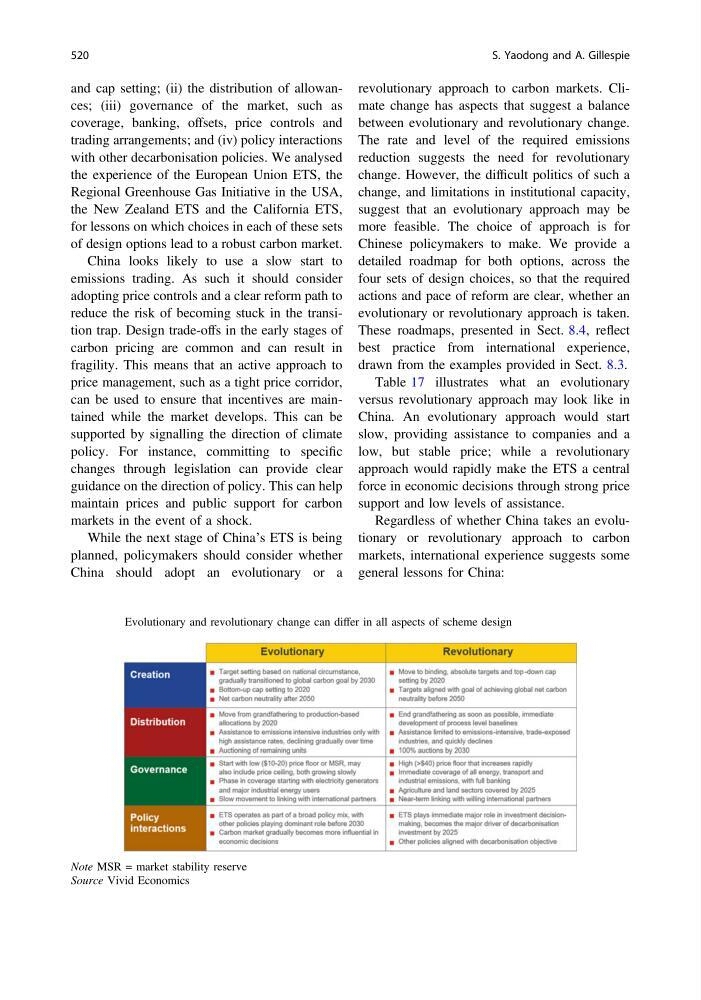
Table 17 illustrates what an evolutionary
versus revolutionary approach may look like in
China. An evolutionary approach would start
slow, providing assistance to companies and a
low, but stable price; while a revolutionary
approach would rapidly make the ETS a central
force in economic decisions through strong price
support and low levels of assistance.
Regardless of whether China takes an evolutionary or revolutionary approach to carbon
markets, international experience suggests some
general lessons for China:
Table 17 Evolutionary and revolutionary change can differ in all aspects of scheme design
Note MSR = market stability reserve
Source Vivid Economics
520
S. Yaodong and A. Gillespie
coverage, banking, offsets, price controls and
trading arrangements; and (iv) policy interactions
with other decarbonisation policies. We analysed
the experience of the European Union ETS, the
Regional Greenhouse Gas Initiative in the USA,
the New Zealand ETS and the California ETS,
for lessons on which choices in each of these sets
of design options lead to a robust carbon market.
China looks likely to use a slow start to
emissions trading. As such it should consider
adopting price controls and a clear reform path to
reduce the risk of becoming stuck in the transition trap. Design trade-offs in the early stages of
carbon pricing are common and can result in
fragility. This means that an active approach to
price management, such as a tight price corridor,
can be used to ensure that incentives are maintained while the market develops. This can be
supported by signalling the direction of climate
policy. For instance, committing to specific
changes through legislation can provide clear
guidance on the direction of policy. This can help
maintain prices and public support for carbon
markets in the event of a shock.
While the next stage of China’s ETS is being
planned, policymakers should consider whether
China should adopt an evolutionary or a
revolutionary approach to carbon markets. Climate change has aspects that suggest a balance
between evolutionary and revolutionary change.
The rate and level of the required emissions
reduction suggests the need for revolutionary
change. However, the difficult politics of such a
change, and limitations in institutional capacity,
suggest that an evolutionary approach may be
more feasible. The choice of approach is for
Chinese policymakers to make. We provide a
detailed roadmap for both options, across the
four sets of design choices, so that the required
actions and pace of reform are clear, whether an
evolutionary or revolutionary approach is taken.
These roadmaps, presented in Sect. 8.4, reflect
best practice from international experience,
drawn from the examples provided in Sect. 8.3.
Table 17 illustrates what an evolutionary
versus revolutionary approach may look like in
China. An evolutionary approach would start
slow, providing assistance to companies and a
low, but stable price; while a revolutionary
approach would rapidly make the ETS a central
force in economic decisions through strong price
support and low levels of assistance.
Regardless of whether China takes an evolutionary or revolutionary approach to carbon
markets, international experience suggests some
general lessons for China:
Table 17 Evolutionary and revolutionary change can differ in all aspects of scheme design
Note MSR = market stability reserve
Source Vivid Economics
520
S. Yaodong and A. Gillespie