

China is attaching increasing importance to
social supervision in the energy sector. The
supervisory functions for the environment, safety
and health involve externalities and public
goods, and tend to be centralised in departments
or administrative institutions such as those for
environmental protection and safety at work.
Social supervision, however, tends to follow the
guiding principles of local administration.
(3) Administration and regulation have been
bundled together, but regulation is weak
China’s institutional organisation of energy regulation generally bundles administration and
regulation together. This reflects the relationship
between energy regulation and other energy
administrative functions. For example, supervision, planning, policy, regulation and public
services are centralised in one department, like
the NDRC or NEA. These departments are
responsible not only for developing investment,
operation and administrative policies in energy
sectors like power, natural gas and coal, but also
for supervising the implementation of these
policies. Despite the relative independence of
these organisations and the formation of some
supervisory departments and bureaus, regulation
is still weaker than other functions, such as
planning and policy.
In the long term, however, especially as the
energy pricing mechanism gradually improves,
the separation of administration and regulation
will continue. Regardless of which approach to
administration and regulation is taken, bundled
or separated, the following tasks need to be
undertaken: increase energy regulation; gradually
raise the access threshold to the energy market;
improve technical standards, environmental
requirements and safety standards; and improve
the management of energy projects and the safety
supervision of energy enterprises. In addition, the
scope of energy regulation should be enlarged
and the supervision of costs in sectors with a
natural monopoly should be increased.
(4) The energy regulation system has taken
shape
China’s energy law and regulation system has
taken shape. Energy-related laws, administrative
regulations, departmental regulations, normative
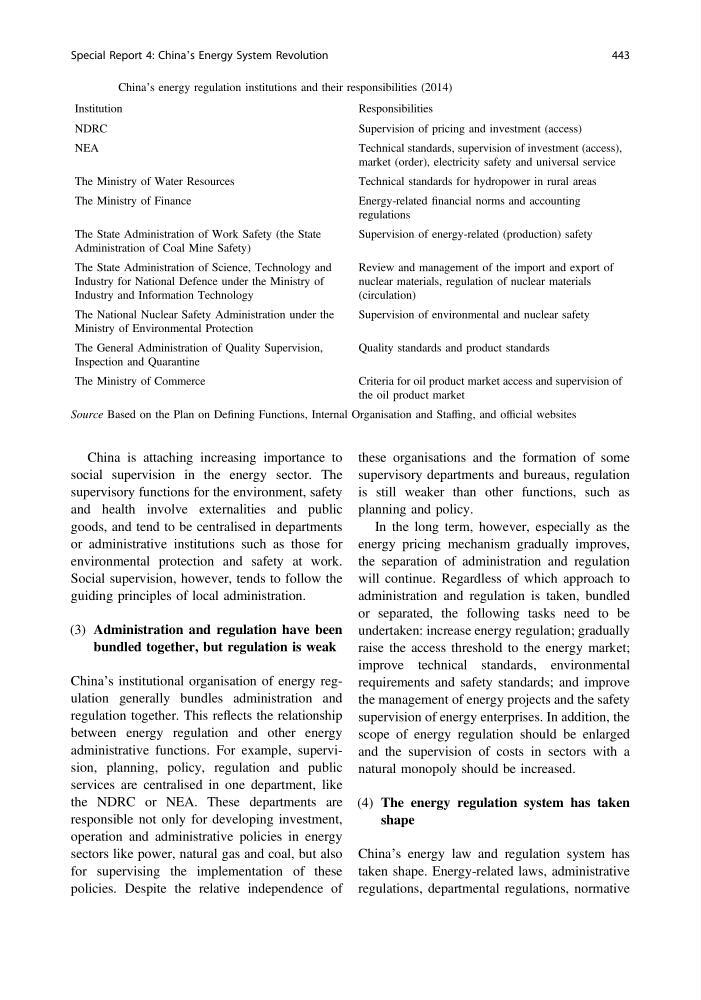
Table 5 China’s energy regulation institutions and their responsibilities (2014)
Institution
Responsibilities
NDRC
Supervision of pricing and investment (access)
NEA
Technical standards, supervision of investment (access),
market (order), electricity safety and universal service
The Ministry of Water Resources
Technical standards for hydropower in rural areas
The Ministry of Finance
Energy-related financial norms and accounting
regulations
The State Administration of Work Safety (the State
Administration of Coal Mine Safety)
Supervision of energy-related (production) safety
The State Administration of Science, Technology and
Industry for National Defence under the Ministry of
Industry and Information Technology
Review and management of the import and export of
nuclear materials, regulation of nuclear materials
(circulation)
The National Nuclear Safety Administration under the
Ministry of Environmental Protection
Supervision of environmental and nuclear safety
The General Administration of Quality Supervision,
Inspection and Quarantine
Quality standards and product standards
The Ministry of Commerce
Criteria for oil product market access and supervision of
the oil product market
Source Based on the Plan on Defining Functions, Internal Organisation and Staffing, and official websites
Special Report 4: China’s Energy System Revolution
443
social supervision in the energy sector. The
supervisory functions for the environment, safety
and health involve externalities and public
goods, and tend to be centralised in departments
or administrative institutions such as those for
environmental protection and safety at work.
Social supervision, however, tends to follow the
guiding principles of local administration.
(3) Administration and regulation have been
bundled together, but regulation is weak
China’s institutional organisation of energy regulation generally bundles administration and
regulation together. This reflects the relationship
between energy regulation and other energy
administrative functions. For example, supervision, planning, policy, regulation and public
services are centralised in one department, like
the NDRC or NEA. These departments are
responsible not only for developing investment,
operation and administrative policies in energy
sectors like power, natural gas and coal, but also
for supervising the implementation of these
policies. Despite the relative independence of
these organisations and the formation of some
supervisory departments and bureaus, regulation
is still weaker than other functions, such as
planning and policy.
In the long term, however, especially as the
energy pricing mechanism gradually improves,
the separation of administration and regulation
will continue. Regardless of which approach to
administration and regulation is taken, bundled
or separated, the following tasks need to be
undertaken: increase energy regulation; gradually
raise the access threshold to the energy market;
improve technical standards, environmental
requirements and safety standards; and improve
the management of energy projects and the safety
supervision of energy enterprises. In addition, the
scope of energy regulation should be enlarged
and the supervision of costs in sectors with a
natural monopoly should be increased.
(4) The energy regulation system has taken
shape
China’s energy law and regulation system has
taken shape. Energy-related laws, administrative
regulations, departmental regulations, normative
Table 5 China’s energy regulation institutions and their responsibilities (2014)
Institution
Responsibilities
NDRC
Supervision of pricing and investment (access)
NEA
Technical standards, supervision of investment (access),
market (order), electricity safety and universal service
The Ministry of Water Resources
Technical standards for hydropower in rural areas
The Ministry of Finance
Energy-related financial norms and accounting
regulations
The State Administration of Work Safety (the State
Administration of Coal Mine Safety)
Supervision of energy-related (production) safety
The State Administration of Science, Technology and
Industry for National Defence under the Ministry of
Industry and Information Technology
Review and management of the import and export of
nuclear materials, regulation of nuclear materials
(circulation)
The National Nuclear Safety Administration under the
Ministry of Environmental Protection
Supervision of environmental and nuclear safety
The General Administration of Quality Supervision,
Inspection and Quarantine
Quality standards and product standards
The Ministry of Commerce
Criteria for oil product market access and supervision of
the oil product market
Source Based on the Plan on Defining Functions, Internal Organisation and Staffing, and official websites
Special Report 4: China’s Energy System Revolution
443