

energy bureaus and local energy offices is still
regulating the power sector.
The NDRC and the State Council are responsible for the approval of major energy projects
(including infrastructure); and the NDRC, under
the control of the central government, is responsible for energy pricing (mainly in the upstream
and midstream sectors) and its supervision and
management. The development and reform
department under local government is responsible
for the approval of local energy projects, and the
local development and reform (pricing) department is responsible for local energy pricing
(mainly with regard to downstream use).
Some government administration functions
related to energy have been assigned to other
departments. For example, the Ministry of Land
and Resources administers the mining rights for
oil, natural gas and natural uranium; the central
and local land and resources authorities administer the coal mining rights under their
jurisdiction; the State Administration of Coal
Mine Safety is responsible for safety in coal
exploration and development, and the State
Administration of Work Safety is responsible for
safety in conventional energy production; and
customs authorities administer energy imports
and exports. In addition, the State-owned Assets
Supervision and Administration Commission
(SASAC) invests in large state-owned energy
enterprises.
Coordinated administration has become normal practice. Some major energy policies are
jointly released by the NDRC and NEA. Basically, the NEA can coordinate the administration
of all energy sources, except nuclear power and
coal, which have special requirements for safety.
To undertake overall administration of China’s
energy system, the NEA must coordinate with
the NDRC and local government, and effectively
perform its governmental functions of planning,
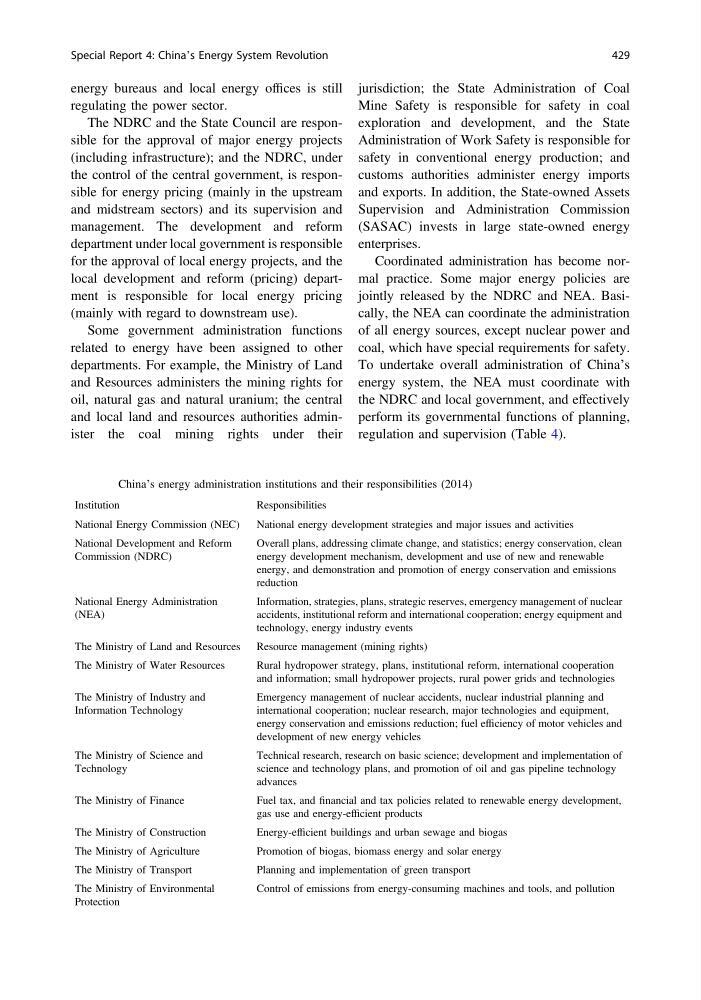
regulation and supervision (Table 4).
Table 4 China’s energy administration institutions and their responsibilities (2014)
Institution
Responsibilities
National Energy Commission (NEC)
National energy development strategies and major issues and activities
National Development and Reform
Commission (NDRC)
Overall plans, addressing climate change, and statistics; energy conservation, clean
energy development mechanism, development and use of new and renewable
energy, and demonstration and promotion of energy conservation and emissions
reduction
National Energy Administration
(NEA)
Information, strategies, plans, strategic reserves, emergency management of nuclear
accidents, institutional reform and international cooperation; energy equipment and
technology, energy industry events
The Ministry of Land and Resources Resource management (mining rights)
The Ministry of Water Resources
Rural hydropower strategy, plans, institutional reform, international cooperation
and information; small hydropower projects, rural power grids and technologies
The Ministry of Industry and
Information Technology
Emergency management of nuclear accidents, nuclear industrial planning and
international cooperation; nuclear research, major technologies and equipment,
energy conservation and emissions reduction; fuel efficiency of motor vehicles and
development of new energy vehicles
The Ministry of Science and
Technology
Technical research, research on basic science; development and implementation of
science and technology plans, and promotion of oil and gas pipeline technology
advances
The Ministry of Finance
Fuel tax, and financial and tax policies related to renewable energy development,
gas use and energy-efficient products
The Ministry of Construction
Energy-efficient buildings and urban sewage and biogas
The Ministry of Agriculture
Promotion of biogas, biomass energy and solar energy
The Ministry of Transport
Planning and implementation of green transport
The Ministry of Environmental
Protection
Control of emissions from energy-consuming machines and tools, and pollution
Special Report 4: China’s Energy System Revolution
429
regulating the power sector.
The NDRC and the State Council are responsible for the approval of major energy projects
(including infrastructure); and the NDRC, under
the control of the central government, is responsible for energy pricing (mainly in the upstream
and midstream sectors) and its supervision and
management. The development and reform
department under local government is responsible
for the approval of local energy projects, and the
local development and reform (pricing) department is responsible for local energy pricing
(mainly with regard to downstream use).
Some government administration functions
related to energy have been assigned to other
departments. For example, the Ministry of Land
and Resources administers the mining rights for
oil, natural gas and natural uranium; the central
and local land and resources authorities administer the coal mining rights under their
jurisdiction; the State Administration of Coal
Mine Safety is responsible for safety in coal
exploration and development, and the State
Administration of Work Safety is responsible for
safety in conventional energy production; and
customs authorities administer energy imports
and exports. In addition, the State-owned Assets
Supervision and Administration Commission
(SASAC) invests in large state-owned energy
enterprises.
Coordinated administration has become normal practice. Some major energy policies are
jointly released by the NDRC and NEA. Basically, the NEA can coordinate the administration
of all energy sources, except nuclear power and
coal, which have special requirements for safety.
To undertake overall administration of China’s
energy system, the NEA must coordinate with
the NDRC and local government, and effectively
perform its governmental functions of planning,
regulation and supervision (Table 4).
Table 4 China’s energy administration institutions and their responsibilities (2014)
Institution
Responsibilities
National Energy Commission (NEC)
National energy development strategies and major issues and activities
National Development and Reform
Commission (NDRC)
Overall plans, addressing climate change, and statistics; energy conservation, clean
energy development mechanism, development and use of new and renewable
energy, and demonstration and promotion of energy conservation and emissions
reduction
National Energy Administration
(NEA)
Information, strategies, plans, strategic reserves, emergency management of nuclear
accidents, institutional reform and international cooperation; energy equipment and
technology, energy industry events
The Ministry of Land and Resources Resource management (mining rights)
The Ministry of Water Resources
Rural hydropower strategy, plans, institutional reform, international cooperation
and information; small hydropower projects, rural power grids and technologies
The Ministry of Industry and
Information Technology
Emergency management of nuclear accidents, nuclear industrial planning and
international cooperation; nuclear research, major technologies and equipment,
energy conservation and emissions reduction; fuel efficiency of motor vehicles and
development of new energy vehicles
The Ministry of Science and
Technology
Technical research, research on basic science; development and implementation of
science and technology plans, and promotion of oil and gas pipeline technology
advances
The Ministry of Finance
Fuel tax, and financial and tax policies related to renewable energy development,
gas use and energy-efficient products
The Ministry of Construction
Energy-efficient buildings and urban sewage and biogas
The Ministry of Agriculture
Promotion of biogas, biomass energy and solar energy
The Ministry of Transport
Planning and implementation of green transport
The Ministry of Environmental
Protection
Control of emissions from energy-consuming machines and tools, and pollution
Special Report 4: China’s Energy System Revolution
429