

industrial competitiveness and creating an efficient and modern energy system. The measures to
achieve this include reshaping patterns of production and living, restructuring the economy,
optimising the industrial system, increasing the
share of clean energy, and making energy use
more efficient. Energy efficiency can pave the way
for a green and low-carbon society and help realise the centenary goals to mark the founding of
the Communist Party of China in 2021 and the
People’s Republic of China in 2049. Those two
goals are building a moderately prosperous society in all respects by 2021 and transforming China
into a modern socialist country that is prosperous,
strong, democratic, culturally advanced and harmonious by 2049.
In 2016 the State Council of China issued the
Overall Work Plan for Energy Conservation and
Emissions Reduction for the 13th Five-Year Plan
(2016–20), outlining targets for energy efficiency: by 2020, the energy consumption per unit
of GDP should be RMB 10,000, 15% lower than
in 2015, and total energy consumption should
remain less than 5 Btce. Moreover, the goal of
controlling total energy consumption and energy
intensity would be delegated to the provinces. As
part of the 2016 plan, the National Development
and Reform Commission (NDRC) and other
authorities were entrusted by the State Council to
evaluate provincial government success in
delivering the energy efficiency goals of the 12th
Five-Year Plan (2011–15). The provinces also
had to define their 2016 and 2017 targets for
controlling total energy consumption and energy
intensity. In 2017, NDRC and its partner
authorities assessed the provincial governments’
progress in fulfilling those targets. Twelve ministries and commissions, including the NDRC,
the Ministry of Science and Technology, the
Ministry of Industry and Information Technology and the Ministry of Finance, jointly issued
the Action Plan for National Energy Saving
during the 13th Five-Year Plan (2016–20). The
plan defined the top 10 energy-saving measures
to achieve the targets, including deploying
energy-efficient products and promoting energy
saving. The introduction of regulations on energy
saving—including the Measures for Energy
Conservation Supervision, the Measures for the
Energy Conservation Review of Fixed-Asset
Investment Projects, the Plan for Developing
the Energy Saving Standard System and the
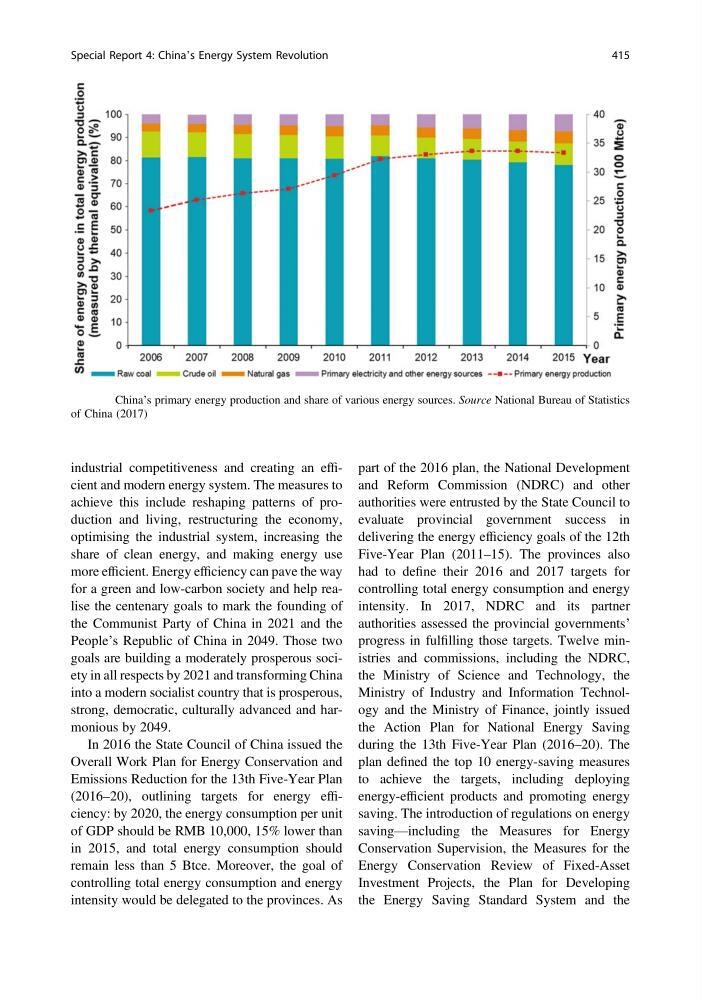
Fig. 15 China’s primary energy production and share of various energy sources. Source National Bureau of Statistics
of China (2017)
Special Report 4: China’s Energy System Revolution
415
achieve this include reshaping patterns of production and living, restructuring the economy,
optimising the industrial system, increasing the
share of clean energy, and making energy use
more efficient. Energy efficiency can pave the way
for a green and low-carbon society and help realise the centenary goals to mark the founding of
the Communist Party of China in 2021 and the
People’s Republic of China in 2049. Those two
goals are building a moderately prosperous society in all respects by 2021 and transforming China
into a modern socialist country that is prosperous,
strong, democratic, culturally advanced and harmonious by 2049.
In 2016 the State Council of China issued the
Overall Work Plan for Energy Conservation and
Emissions Reduction for the 13th Five-Year Plan
(2016–20), outlining targets for energy efficiency: by 2020, the energy consumption per unit
of GDP should be RMB 10,000, 15% lower than
in 2015, and total energy consumption should
remain less than 5 Btce. Moreover, the goal of
controlling total energy consumption and energy
intensity would be delegated to the provinces. As
part of the 2016 plan, the National Development
and Reform Commission (NDRC) and other
authorities were entrusted by the State Council to
evaluate provincial government success in
delivering the energy efficiency goals of the 12th
Five-Year Plan (2011–15). The provinces also
had to define their 2016 and 2017 targets for
controlling total energy consumption and energy
intensity. In 2017, NDRC and its partner
authorities assessed the provincial governments’
progress in fulfilling those targets. Twelve ministries and commissions, including the NDRC,
the Ministry of Science and Technology, the
Ministry of Industry and Information Technology and the Ministry of Finance, jointly issued
the Action Plan for National Energy Saving
during the 13th Five-Year Plan (2016–20). The
plan defined the top 10 energy-saving measures
to achieve the targets, including deploying
energy-efficient products and promoting energy
saving. The introduction of regulations on energy
saving—including the Measures for Energy
Conservation Supervision, the Measures for the
Energy Conservation Review of Fixed-Asset
Investment Projects, the Plan for Developing
the Energy Saving Standard System and the
Fig. 15 China’s primary energy production and share of various energy sources. Source National Bureau of Statistics
of China (2017)
Special Report 4: China’s Energy System Revolution
415