

and natural gas and primary electricity slightly
increased.
Coal production declined sharply in 2016,
with raw coal production at 3.41 Bt, down 340 Mt
(9%) on the previous year. This was consistent
with the trend of declining coal consumption over
the previous three years. There was a slight
increase in the second half of the year, as some
high-quality, safe and efficient capacity was
released in August and September. The State
Council of China announced in its Opinions on
Alleviating Overcapacity in the Coal Sector to
Secure Sound Development that the approval of
new coal mines and mine modernisations to create additional capacity would be stopped from
March 2016. For any new coal mines that were
genuinely essential, the policy was to reduce
outdated capacity and replace it with high-quality
capacity. Thanks to the efforts to eliminate overcapacity, excess coal capacity was reduced by
290 Mt, which also helped stabilise the coal price.
There was also a clear drop in crude oil production, though refined crude oil output maintained its growth rate. In 2016, spurred by lower
international oil prices, China’s crude oil producers further reduced inefficient production.
Data from China’s NBS show that crude oil
production was 199 Mt in 2016, down 6.9% on
the previous year. This was also the first year
since 2010 that crude oil production was less
than 300 Mt, with the annual decrease exceeding
10 Mt for the first time. At the same time, regulations around the import and use of crude oil
were relaxed. As a result, driven by high demand
from the vehicle and aviation sectors, China’s
crude oil processing capacity grew rapidly,
reaching 541 Mt (up 3.6% on the previous year).
In particular, crude oil processing capacity in
Shandong, a province with several local oil
refining companies, was 101 Mt, which made
Shandong the first province to exceed 100 Mt in
crude oil processing capacity. In 2016, China’s
production of oil products stood at 345 Mt, an
increase of 2.4%.
Natural gas production, on the other hand, rose
slightly, and shale gas output grew rapidly.
Coalbed methane (CBM) production also
increased. In 2016, due to slower growth in
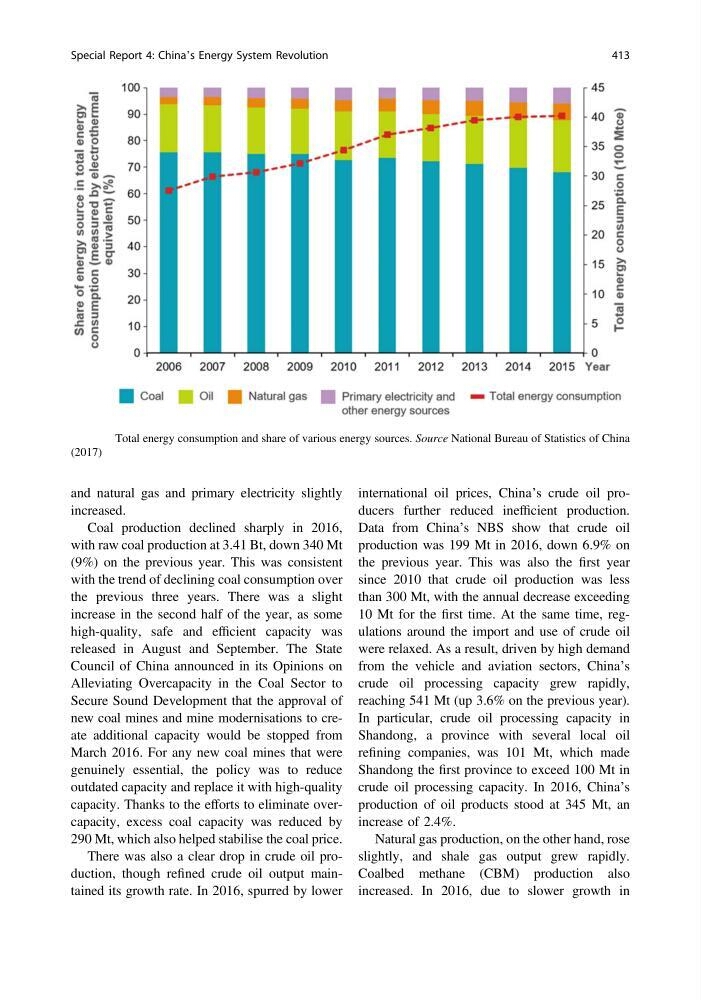
Fig. 14 Total energy consumption and share of various energy sources. Source National Bureau of Statistics of China
(2017)
Special Report 4: China’s Energy System Revolution
413
increased.
Coal production declined sharply in 2016,
with raw coal production at 3.41 Bt, down 340 Mt
(9%) on the previous year. This was consistent
with the trend of declining coal consumption over
the previous three years. There was a slight
increase in the second half of the year, as some
high-quality, safe and efficient capacity was
released in August and September. The State
Council of China announced in its Opinions on
Alleviating Overcapacity in the Coal Sector to
Secure Sound Development that the approval of
new coal mines and mine modernisations to create additional capacity would be stopped from
March 2016. For any new coal mines that were
genuinely essential, the policy was to reduce
outdated capacity and replace it with high-quality
capacity. Thanks to the efforts to eliminate overcapacity, excess coal capacity was reduced by
290 Mt, which also helped stabilise the coal price.
There was also a clear drop in crude oil production, though refined crude oil output maintained its growth rate. In 2016, spurred by lower
international oil prices, China’s crude oil producers further reduced inefficient production.
Data from China’s NBS show that crude oil
production was 199 Mt in 2016, down 6.9% on
the previous year. This was also the first year
since 2010 that crude oil production was less
than 300 Mt, with the annual decrease exceeding
10 Mt for the first time. At the same time, regulations around the import and use of crude oil
were relaxed. As a result, driven by high demand
from the vehicle and aviation sectors, China’s
crude oil processing capacity grew rapidly,
reaching 541 Mt (up 3.6% on the previous year).
In particular, crude oil processing capacity in
Shandong, a province with several local oil
refining companies, was 101 Mt, which made
Shandong the first province to exceed 100 Mt in
crude oil processing capacity. In 2016, China’s
production of oil products stood at 345 Mt, an
increase of 2.4%.
Natural gas production, on the other hand, rose
slightly, and shale gas output grew rapidly.
Coalbed methane (CBM) production also
increased. In 2016, due to slower growth in
Fig. 14 Total energy consumption and share of various energy sources. Source National Bureau of Statistics of China
(2017)
Special Report 4: China’s Energy System Revolution
413