

(3) Economic and social benefits
First, the South-east Shanxi-Nanyang-Jingmen
UHVAC power transmission project.
As the first 1,000 kV UHVAC link in the
world, this pilot and demonstration project has
played an instrumental role in optimising grid
resources in the 10 years since it opened. In dry
winter seasons, it transfers thermal power from
the north to Hubei. In wet summers, it delivers
surplus hydropower from south-west China,
including Sichuan, to the north China power
grid, relieving power shortages in Shandong. The
complementarity of hydropower and thermal
power not only avoids hydro curtailment in the
wet season, it reduces coal consumption in north
China and increases the use of clean energy.
Fossil energy sources are scarce in Hubei. Its
coal reserves account for less than 1% of China’s
total. 98% of the coal used for Hubei’s power
generation needs to be procured from other provinces. Its hydropower has been fully developed
and is transmitted to other regions. 60% of
Hubei’s power consumption is supplied by
thermal power, exposing it to increasingly serious energy constraints. The South-east
Shanxi-Nanyang-Jingmen UHVAC project supplies 5,000 MW of thermal power from north
China to Hubei. This avoids the transport of
more than 7 million tonnes of thermal coal per
year, which if converted into electricity would be
equal to the output of the 2,700 MW Gezhouba
hydropower plant in Hubei. Up to the end of
October 2016, the link, which has a capacity of
5,720 MW, had transmitted 55,600 GWh of
electricity, effectively eliminating the power
shortage in Hubei. Calculations show that the
price of electricity transmitted by the link to
Hubei is RMB 0.02–0.07/kWh lower than the
current benchmark thermal power price in Hubei.
According to a report published by Greenpeace,
the transmission of every 100 GWh through
UHV reduces particulate matter (PM2.5 and
PM10) and sulphur dioxide/nitrogen oxide (SO 2 /
NO x ) from load centres by about 7 tonnes, 17
tonnes and 450 tonnes respectively.
65
Second, the Anhui-East China UHVAC
power transmission project.
The Anhui-East China 1,000 kV UHVAC
power transmission line, which starts at Huainan
and ends at Shanghai, has been operating since
2013, delivering multiple benefits to Huainan
and east China. Huainan’s power generation
companies transmit around 24,000 GWh of
electricity to east China through the UHV project
every year, generating more than RMB 17 billion
in sales revenue and RMB 3 billion in taxes
annually, which boost the local economy. In
addition, coal is used locally in Anhui at RMB
30/tonne, rather than being transported over long
distances to Shanghai at RMB 70/tonne. This
reduces transport-related pollution. The dust,
exhaust gas and lines of trucks on the roads of
Huainan are no longer to be seen. In addition to
supplying Shanghai and Zhejiang with
6,000 MW of capacity and 24 billion kWh of
electricity, the link enables Shanghai and Zhejiang to reduce coal consumption by 10.8 million
tonnes per year, equivalent to six 1,000 MW
thermal generating units. This has cut emissions
of CO 2 , SO 2 and NO x in Shanghai by 21 million
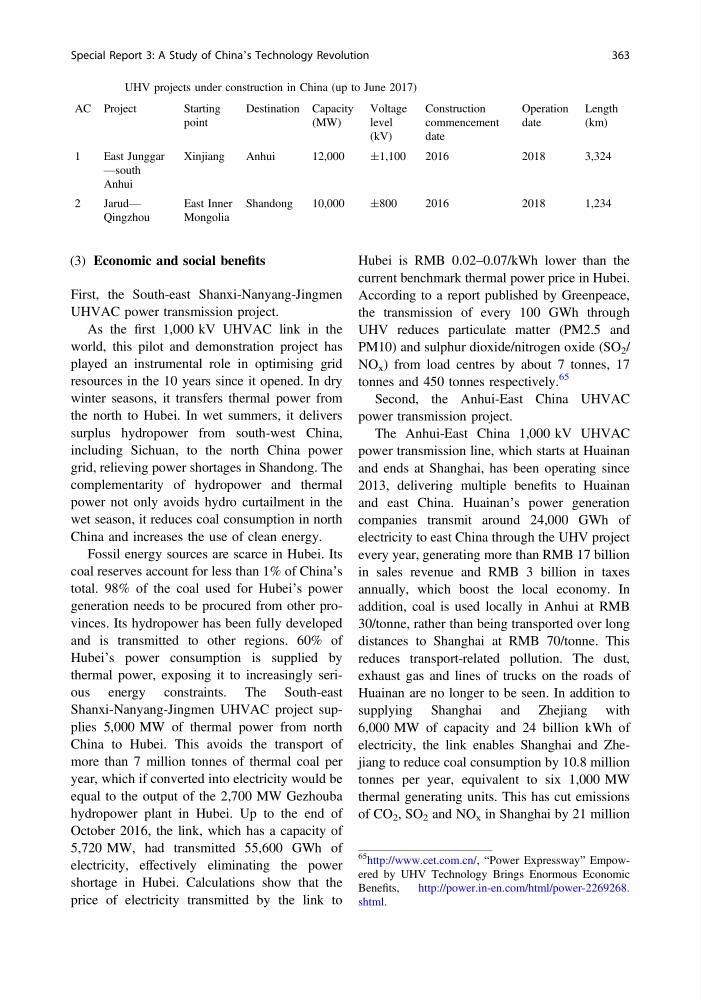
Table 14 UHV projects under construction in China (up to June 2017)
AC Project
Starting
point
Destination Capacity
(MW)
Voltage
level
(kV)
Construction
commencement
date
Operation
date
Length
(km)
1
East Junggar
—south
Anhui
Xinjiang
Anhui
12,000
±1,100
2016
2018
3,324
2
Jarud—
Qingzhou
East Inner
Mongolia
Shandong
10,000
±800
2016
2018
1,234
65
http://www.cet.com.cn/, “Power Expressway” Empowered by UHV Technology Brings Enormous Economic
Benefits,
http://power.in-en.com/html/power-2269268.
shtml.
Special Report 3: A Study of China’s Technology Revolution
363
First, the South-east Shanxi-Nanyang-Jingmen
UHVAC power transmission project.
As the first 1,000 kV UHVAC link in the
world, this pilot and demonstration project has
played an instrumental role in optimising grid
resources in the 10 years since it opened. In dry
winter seasons, it transfers thermal power from
the north to Hubei. In wet summers, it delivers
surplus hydropower from south-west China,
including Sichuan, to the north China power
grid, relieving power shortages in Shandong. The
complementarity of hydropower and thermal
power not only avoids hydro curtailment in the
wet season, it reduces coal consumption in north
China and increases the use of clean energy.
Fossil energy sources are scarce in Hubei. Its
coal reserves account for less than 1% of China’s
total. 98% of the coal used for Hubei’s power
generation needs to be procured from other provinces. Its hydropower has been fully developed
and is transmitted to other regions. 60% of
Hubei’s power consumption is supplied by
thermal power, exposing it to increasingly serious energy constraints. The South-east
Shanxi-Nanyang-Jingmen UHVAC project supplies 5,000 MW of thermal power from north
China to Hubei. This avoids the transport of
more than 7 million tonnes of thermal coal per
year, which if converted into electricity would be
equal to the output of the 2,700 MW Gezhouba
hydropower plant in Hubei. Up to the end of
October 2016, the link, which has a capacity of
5,720 MW, had transmitted 55,600 GWh of
electricity, effectively eliminating the power
shortage in Hubei. Calculations show that the
price of electricity transmitted by the link to
Hubei is RMB 0.02–0.07/kWh lower than the
current benchmark thermal power price in Hubei.
According to a report published by Greenpeace,
the transmission of every 100 GWh through
UHV reduces particulate matter (PM2.5 and
PM10) and sulphur dioxide/nitrogen oxide (SO 2 /
NO x ) from load centres by about 7 tonnes, 17
tonnes and 450 tonnes respectively.
65
Second, the Anhui-East China UHVAC
power transmission project.
The Anhui-East China 1,000 kV UHVAC
power transmission line, which starts at Huainan
and ends at Shanghai, has been operating since
2013, delivering multiple benefits to Huainan
and east China. Huainan’s power generation
companies transmit around 24,000 GWh of
electricity to east China through the UHV project
every year, generating more than RMB 17 billion
in sales revenue and RMB 3 billion in taxes
annually, which boost the local economy. In
addition, coal is used locally in Anhui at RMB
30/tonne, rather than being transported over long
distances to Shanghai at RMB 70/tonne. This
reduces transport-related pollution. The dust,
exhaust gas and lines of trucks on the roads of
Huainan are no longer to be seen. In addition to
supplying Shanghai and Zhejiang with
6,000 MW of capacity and 24 billion kWh of
electricity, the link enables Shanghai and Zhejiang to reduce coal consumption by 10.8 million
tonnes per year, equivalent to six 1,000 MW
thermal generating units. This has cut emissions
of CO 2 , SO 2 and NO x in Shanghai by 21 million
Table 14 UHV projects under construction in China (up to June 2017)
AC Project
Starting
point
Destination Capacity
(MW)
Voltage
level
(kV)
Construction
commencement
date
Operation
date
Length
(km)
1
East Junggar
—south
Anhui
Xinjiang
Anhui
12,000
±1,100
2016
2018
3,324
2
Jarud—
Qingzhou
East Inner
Mongolia
Shandong
10,000
±800
2016
2018
1,234
65
http://www.cet.com.cn/, “Power Expressway” Empowered by UHV Technology Brings Enormous Economic
Benefits,
http://power.in-en.com/html/power-2269268.
shtml.
Special Report 3: A Study of China’s Technology Revolution
363