

which comprises several components, including
cyber-physical systems like smart grids and
autonomous vehicles, the Internet of things and
cloud computing. Industry 4.0 will have a huge
impact on global manufacturing and society.
Second, the industrial Internet of things. In
this concept, the countless machines, equipment,
facilities and system networks in manufacturing
and industry are integrated with computing,
information and communications technologies to
create a new industrial Internet revolution. The
essence of the industrial Internet of things (IIoT)
comprises three elements—intelligent machines,
advanced analytics and people. The impacts of
IIoT are not limited to industry, but also span
transport, healthcare and government. It is projected that by 2025, the IIoT can affect 50% of
global economic volume, equivalent to about $82
trillion. According to GE, the IIoT is a direct
response to the scarcity of energy resources.
Third, the New Industrial Revolution (NIR).
At the 2016 G20 Summit in Hangzhou, China,
the G20 New Industrial Revolution Action Plan
was released. It says, among other things, that
“the ongoing industrial revolution characterised
by the intelligent interconnectedness of people,
machine and resources driven by the convergence of Next Generation Information Technology and advanced manufacturing, is increasingly
blurring the boundary between the physical and
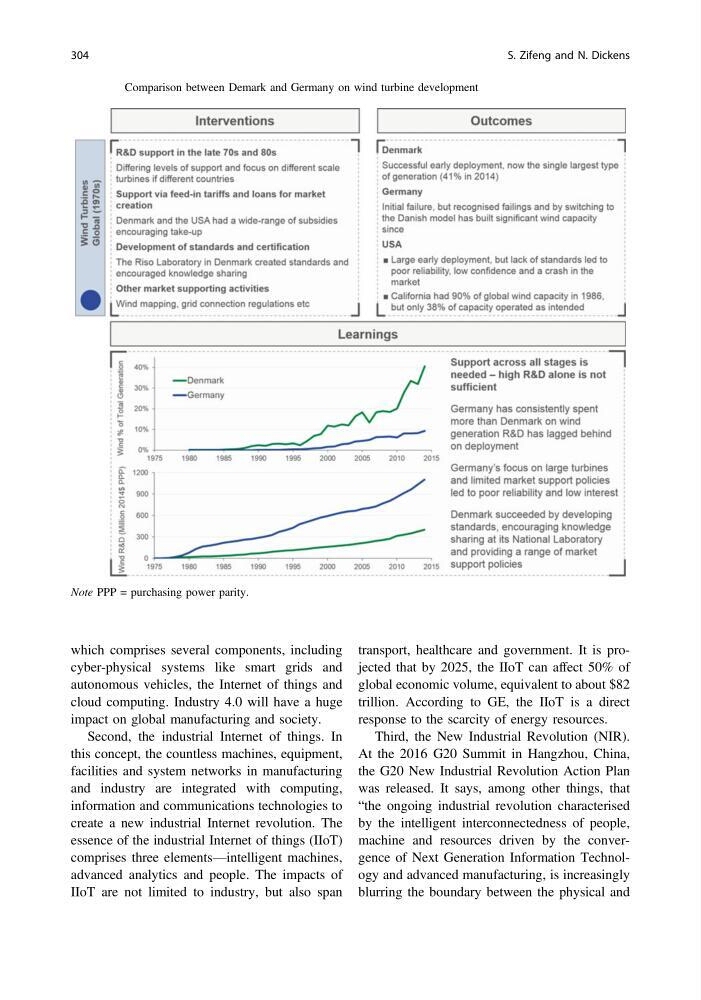
Table 10 Comparison between Demark and Germany on wind turbine development
Note PPP = purchasing power parity.
304
S. Zifeng and N. Dickens
cyber-physical systems like smart grids and
autonomous vehicles, the Internet of things and
cloud computing. Industry 4.0 will have a huge
impact on global manufacturing and society.
Second, the industrial Internet of things. In
this concept, the countless machines, equipment,
facilities and system networks in manufacturing
and industry are integrated with computing,
information and communications technologies to
create a new industrial Internet revolution. The
essence of the industrial Internet of things (IIoT)
comprises three elements—intelligent machines,
advanced analytics and people. The impacts of
IIoT are not limited to industry, but also span
transport, healthcare and government. It is projected that by 2025, the IIoT can affect 50% of
global economic volume, equivalent to about $82
trillion. According to GE, the IIoT is a direct
response to the scarcity of energy resources.
Third, the New Industrial Revolution (NIR).
At the 2016 G20 Summit in Hangzhou, China,
the G20 New Industrial Revolution Action Plan
was released. It says, among other things, that
“the ongoing industrial revolution characterised
by the intelligent interconnectedness of people,
machine and resources driven by the convergence of Next Generation Information Technology and advanced manufacturing, is increasingly
blurring the boundary between the physical and
Table 10 Comparison between Demark and Germany on wind turbine development
Note PPP = purchasing power parity.
304
S. Zifeng and N. Dickens