

(1) The transformation of primary energy—
substituting clean energy for fossil energy
This transformation is about substituting
non-fossil energy for fossil fuels in the primary
energy system. It requires replacing coal with
cleaner natural gas in the fossil energy supply
system, using clean coal in the coal supply system and accelerating the shift in coal from its
extensive use as an all-purpose fuel to an
emphasis on clean coal and raw material quality.
The energy revolution will reduce coal production capacity by 115 Mt in 2030 and 153 Mt in
2050, a drop of more than 50% compared to
2015. Greater use of natural gas can offset 16%
of this reduction, with the remainder met by
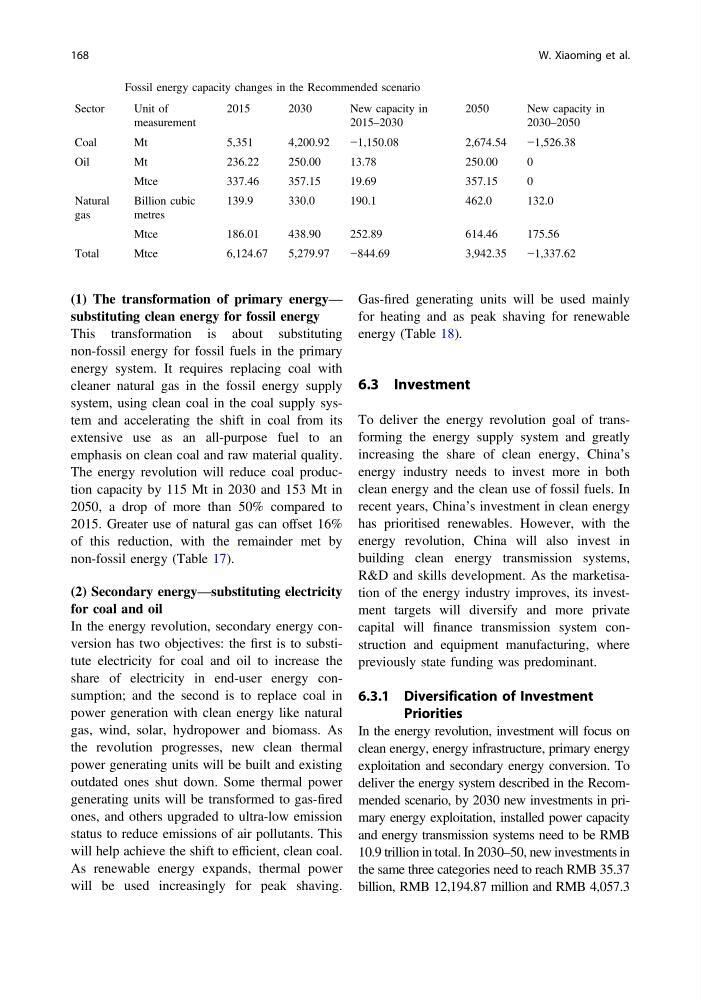
non-fossil energy (Table 17).
(2) Secondary energy—substituting electricity
for coal and oil
In the energy revolution, secondary energy conversion has two objectives: the first is to substitute electricity for coal and oil to increase the
share of electricity in end-user energy consumption; and the second is to replace coal in
power generation with clean energy like natural
gas, wind, solar, hydropower and biomass. As
the revolution progresses, new clean thermal
power generating units will be built and existing
outdated ones shut down. Some thermal power
generating units will be transformed to gas-fired
ones, and others upgraded to ultra-low emission
status to reduce emissions of air pollutants. This
will help achieve the shift to efficient, clean coal.
As renewable energy expands, thermal power
will be used increasingly for peak shaving.
Gas-fired generating units will be used mainly
for heating and as peak shaving for renewable
energy (Table 18).
6.3 Investment
To deliver the energy revolution goal of transforming the energy supply system and greatly
increasing the share of clean energy, China’s
energy industry needs to invest more in both
clean energy and the clean use of fossil fuels. In
recent years, China’s investment in clean energy
has prioritised renewables. However, with the
energy revolution, China will also invest in
building clean energy transmission systems,
R&D and skills development. As the marketisation of the energy industry improves, its investment targets will diversify and more private
capital will finance transmission system construction and equipment manufacturing, where
previously state funding was predominant.
6.3.1 Diversification of Investment
Priorities
In the energy revolution, investment will focus on
clean energy, energy infrastructure, primary energy
exploitation and secondary energy conversion. To
deliver the energy system described in the Recommended scenario, by 2030 new investments in primary energy exploitation, installed power capacity
and energy transmission systems need to be RMB
10.9 trillion in total. In 2030–50, new investments in
the same three categories need to reach RMB 35.37
billion, RMB 12,194.87 million and RMB 4,057.3
Table 17 Fossil energy capacity changes in the Recommended scenario
Sector
Unit of
measurement
2015
2030
New capacity in
2015–2030
2050
New capacity in
2030–2050
Coal
Mt
5,351
4,200.92
−1,150.08
2,674.54
−1,526.38
Oil
Mt
236.22
250.00
13.78
250.00
0
Mtce
337.46
357.15
19.69
357.15
0
Natural
gas
Billion cubic
metres
139.9
330.0
190.1
462.0
132.0
Mtce
186.01
438.90
252.89
614.46
175.56
Total
Mtce
6,124.67
5,279.97
−844.69
3,942.35
−1,337.62
168
W. Xiaoming et al.
substituting clean energy for fossil energy
This transformation is about substituting
non-fossil energy for fossil fuels in the primary
energy system. It requires replacing coal with
cleaner natural gas in the fossil energy supply
system, using clean coal in the coal supply system and accelerating the shift in coal from its
extensive use as an all-purpose fuel to an
emphasis on clean coal and raw material quality.
The energy revolution will reduce coal production capacity by 115 Mt in 2030 and 153 Mt in
2050, a drop of more than 50% compared to
2015. Greater use of natural gas can offset 16%
of this reduction, with the remainder met by
non-fossil energy (Table 17).
(2) Secondary energy—substituting electricity
for coal and oil
In the energy revolution, secondary energy conversion has two objectives: the first is to substitute electricity for coal and oil to increase the
share of electricity in end-user energy consumption; and the second is to replace coal in
power generation with clean energy like natural
gas, wind, solar, hydropower and biomass. As
the revolution progresses, new clean thermal
power generating units will be built and existing
outdated ones shut down. Some thermal power
generating units will be transformed to gas-fired
ones, and others upgraded to ultra-low emission
status to reduce emissions of air pollutants. This
will help achieve the shift to efficient, clean coal.
As renewable energy expands, thermal power
will be used increasingly for peak shaving.
Gas-fired generating units will be used mainly
for heating and as peak shaving for renewable
energy (Table 18).
6.3 Investment
To deliver the energy revolution goal of transforming the energy supply system and greatly
increasing the share of clean energy, China’s
energy industry needs to invest more in both
clean energy and the clean use of fossil fuels. In
recent years, China’s investment in clean energy
has prioritised renewables. However, with the
energy revolution, China will also invest in
building clean energy transmission systems,
R&D and skills development. As the marketisation of the energy industry improves, its investment targets will diversify and more private
capital will finance transmission system construction and equipment manufacturing, where
previously state funding was predominant.
6.3.1 Diversification of Investment
Priorities
In the energy revolution, investment will focus on
clean energy, energy infrastructure, primary energy
exploitation and secondary energy conversion. To
deliver the energy system described in the Recommended scenario, by 2030 new investments in primary energy exploitation, installed power capacity
and energy transmission systems need to be RMB
10.9 trillion in total. In 2030–50, new investments in
the same three categories need to reach RMB 35.37
billion, RMB 12,194.87 million and RMB 4,057.3
Table 17 Fossil energy capacity changes in the Recommended scenario
Sector
Unit of
measurement
2015
2030
New capacity in
2015–2030
2050
New capacity in
2030–2050
Coal
Mt
5,351
4,200.92
−1,150.08
2,674.54
−1,526.38
Oil
Mt
236.22
250.00
13.78
250.00
0
Mtce
337.46
357.15
19.69
357.15
0
Natural
gas
Billion cubic
metres
139.9
330.0
190.1
462.0
132.0
Mtce
186.01
438.90
252.89
614.46
175.56
Total
Mtce
6,124.67
5,279.97
−844.69
3,942.35
−1,337.62
168
W. Xiaoming et al.