

resources are owned by one or more transmission
owners (TOs). The ISO levies charges from
generators and/or consumers for use of the
transmission system and pays these charges to
the TOs. Typically, an ISO is also responsible for
planning new transmission investments, either
mandating TOs to make these investments or
incentivise competitive tenders to facilitate
delivery of investment. An ISO is usually a
non-profit entity.
Separation of operation from ownership
removes the system operator’s incentives to
charge monopoly prices. An ISO may be a
non-profit organisation or may earn profits on
revenues for system operation. As an ISO does
not earn profits determined by revenues from use
of the transmission system or by the cost of
transmission investments, it has no incentive to
charge tariffs that are higher than needed to
recover the investment costs of the transmission
network or underinvest in transmission assets.
Unlike a TSO, therefore, an ISO does not need
performance-based regulation.
The ISO’s functions can be specified by its
mandate and its behaviour can be governed by a
set of rules. The mandate could be to minimise
the total cost of meeting a given reliability
standard. Rules could govern processes for
transmission planning and investment; providing
grid connections to new system resources;
administering competitive tenders for new network assets; levying charges for network use; or
monitoring market power in the electricity
system.
Nevertheless, it is desirable to have in place a
mechanism to incentivise the ISO. It is unlikely
to be possible to specify a set of rules that perfectly incentivise the management to meet the
ISO’s mandate. That is, to encourage the ISO to
carry out the planning, investment and operation
of the transmission system to strike the best
possible balance between reliability of electricity
supply and economic efficiency of the network.
Imposition of financial penalties on the ISO is
likely to be a poor incentive mechanism as ISO
revenues are likely to be small relative to the
welfare losses arising from poor performance in
operating the system. Instead, well-designed
management incentives may be needed.
The ISO model is prevalent in North and
South America. Chile, Argentina and Peru were
early adopters of the ISO model. There are many
ISOs in the USA, each covering a transmission
network.
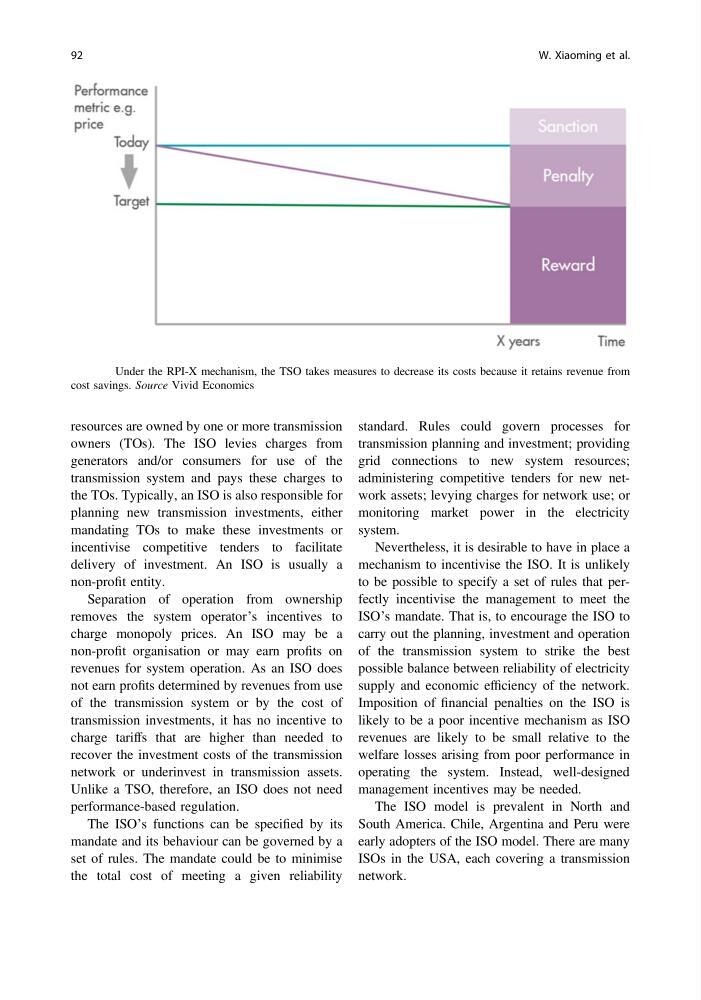
Fig. 31 Under the RPI-X mechanism, the TSO takes measures to decrease its costs because it retains revenue from
cost savings. Source Vivid Economics
92
W. Xiaoming et al.
owners (TOs). The ISO levies charges from
generators and/or consumers for use of the
transmission system and pays these charges to
the TOs. Typically, an ISO is also responsible for
planning new transmission investments, either
mandating TOs to make these investments or
incentivise competitive tenders to facilitate
delivery of investment. An ISO is usually a
non-profit entity.
Separation of operation from ownership
removes the system operator’s incentives to
charge monopoly prices. An ISO may be a
non-profit organisation or may earn profits on
revenues for system operation. As an ISO does
not earn profits determined by revenues from use
of the transmission system or by the cost of
transmission investments, it has no incentive to
charge tariffs that are higher than needed to
recover the investment costs of the transmission
network or underinvest in transmission assets.
Unlike a TSO, therefore, an ISO does not need
performance-based regulation.
The ISO’s functions can be specified by its
mandate and its behaviour can be governed by a
set of rules. The mandate could be to minimise
the total cost of meeting a given reliability
standard. Rules could govern processes for
transmission planning and investment; providing
grid connections to new system resources;
administering competitive tenders for new network assets; levying charges for network use; or
monitoring market power in the electricity
system.
Nevertheless, it is desirable to have in place a
mechanism to incentivise the ISO. It is unlikely
to be possible to specify a set of rules that perfectly incentivise the management to meet the
ISO’s mandate. That is, to encourage the ISO to
carry out the planning, investment and operation
of the transmission system to strike the best
possible balance between reliability of electricity
supply and economic efficiency of the network.
Imposition of financial penalties on the ISO is
likely to be a poor incentive mechanism as ISO
revenues are likely to be small relative to the
welfare losses arising from poor performance in
operating the system. Instead, well-designed
management incentives may be needed.
The ISO model is prevalent in North and
South America. Chile, Argentina and Peru were
early adopters of the ISO model. There are many
ISOs in the USA, each covering a transmission
network.
Fig. 31 Under the RPI-X mechanism, the TSO takes measures to decrease its costs because it retains revenue from
cost savings. Source Vivid Economics
92
W. Xiaoming et al.