

38
A. M. Saat et al.
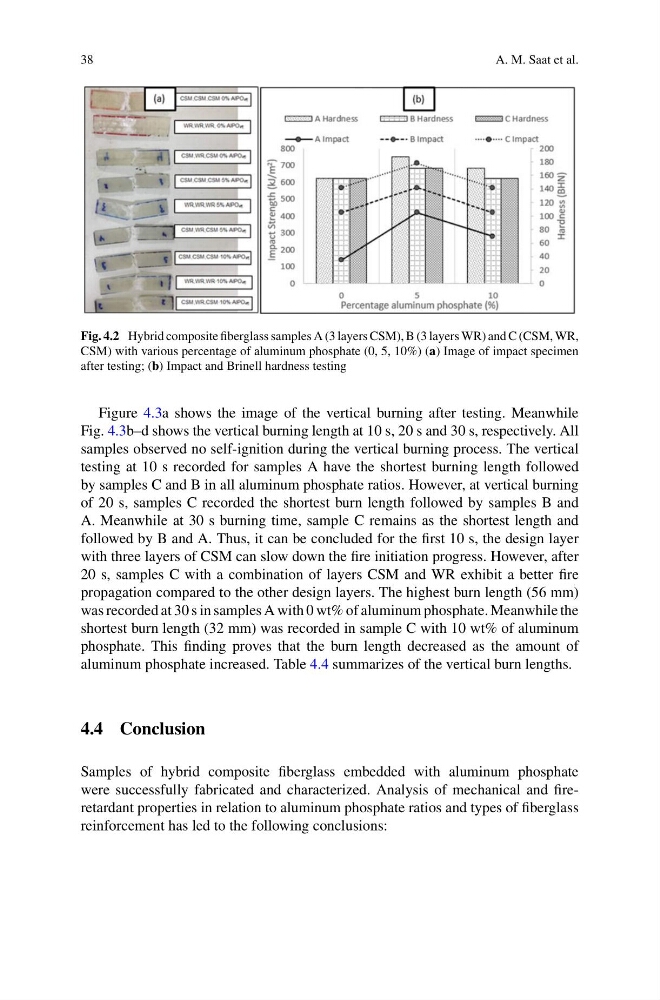
Fig. 4.2 Hybrid composite fiberglass samples A (3 layers CSM), B (3 layers WR) and C (CSM, WR,
CSM) with various percentage of aluminum phosphate (0, 5, 10%) (a) Image of impact specimen
after testing; (b) Impact and Brinell hardness testing
Figure 4.3a shows the image of the vertical burning after testing. Meanwhile
Fig. 4.3b–d shows the vertical burning length at 10 s, 20 s and 30 s, respectively. All
samples observed no self-ignition during the vertical burning process. The vertical
testing at 10 s recorded for samples A have the shortest burning length followed
by samples C and B in all aluminum phosphate ratios. However, at vertical burning
of 20 s, samples C recorded the shortest burn length followed by samples B and
A. Meanwhile at 30 s burning time, sample C remains as the shortest length and
followed by B and A. Thus, it can be concluded for the first 10 s, the design layer
with three layers of CSM can slow down the fire initiation progress. However, after
20 s, samples C with a combination of layers CSM and WR exhibit a better fire
propagation compared to the other design layers. The highest burn length (56 mm)
was recorded at 30 s in samples A with 0 wt% of aluminum phosphate. Meanwhile the
shortest burn length (32 mm) was recorded in sample C with 10 wt% of aluminum
phosphate. This finding proves that the burn length decreased as the amount of
aluminum phosphate increased. Table 4.4 summarizes of the vertical burn lengths.
4.4 Conclusion
Samples of hybrid composite fiberglass embedded with aluminum phosphate
were successfully fabricated and characterized. Analysis of mechanical and fireretardant properties in relation to aluminum phosphate ratios and types of fiberglass
reinforcement has led to the following conclusions:
A. M. Saat et al.
Fig. 4.2 Hybrid composite fiberglass samples A (3 layers CSM), B (3 layers WR) and C (CSM, WR,
CSM) with various percentage of aluminum phosphate (0, 5, 10%) (a) Image of impact specimen
after testing; (b) Impact and Brinell hardness testing
Figure 4.3a shows the image of the vertical burning after testing. Meanwhile
Fig. 4.3b–d shows the vertical burning length at 10 s, 20 s and 30 s, respectively. All
samples observed no self-ignition during the vertical burning process. The vertical
testing at 10 s recorded for samples A have the shortest burning length followed
by samples C and B in all aluminum phosphate ratios. However, at vertical burning
of 20 s, samples C recorded the shortest burn length followed by samples B and
A. Meanwhile at 30 s burning time, sample C remains as the shortest length and
followed by B and A. Thus, it can be concluded for the first 10 s, the design layer
with three layers of CSM can slow down the fire initiation progress. However, after
20 s, samples C with a combination of layers CSM and WR exhibit a better fire
propagation compared to the other design layers. The highest burn length (56 mm)
was recorded at 30 s in samples A with 0 wt% of aluminum phosphate. Meanwhile the
shortest burn length (32 mm) was recorded in sample C with 10 wt% of aluminum
phosphate. This finding proves that the burn length decreased as the amount of
aluminum phosphate increased. Table 4.4 summarizes of the vertical burn lengths.
4.4 Conclusion
Samples of hybrid composite fiberglass embedded with aluminum phosphate
were successfully fabricated and characterized. Analysis of mechanical and fireretardant properties in relation to aluminum phosphate ratios and types of fiberglass
reinforcement has led to the following conclusions: