

36
Y. Jhanji et al.
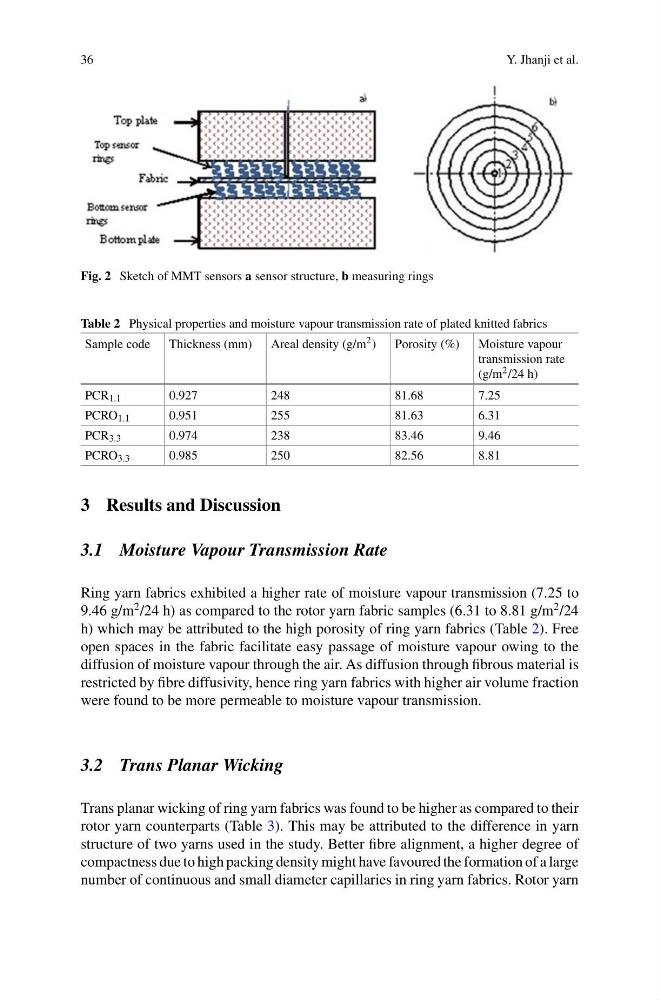
Fig. 2 Sketch of MMT sensors a sensor structure, b measuring rings
Table 2 Physical properties and moisture vapour transmission rate of plated knitted fabrics
Sample code Thickness (mm) Areal density (g/m 2 ) Porosity (%) Moisture vapour
transmission rate
(g/m 2 /24 h)
PCR 1.1
0.927
248
81.68
7.25
PCRO 1.1
0.951
255
81.63
6.31
PCR 3.3
0.974
238
83.46
9.46
PCRO 3.3
0.985
250
82.56
8.81
3 Results and Discussion
3.1 Moisture Vapour Transmission Rate
Ring yarn fabrics exhibited a higher rate of moisture vapour transmission (7.25 to
9.46 g/m
2 /24 h) as compared to the rotor yarn fabric samples (6.31 to 8.81 g/m
2 /24
h) which may be attributed to the high porosity of ring yarn fabrics (Table 2). Free
open spaces in the fabric facilitate easy passage of moisture vapour owing to the
diffusion of moisture vapour through the air. As diffusion through fibrous material is
restricted by fibre diffusivity, hence ring yarn fabrics with higher air volume fraction
were found to be more permeable to moisture vapour transmission.
3.2 Trans Planar Wicking
Trans planar wicking of ring yarn fabrics was found to be higher as compared to their
rotor yarn counterparts (Table 3). This may be attributed to the difference in yarn
structure of two yarns used in the study. Better fibre alignment, a higher degree of
compactness due to high packing density might have favoured the formation of a large
number of continuous and small diameter capillaries in ring yarn fabrics. Rotor yarn
Y. Jhanji et al.
Fig. 2 Sketch of MMT sensors a sensor structure, b measuring rings
Table 2 Physical properties and moisture vapour transmission rate of plated knitted fabrics
Sample code Thickness (mm) Areal density (g/m 2 ) Porosity (%) Moisture vapour
transmission rate
(g/m 2 /24 h)
PCR 1.1
0.927
248
81.68
7.25
PCRO 1.1
0.951
255
81.63
6.31
PCR 3.3
0.974
238
83.46
9.46
PCRO 3.3
0.985
250
82.56
8.81
3 Results and Discussion
3.1 Moisture Vapour Transmission Rate
Ring yarn fabrics exhibited a higher rate of moisture vapour transmission (7.25 to
9.46 g/m
2 /24 h) as compared to the rotor yarn fabric samples (6.31 to 8.81 g/m
2 /24
h) which may be attributed to the high porosity of ring yarn fabrics (Table 2). Free
open spaces in the fabric facilitate easy passage of moisture vapour owing to the
diffusion of moisture vapour through the air. As diffusion through fibrous material is
restricted by fibre diffusivity, hence ring yarn fabrics with higher air volume fraction
were found to be more permeable to moisture vapour transmission.
3.2 Trans Planar Wicking
Trans planar wicking of ring yarn fabrics was found to be higher as compared to their
rotor yarn counterparts (Table 3). This may be attributed to the difference in yarn
structure of two yarns used in the study. Better fibre alignment, a higher degree of
compactness due to high packing density might have favoured the formation of a large
number of continuous and small diameter capillaries in ring yarn fabrics. Rotor yarn