

188
M. Sharan and S. Haldar
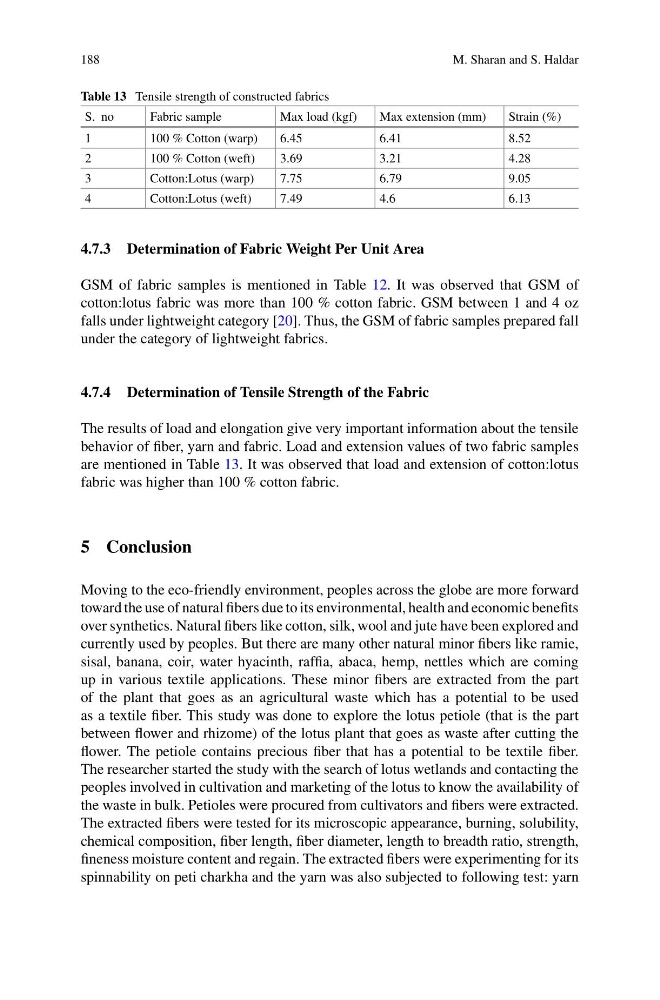
Table 13 Tensile strength of constructed fabrics
S. no
Fabric sample
Max load (kgf)
Max extension (mm)
Strain (%)
1
100 % Cotton (warp)
6.45
6.41
8.52
2
100 % Cotton (weft)
3.69
3.21
4.28
3
Cotton:Lotus (warp)
7.75
6.79
9.05
4
Cotton:Lotus (weft)
7.49
4.6
6.13
4.7.3 Determination of Fabric Weight Per Unit Area
GSM of fabric samples is mentioned in Table 12. It was observed that GSM of
cotton:lotus fabric was more than 100 % cotton fabric. GSM between 1 and 4 oz
falls under lightweight category [20]. Thus, the GSM of fabric samples prepared fall
under the category of lightweight fabrics.
4.7.4 Determination of Tensile Strength of the Fabric
The results of load and elongation give very important information about the tensile
behavior of fiber, yarn and fabric. Load and extension values of two fabric samples
are mentioned in Table 13. It was observed that load and extension of cotton:lotus
fabric was higher than 100 % cotton fabric.
5 Conclusion
Moving to the eco-friendly environment, peoples across the globe are more forward
toward the use of natural fibers due to its environmental, health and economic benefits
over synthetics. Natural fibers like cotton, silk, wool and jute have been explored and
currently used by peoples. But there are many other natural minor fibers like ramie,
sisal, banana, coir, water hyacinth, raffia, abaca, hemp, nettles which are coming
up in various textile applications. These minor fibers are extracted from the part
of the plant that goes as an agricultural waste which has a potential to be used
as a textile fiber. This study was done to explore the lotus petiole (that is the part
between flower and rhizome) of the lotus plant that goes as waste after cutting the
flower. The petiole contains precious fiber that has a potential to be textile fiber.
The researcher started the study with the search of lotus wetlands and contacting the
peoples involved in cultivation and marketing of the lotus to know the availability of
the waste in bulk. Petioles were procured from cultivators and fibers were extracted.
The extracted fibers were tested for its microscopic appearance, burning, solubility,
chemical composition, fiber length, fiber diameter, length to breadth ratio, strength,
fineness moisture content and regain. The extracted fibers were experimenting for its
spinnability on peti charkha and the yarn was also subjected to following test: yarn
M. Sharan and S. Haldar
Table 13 Tensile strength of constructed fabrics
S. no
Fabric sample
Max load (kgf)
Max extension (mm)
Strain (%)
1
100 % Cotton (warp)
6.45
6.41
8.52
2
100 % Cotton (weft)
3.69
3.21
4.28
3
Cotton:Lotus (warp)
7.75
6.79
9.05
4
Cotton:Lotus (weft)
7.49
4.6
6.13
4.7.3 Determination of Fabric Weight Per Unit Area
GSM of fabric samples is mentioned in Table 12. It was observed that GSM of
cotton:lotus fabric was more than 100 % cotton fabric. GSM between 1 and 4 oz
falls under lightweight category [20]. Thus, the GSM of fabric samples prepared fall
under the category of lightweight fabrics.
4.7.4 Determination of Tensile Strength of the Fabric
The results of load and elongation give very important information about the tensile
behavior of fiber, yarn and fabric. Load and extension values of two fabric samples
are mentioned in Table 13. It was observed that load and extension of cotton:lotus
fabric was higher than 100 % cotton fabric.
5 Conclusion
Moving to the eco-friendly environment, peoples across the globe are more forward
toward the use of natural fibers due to its environmental, health and economic benefits
over synthetics. Natural fibers like cotton, silk, wool and jute have been explored and
currently used by peoples. But there are many other natural minor fibers like ramie,
sisal, banana, coir, water hyacinth, raffia, abaca, hemp, nettles which are coming
up in various textile applications. These minor fibers are extracted from the part
of the plant that goes as an agricultural waste which has a potential to be used
as a textile fiber. This study was done to explore the lotus petiole (that is the part
between flower and rhizome) of the lotus plant that goes as waste after cutting the
flower. The petiole contains precious fiber that has a potential to be textile fiber.
The researcher started the study with the search of lotus wetlands and contacting the
peoples involved in cultivation and marketing of the lotus to know the availability of
the waste in bulk. Petioles were procured from cultivators and fibers were extracted.
The extracted fibers were tested for its microscopic appearance, burning, solubility,
chemical composition, fiber length, fiber diameter, length to breadth ratio, strength,
fineness moisture content and regain. The extracted fibers were experimenting for its
spinnability on peti charkha and the yarn was also subjected to following test: yarn